
Vandaag of morgen in huis

Kwaliteit gegarandeerd

Welkomstaanbiedingen ontgrendelen: GRATIS bezorging | Tot 80% korting | Gratis 30 dagen JoyPlus-proefperiode
Download de app
A donut dog bed looks soft and inviting. However, the wrong choice can quickly disappoint. A bed that is too small, loses its shape or is difficult to clean often ends up unused in a corner. The same applies to cats that enjoy sleeping in a round, sheltered space.
As a Joybuy Product Recommendation Officer, I filter product information based on practical considerations. Below, you’ll find out which features really matter in a fluffy dog bed, which marketing claims should be treated with caution and which models suit different pets.
A 70 cm round dog bed has a raised edge, so the actual sleeping area is smaller than the external measurement might suggest. Measure your dog while they are lying down in a relaxed position. Add around 15 to 20 cm, allowing them to turn around and stretch out.
A 60 or 70 cm dog bed may be suitable for a compact dog or cat. For a medium-sized dog, 70 to 90 cm is often more practical. Large dogs may need 100, 120 or even 140 cm, depending on how they sleep.
On several models, the cover or central cushion can be removed using a zip. This makes maintenance easier, but the inner filling is not suitable for machine washing in every product. Check:
A dog bed with a removable cover is particularly practical for muddy paws, shedding or accidents. Do not use bleach or harsh cleaning products unless this is permitted on the label.
A dog bed with an anti-slip base can limit movement on a smooth floor. However, rubber dots do not guarantee that the bed will remain completely stable on every surface. Place the bed on a flat, dry floor and make sure the underside is in full contact with the surface.
For older dogs, energetic puppies or pets that have difficulty getting up, a fixed position without obstacles is more important than an anti-slip layer alone.
A plush dog bed feels comfortable for dogs that like to curl up. Don’t just consider the length or thickness of the plush fibres; pay attention to the filling as well. PP cotton is used in these products as a soft, resilient filling. According to the product descriptions, it is designed to retain its shape and provide support.
This does not guarantee that every pet will find the bed comfortable. Some dogs prefer a firmer, flatter surface. Observe whether your dog can get in and out of the bed easily and whether they have enough room.
A dog bed with a raised edge provides a sheltered place to lean against. According to the product information from the brands concerned, this design can create a nest-like feeling. Present this as a design feature, not as a proven treatment for anxiety or stress.
For an anxious dog, a quiet corner with a familiar blanket or toy may help them get used to the new bed. A donut bed is not a substitute for training, guidance or a safe place to rest.
As well as the diameter, check the height of approximately 20 cm and the weight of the bed. A large model takes up relatively more space and is less easy to move. Vacuum-packed beds should be shaken and plumped up after unpacking. Some product descriptions recommend allowing 24 to 48 hours for the bed to regain its original shape.

Why it suits this profile: The 60 cm diameter is designed for cats and small dogs. The soft long-plush fabric, PP filling and removable central cushion make this an accessible choice for a first plush sleeping space.
The product dimensions are clearly stated. The rubber dots help limit movement, but positioning on a stable floor is still necessary.
60 × 60 × 20 cm, removable cover or central cushion according to the product information, and an anti-slip base.
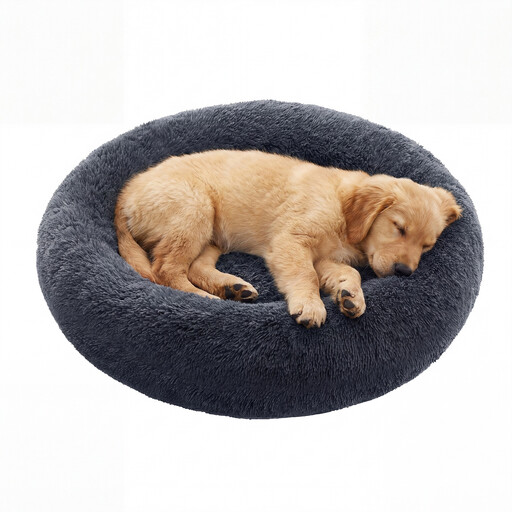
Why it suits this profile: With a diameter of 100 cm, this round dog bed offers more space for medium-sized to larger dogs that like to curl up but also stretch out from time to time.
The product information specifies a removable cover with a concealed zip. Wash the cover according to the label and treat the filling separately.
100 cm diameter, soft plush fabric, PP cotton filling and a cover that is machine washable according to the product description.
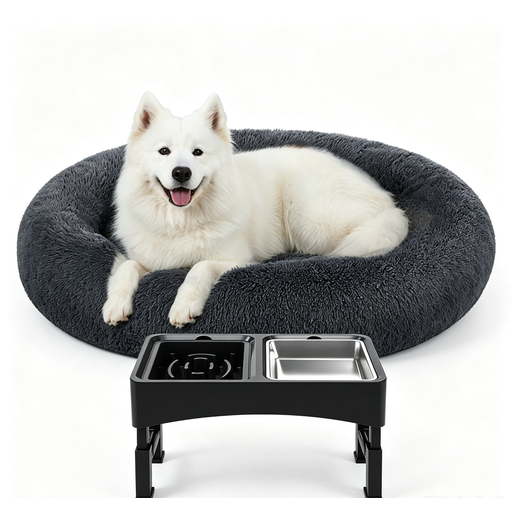
Why it suits this profile: The 120 cm diameter is intended for large dogs or households with several pets. The bed can also be placed in a spacious crate or a quiet indoor corner.
The size prevents a large dog from having to lie only on the edge. The cover is removable; according to the instructions, the inner filling must not be machine washed.
120 × 120 × 20 cm, PP cotton filling, removable cover and rubber anti-slip dots.
We have put together a complete, up-to-date list of products that fully meet these strict selection criteria and the applicable European safety regulations.
Allow a vacuum-packed bed to expand fully first. Loosen the filling by shaking it and gently plump up the edges. Then place the bed somewhere dry and flat. A familiar blanket or toy can help your dog or cat get used to the new bed.
Wash the removable cover according to the care label. Allow all parts to dry completely before putting them back. Check regularly for:
With dogs that chew, supervision during the first use is advisable. Stop using the bed if the fabric or filling starts to come loose.
It can be, depending on the entry height, size and stability. An anti-slip base helps limit movement, but always place the bed on a stable surface. Make sure your dog can get in and out of the bed without difficulty.
Measure your dog from nose to the base of the tail while they are lying down, then add around 15 to 20 cm. Compare this with the internal space, not just the stated external diameter. A 60 cm bed is often suitable for cats and small dogs; 70 to 90 cm is aimed at small to medium-sized dogs; 100 cm or larger is intended for medium-sized to large dogs.
Its lifespan depends on use, washing, moisture and chewing behaviour. Regular airing, washing according to the label and promptly repairing minor damage can help prevent unnecessary wear. Replace the bed when the filling becomes visible, the seams start to come apart or the base is no longer stable.
