
Vandaag of morgen in huis

Kwaliteit gegarandeerd

Welkomstaanbiedingen ontgrendelen: GRATIS bezorging | Tot 80% korting | Gratis 30 dagen JoyPlus-proefperiode
Download de app
A donut dog bed may seem simple at first glance: a round cushion with a soft edge. However, models vary considerably in size, filling, washability and stability. A bed that is too small, quickly loses its shape or is difficult to clean can soon turn out to be a poor purchase.
For UK households, three pitfalls are particularly important:
Measure your dog while they are lying fully stretched out and allow extra space for turning around. Dogs that like to curl up often feel comfortable in a round dog bed with a raised edge. Dogs that sleep stretched out need more usable sleeping space.
As a practical guide:
Always check the product specifications and recommended weight. For example, a 70 cm model may be listed in the product information for small to medium-sized dogs weighing up to around 15 kg. A 100 cm donut bed may be described as suitable for medium-sized to large dogs weighing up to around 30 kg.
A soft dog bed should not only feel comfortable, but also retain its shape sufficiently after use. According to the product specifications, PP cotton or PP filling provides a resilient, soft construction. Other models use egg-crate foam. This material creates a firmer sleeping surface and may be worth considering for older dogs that do not like lying on a thin cushion.
Pay attention to the wording used in the product information. Words such as “supportive” or “orthopaedic” describe a design choice, not guaranteed performance. If your dog has persistent joint or mobility problems, consulting a vet is wiser than relying solely on the name orthopaedic dog bed.
A dog bed with a washable cover is more practical when dealing with muddy paws, shedding or accidents. Check whether the zip is easy to access and which part can go in the washing machine. On various donut models, the central cushion can be removed via a zip underneath. According to the product information, the outer edge or inner filling cannot always be machine washed.
A dog bed with a non-slip base will generally remain more stable on a smooth floor. Rubber dots help reduce movement, but only work effectively when the underside is in full contact with a flat, dry floor. Do not place a bed on an unstable raised surface, and regularly check the seams, zips and filling.
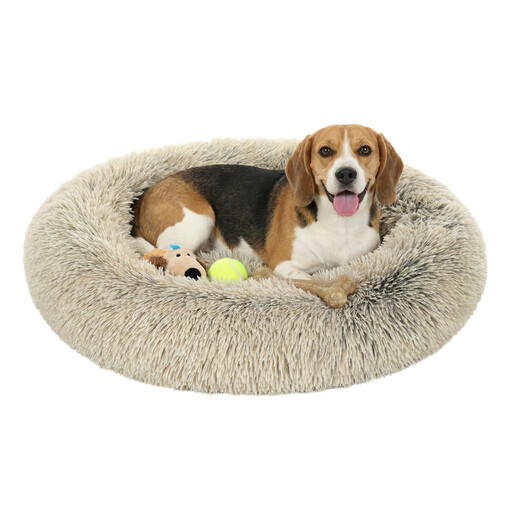
Why it suits this profile: The 70 cm diameter is a manageable size for small and medium-sized dogs that like to curl up. The round design also fits neatly in a living room, bedroom or quiet corner.
The product information mentions a removable central cushion and a zip underneath. However, check the care label: not every component needs to be machine washable.
70 cm diameter, 20 cm high, PP filling, soft plush fabric and rubber non-slip dots underneath.

Why it suits this profile: This model combines plush and sherpa with egg-crate foam and a raised headrest. It is suitable for pets looking for a firmer sleeping surface as well as softness.
The product description explicitly states that the cover is removable and machine washable. According to the instructions, the inner core must not be washed and requires local cleaning.
Egg-crate foam, raised headrest, removable cover and non-slip fabric; suitable for dogs and cats according to the product information.
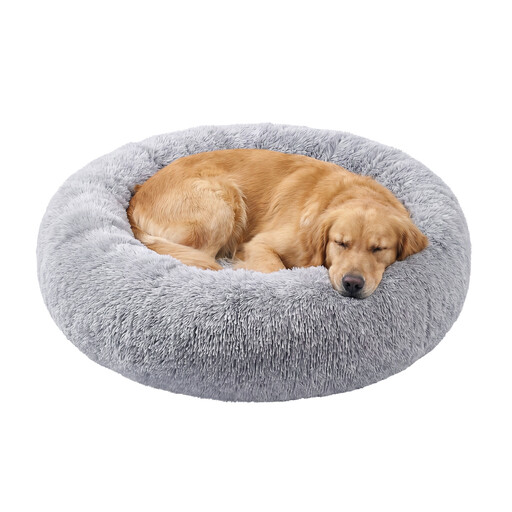
Why it suits this profile: The 120 cm diameter gives a large dog more room to turn around and stretch out. This is a practical choice for intensive daily use indoors.
The size prevents a large dog bed from only appearing spacious because of its edge. The product information also mentions a removable cushion and a non-slip base.
120 cm diameter, long-pile plush fabric, PP filling, removable cover and rubber non-slip dots.
We have put together a complete, up-to-date list of products that fully meet these strict selection criteria and the applicable European safety regulations.
Many models are vacuum-packed. Shake out the bed, loosen the filling and give the material time to regain its shape. Some models specify 24 to 48 hours. Then place the bed on a flat, dry surface, with the non-slip side fully in contact with the floor.
A gentle introduction often works better than lifting your dog straight into the bed. If you like, place a familiar blanket or toy inside. Keep an eye on dogs that like to chew during their first few uses. Afterwards, regularly check the bed for loose seams, damaged zips and exposed filling.
Wash the cover according to the label, do not use bleach, and allow all components to dry completely before reassembling the bed. Its lifespan depends on its size, use, washing and your pet’s behaviour. Replace the bed as soon as the fabric or filling starts to come loose.
According to product descriptions, the raised, round edge can create an enclosed and cosy feeling. This may suit dogs that like to lie against an edge. The effect varies from one animal to another. A calming dog bed is not a treatment for anxiety and does not replace professional guidance.
Measure your dog when fully stretched out and compare this length with the actual internal space. Choose a larger size if your dog likes to lie stretched out. A 60 or 70 cm model may be sufficient for a dog that usually curls up, while large dogs often need 100, 120 or 140 cm.
Remove hair regularly with a hoover or lint roller, and wash the cover when it is visibly dirty or smells unpleasant. More frequent washing may be needed with intensive use. First check whether only the cover, the central cushion or other components can be machine washed.
