
Vandaag of morgen in huis

Kwaliteit gegarandeerd

Welkomstaanbiedingen ontgrendelen: GRATIS bezorging | Tot 80% korting | Gratis 30 dagen JoyPlus-proefperiode
Download de app
A donut dog bed has a round shape and a raised edge. It often suits dogs that like to sleep curled up or rest their head against a raised side. However, not all round dog beds are the same in practice. A soft exterior tells you little about how easy the bed is to wash, what size it is or how stable it will be on a smooth floor.
When buying, look out for these three common pitfalls:
Read on to find out which features matter and which models suit different needs.
Measure your dog from the nose to the base of the tail while they’re lying comfortably. Then measure their width when they stretch out. Allow a little extra room all the way round. A dog bed’s diameter usually refers to its outer measurement, so the usable sleeping area is smaller than the figure on the packaging.
According to the product information, a 70 cm bed is designed for small to medium-sized dogs. An 80 or 90 cm model gives a medium-sized dog more room. For large dogs, 100 or 120 cm models are a more sensible choice, provided there’s enough space in the room or crate.
A small dog’s bed shouldn’t be so large that the raised edge loses its supportive function. For a large dog’s bed, having enough sleeping space is especially important.
A donut bed usually consists of a central cushion and a raised edge. The models listed use PP cotton filling to give the cushion and edge their shape. Check whether the bed needs plumping up after delivery: vacuum-packed models often need time to regain their original shape.
A raised edge can be comfortable for dogs that like to lean against something. However, treat terms such as “calming dog bed” as product positioning. The product descriptions say that the round edge is designed to create a feeling of being enclosed; this doesn’t guarantee that it will reduce anxiety or stress for every dog.
A washable dog bed is more practical when you can unzip and remove the cover or central cushion. Always check the care label. Several models in this selection have a removable central cushion and a cover that can be hand-washed or washed on a gentle cycle. The inner filling isn’t always suitable for machine washing.
An anti-slip dog bed has rubber dots on the underside. These help limit movement on a smooth floor, but they’re no substitute for a flat, dry surface. Check the seams, zip and filling regularly. Stop using the bed if your dog chews it open or the filling becomes visible.

Why it suits this type of buyer: A straightforward option for small to medium-sized dogs, with a round shape, soft plush fabric and a central cushion with a zip.
The product information lists a 70 cm diameter, a removable central cushion and rubber anti-slip dots. Do check that this size suits your dog when they’re stretched out.
70 cm diameter, plush cover, PP filling, removable cushion and an underside with rubber dots.
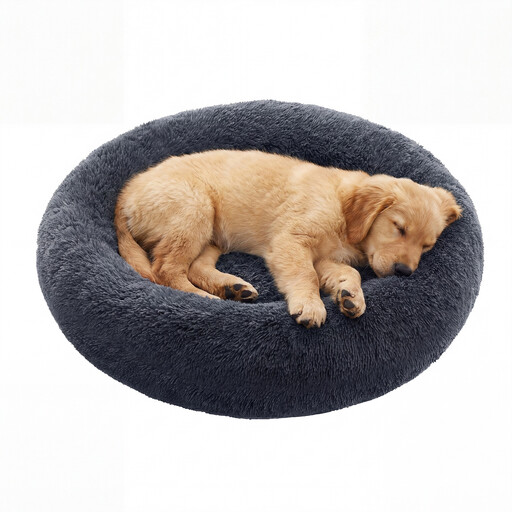
Why it suits this type of buyer: With a diameter of 100 cm, this bed gives medium to large dogs more room to turn around and lie down, while the high edge retains its rounded, nest-like shape.
The product description says the cover is removable and can be machine-washed on a gentle cycle. Use mild detergent and always follow the specific care label.
100 cm diameter, plush fabric, PP filling, removable cover and a high, rounded edge.
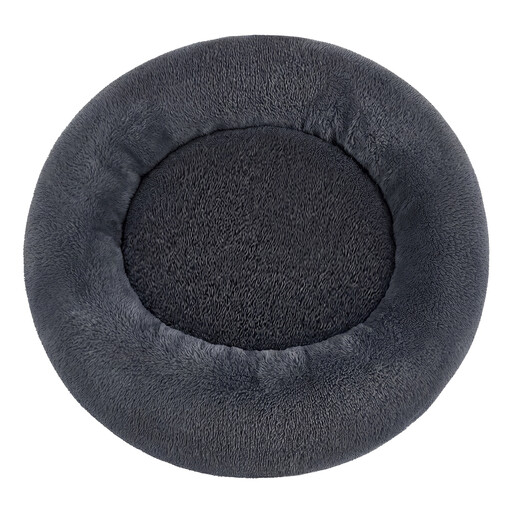
Why it suits this type of buyer: According to the product information, this large dog bed is designed for large dogs and households with multiple pets.
Its size means a large dog won’t be short of space to lie down. The description says the cover is removable; the inner filling needs to be cared for separately and shouldn’t go in the washing machine.
120 cm diameter, 20 cm height, plush material, PP filling, zip for the central cushion and rubber anti-slip dots.
We’ve put together a complete, up-to-date list of products that meet these strict selection criteria and the applicable European safety regulations.
A vacuum-packed bed needs to be unpacked, shaken and plumped up. Some models may take 24 to 48 hours for the filling to regain its full shape. Place the bed on a flat, dry surface, preferably somewhere quiet where your dog already likes to settle.
For your dog’s first introduction to the bed, put a familiar blanket or toy in it. This may make the transition easier, but every dog reacts differently. Don’t use a donut bed as a replacement for a crate, carrier or restraint.
Wash the cover according to the care label and let it dry completely before putting the central cushion back in. Regular airing and plumping will help it keep its shape. Also check the zips, seams, rubber dots and any loose fibres.
Not necessarily. The shape is best suited to dogs that like to sleep curled up or lean against a raised edge. Dogs that stretch out may be more comfortable on a flat dog bed with a larger sleeping area. So measure your dog and the floor space available.
It depends on how often it’s used, how much your dog sheds and whether there are any accidents. Remove hair regularly and wash the removable cover as soon as it looks, smells or feels dirty. Don’t use bleach or harsh cleaning products unless the care label says they’re suitable.
Its lifespan depends on the material, how often it’s used and your dog’s behaviour. A dog that doesn’t chew may use the bed for longer than one that pulls at the edges and zips. Check the bed regularly and replace it if the cover tears or the filling becomes visible.
