
Vandaag of morgen in huis

Kwaliteit gegarandeerd

Welkomstaanbiedingen ontgrendelen: GRATIS bezorging | Tot 80% korting | Gratis 30 dagen JoyPlus-proefperiode
Download de app
A donut dog bed may look simple at first glance: a round bed with soft filling and raised sides. However, models vary considerably in size, upkeep and stability. Choose the wrong one and your dog may have barely enough room, the bed may quickly go flat, or cleaning may become unnecessarily difficult.
There are three common pitfalls, particularly in Dutch households:
So don’t focus only on the colour or how plush the bed is. Check the dimensions, construction and washing instructions too.
Measure your dog from nose to the base of its tail, then allow some extra room to move. A dog that likes to curl up may be comfortable in a smaller round bed. A dog that often stretches out will need a larger diameter.
The models in this selection range from 70 cm for small to medium-sized dogs to 140 cm for large dogs. Check the height of the raised sides too. Sides of around 20 cm can create a cosy, enclosed feel, but they also take up some of the lying space.
Also, don’t assume a large dog bed will fit in a crate. Check the crate’s internal dimensions first and make sure there’s still enough room for ventilation and movement. A dog bed for a crate should fit properly, not be wedged in tightly.
A plush dog bed or soft dog bed feels cosy for dogs that like to rest their nose and paws against the sides. PP cotton filling can provide support and help the bed keep its shape, but it’s no substitute for an orthopaedic dog bed prescribed by a vet or properly tested as such.
Check the product information:
A product description may suggest that a bed is comfortable or has a calming effect. According to the brands’ own product descriptions, raised sides may create a safe or enclosed feeling. That doesn’t guarantee that every dog will feel calmer. Think of a calming dog bed as a design choice, not a health product.
A dog bed with a non-slip base is useful on smooth floors. Rubber dots may help limit movement, but they won’t make a bed completely slip-proof. Place it on a dry, level surface and check regularly that the base is still in good contact with the floor.
A dog bed with a washable cover is usually more hygienic for everyday use. However, check the difference between a removable cover and a bed that can be washed in its entirety. With several models in this selection, you can remove the inner cushion, while the filling itself can only be spot-cleaned.

Why it suits this type of buyer: The 70 cm diameter is a manageable size for small and medium-sized dogs, and takes up little room in a flat or living room.
The product information mentions a removable central cushion, a zip underneath and rubber anti-slip dots. Before buying, check the washing instructions on the product page.
70 cm diameter, 20 cm height, plush fabric, PP filling and a removable central cushion.
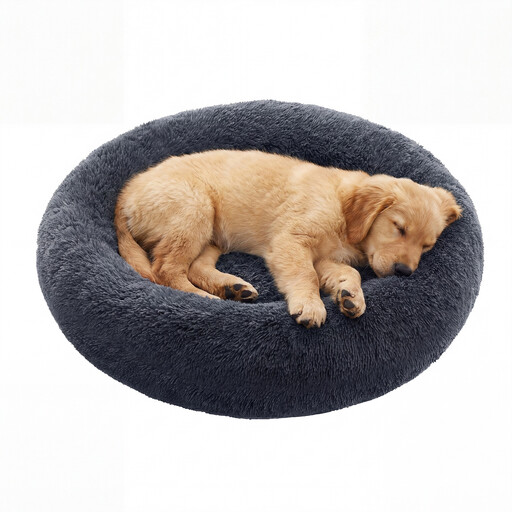
Why it suits this type of buyer: According to the product information, this spacious model is designed for medium to large dogs weighing up to around 30 kg, with raised sides all the way round.
The cover can be removed using a concealed zip and, according to the product description, is suitable for a gentle machine wash. The inner filling needs to be spot-cleaned.
100 cm diameter, plush polyester, PP cotton filling and a removable cover.
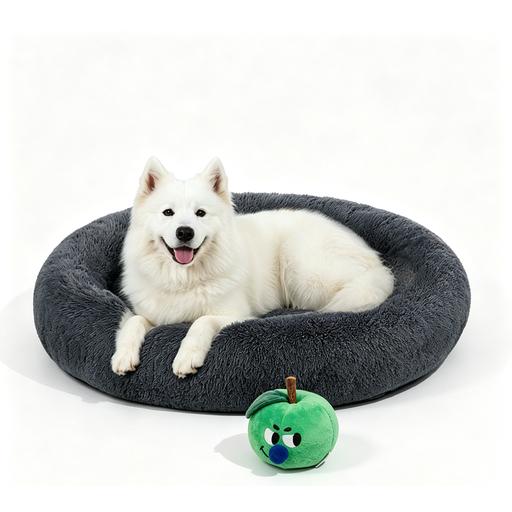
Why it suits this type of buyer: The 120 cm diameter is designed for large dogs and households where the bed gets frequent daily use.
The product information mentions a removable central cushion, a washable cover and rubber anti-slip dots. The filling itself must not be machine washed.
120 cm diameter, 20 cm height, PP cotton filling and suitable for use on the floor or in a suitably sized crate.
We’ve put together a complete, up-to-date list of products that meet these strict selection criteria and the applicable European safety regulations.
Many models are delivered vacuum-packed. Shake out the bed, fluff up the sides and give it plenty of time to regain its shape. Then place it on a flat, dry surface. A familiar blanket or toy can help your dog get used to its new sleeping spot.
Wash the removable cover according to the care label, preferably with a mild detergent. Don’t use bleach unless the instructions say it’s safe to do so. Let the cover dry completely before putting the cushion back in. Check the zips, seams and plush fabric regularly. If you find loose threads, tears or visible filling, replacing the bed is the safer option, especially if your dog chews it.
It can be, as long as the diameter gives your dog enough room to turn around and lie down. For large dogs, 120 or 140 cm models make more sense than a 70 cm bed. Also take your dog’s weight and sleeping style into account.
That depends on how often the bed is used, how much your dog sheds and whether there are any accidents. If your dog uses the bed every day, regular washing is practical. Remove hair in between washes and always follow the care label. Many models have inner filling that isn’t machine washable.
Its lifespan depends on your dog’s weight, how often the bed is used and whether your dog chews it. Fluffing it regularly helps distribute the filling evenly. Check the seams and non-slip base, and replace the bed as soon as the cover or filling is damaged.
