
Vandaag of morgen in huis

Kwaliteit gegarandeerd

Welkomstaanbiedingen ontgrendelen: GRATIS bezorging | Tot 80% korting | Gratis 30 dagen JoyPlus-proefperiode
Download de app
A donut dog bed looks inviting, with its rounded edge and soft covering. However, not every fluffy dog bed is right for your pet. A bed that’s too small can restrict their sleeping position, firm filling can flatten quickly, and an attractive cover isn’t necessarily easy to clean.
For dog and cat owners in the UK, there are three main pitfalls to watch out for:
Read on to find out which specifications to check before buying a donut dog bed.
Measure your dog while they’re lying down comfortably. Measure from the tip of their nose to the end of their body, then add around 15 to 25 cm. Dogs that like to curl up may be happy with a more compact bed. A dog that often stretches out will need more space inside.
Check the height of the edge, too. A 70 cm diameter bed is often described in the product information as suitable for small to medium-sized dogs, while 100, 120 or 140 cm models offer more space for medium to large dogs. Always check the sizing information for the specific model.
A smaller donut bed may suit cats, especially if your pet likes to snuggle against a soft edge. For a cat bed, the entrance is just as important as the diameter: a high edge may be less practical for older or less mobile cats.
A plush dog bed feels soft, but look beyond the surface. The product information may list PP filling, PP cotton or egg-box foam. These materials have different properties:
For older pets or those that need extra support, an orthopaedic dog bed with egg-box foam and a raised headrest may be worth considering. Here, “orthopaedic” is a product description, not a medical promise. A dog bed is no substitute for advice from a vet if your pet has neck, back or joint problems.
A dog bed with a removable cover is usually easier to keep clean than a one-piece bed. Before you buy, check:
Some models have a washable cover, but the inner filling must be spot-cleaned. This information can be less prominent in the product description. So a washable dog bed isn’t always fully washable.
A non-slip dog bed can help prevent it from moving around, but always place the bed on a flat, stable surface. Regularly check for loose seams, holes, exposed filling and damaged zips. Pets that like to chew should be supervised more closely the first few times they use it.

Why it suits this type of buyer: According to the product information, this round bed is designed for small and medium-sized dogs and has a removable central cushion. It’s a practical introduction to donut dog beds.
The size and intended pet size are clearly stated. The central cushion can be removed using the zip; check the care label before washing.
70 cm diameter, PP filling, removable central cushion and rubber non-slip dots.

Why it suits this type of buyer: If you value a firm sleeping surface and extra support, the product description lists egg-box foam, a raised headrest and a machine-washable cover.
The product information specifies both the material and the cleaning method. The inner core should be aired, not machine washed, according to the instructions.
Egg-box foam, raised headrest, soft sherpa and removable machine-washable cover.
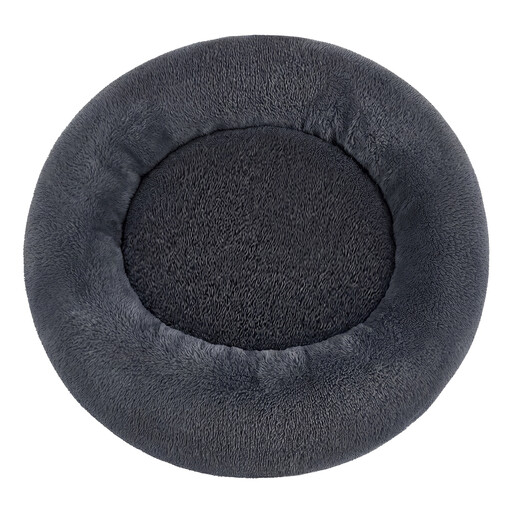
Why it suits this type of buyer: According to the product specifications, this large model is designed for large dogs and households with multiple pets. Its round shape gives them room to turn around and stretch out.
The 120 cm diameter makes it easier to check whether the size is right. The cover is removable; the filling should be aired and spot-cleaned according to the instructions.
120 cm diameter, 20 cm height, PP cotton filling, removable cover and non-slip dots.
Many models are vacuum packed. Fluff the bed after unpacking and give the filling time to regain its shape. Some products recommend leaving it for 24 to 48 hours. Place the bed somewhere dry and level, and make sure the non-slip base is in full contact with the floor.
You could put a familiar blanket or toy in the bed, too. This can help your dog or cat get used to their new resting place gradually. Wash the cover according to the care label, and don’t use bleach or harsh cleaners. After each wash, check that the zips, seams and non-slip material are still intact.
We’ve put together a full, up-to-date list of products that meet these strict selection criteria and the applicable European safety regulations.
It can be, depending on the entrance, size and filling. A raised edge may offer support while your dog rests, but a high edge can be difficult for a dog that struggles to get up. Choose a flat, stable spot, and speak to a vet if problems persist.
Remove hair and crumbs regularly. Wash the cover when it looks dirty, starts to smell or after an accident. Follow the care label, as the recommended temperature and drying method vary from product to product.
Its lifespan depends on how often it’s used, your pet’s weight, washing and chewing habits. Fluffing it regularly, avoiding high-temperature drying and checking for damage promptly can help keep the bed in good condition for longer. Replace it if the filling becomes visible or the seams and zips are no longer safe.
