
Vandaag of morgen in huis

Kwaliteit gegarandeerd

Welkomstaanbiedingen ontgrendelen: GRATIS bezorging | Tot 80% korting | Gratis 30 dagen JoyPlus-proefperiode
Download de app
A donut dog bed may look comfortable, but not every style suits every dog. Medium and large dogs in particular may be disappointed by a bed that is too small, filling that quickly goes flat or a cover that is difficult to clean. Claims such as “calming” and “extra supportive” also deserve a closer look: always check which features are actually listed in the product specifications.
In this buying guide, you’ll find out what to look for in a soft dog bed, which sizes are practical and which styles suit different homes.
A round dog bed measuring 80 cm has a raised rim, so the usable sleeping area is smaller than the overall diameter might suggest. Measure your dog while they’re lying stretched out, then allow a little extra room to move. A 120 cm bed may suit a large dog, but it also takes up considerably more space in a living room or crate.
A plush dog bed feels cosy, but very soft filling can become compressed over time. So check the materials and construction. According to the product descriptions, the models in this selection use PP cotton filling. Fluffing the bed regularly helps keep the filling airy, but it won’t prevent any bed from eventually showing signs of wear with heavy use.
With many beds, only the cover or central cushion can be removed. According to the care instructions, the inner filling often shouldn’t go in the washing machine. Check that the zip is easy to reach, which parts can be washed and whether the care instructions suit your household.
A dog bed with a washable cover is particularly practical for muddy paws, shedding or homes with more than one pet. Also check the seams, zips and loose tufts regularly. If the bed is damaged or the filling is exposed, stop using it.
Use these sizes as a practical guide:
A dog bed for large dogs needs to be wide enough, but that’s not all. Check the height of the rim and the space available inside. A rim of around 20 cm can provide extra support, but shouldn’t make it difficult for your dog to get in and out.
Long-pile plush feels soft and suits dogs who like to rest against a raised rim. According to the product descriptions, the selected models are made from plush fabric with PP cotton filling. These are verifiable product specifications, but they don’t guarantee a particular level of sleep quality or lifespan.
The donut shape of a calming dog bed can create a feeling of being enclosed. According to the brands’ own product information, the raised rim is designed to help dogs feel secure, particularly those who sleep curled up. This is a product claim, not a medically proven effect. If your dog remains unsettled, a bed is no substitute for advice from a vet or animal behaviourist.
A dog bed with a non-slip base may be less likely to move on smooth floors. According to the product information, the models below have rubber dots on the underside. These only help when the base is in full contact with a dry, flat surface. Don’t place the bed partly on a rug, over a threshold or near a heat source.
If you want to use the bed in a crate, first compare the crate’s internal dimensions with the bed’s diameter and rim height. A dog bed for a crate shouldn’t block the door and should leave enough room for your dog to turn around comfortably.
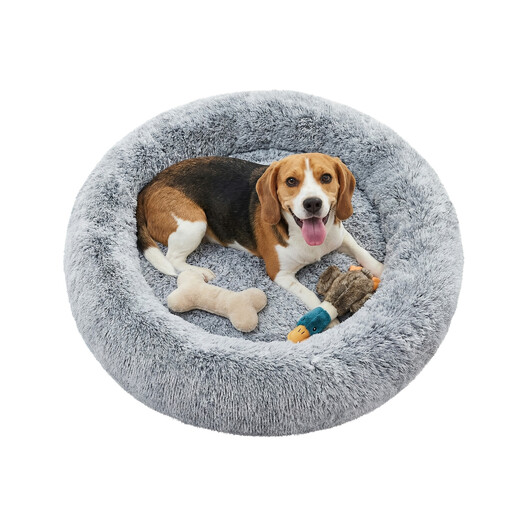
Why it suits this profile: The 80 cm diameter is a manageable size for a medium-sized dog and works well in a quiet corner or a spacious crate. Its grey colour and simple design suit a range of interiors.
The product information lists a removable, washable cover and rubber dots on the underside. That means you can look beyond appearance alone.
Plush material, PP cotton filling, 80 cm diameter and a removable cover, according to the product specifications.
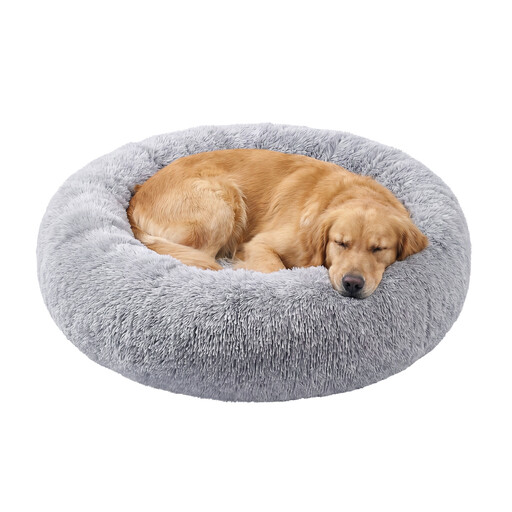
Why it suits this profile: This large round dog bed is designed for large adult dogs and offers more sleeping space for dogs who often change position.
The dimensions are clearly listed as 120 x 20 cm. The cover and central cushion can be removed for cleaning, according to the description.
Long-pile plush, PP filling, a removable cover and anti-slip rubber on the underside, according to the product details.
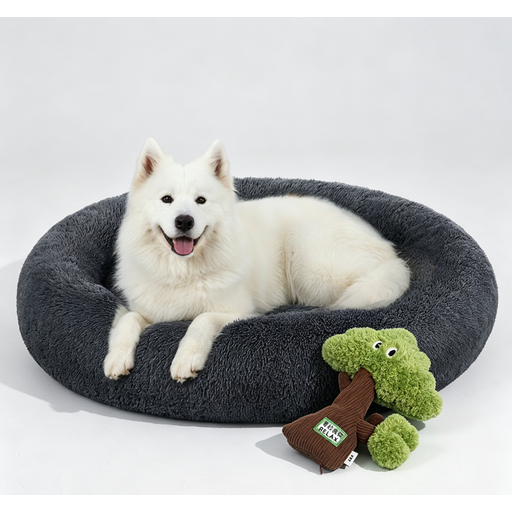
Why it suits this profile: According to the product information, this style is designed for large dogs and households with multiple pets. That makes it a practical, spacious place to sleep in the living room.
The description specifically lists a machine-washable cover, a zip on the underside and non-slip dots. The inner filling shouldn’t go in the machine.
120 cm diameter, PP cotton filling, removable inner cushion and a rubber non-slip base, according to the product specifications.
A donut dog bed is often vacuum-packed. Give it a good shake after delivery and allow the filling time to regain its shape. Then place it on a dry, flat surface. A familiar blanket or toy may help your dog settle into their new sleeping spot.
Wash the cover according to the care label, use a mild detergent and let the material dry thoroughly. According to the product information, the inner core should generally only be aired or spot-cleaned. Fluffing the bed regularly helps it keep its shape. If your dog likes to chew, check the seams and exposed filling more frequently.
We’ve put together a complete, up-to-date list of products that meet these strict selection criteria and the applicable European safety requirements.
It depends on the space inside the bed and your dog’s sleeping position. According to the product information, the 120 cm model is designed for large dogs, while 80 and 90 cm styles are more often suited to medium-sized dogs. Measure your dog while they’re lying down, then compare that measurement with the product dimensions.
According to the product descriptions, the cover or central cushion can be removed from the selected models and washed carefully. The PP cotton filling or inner core generally shouldn’t go in the washing machine. Always check the care label before washing.
Its lifespan depends on your dog’s weight, scratching, chewing, washing and day-to-day use. A plush bed may stay in good condition for longer if you fluff it regularly, place it on a stable surface and check for damage promptly. There’s no fixed lifespan that applies to every dog.
