
Vandaag of morgen in huis

Kwaliteit gegarandeerd

Welkomstaanbiedingen ontgrendelen: GRATIS bezorging | Tot 80% korting | Gratis 30 dagen JoyPlus-proefperiode
Download de app
A donut dog bed can be a lovely place for dogs to rest if they like curling up or leaning against a soft raised edge. But not every plush bed performs the same way in everyday use. A great-looking photo tells you little about the size, washability or stability on a smooth floor.
So pay close attention to the construction and care instructions. This helps you avoid buying a large bed that won’t fit in your living room, a cover that can’t go in the washing machine or soft filling that quickly loses its shape.
A dog bed with raised sides takes up more room than a flat cushion. So check not only the diameter, but also the height of the sides and the space available in the middle. Measure your dog when they’re stretched out and when they’re curled up asleep.
A diameter of 80 or 90 cm may suit medium-sized dogs. A large dog bed often starts at 120 cm, but that doesn’t automatically mean there’s enough space for every large dog. With a bed measuring 140 × 140 × 20 cm, it’s especially important to check that you have enough room for it.
For many models, only the removable cover is washable. The inner filling then needs to be aired or spot-cleaned. That’s not a problem as long as you know in advance. Check:
A dog bed with a removable cover is practical for muddy paws, hair and accidents, but it still needs regular care.
An anti-slip dog bed with rubber dots can help limit movement. However, the surface underneath still matters. An anti-slip base works differently on a smooth tiled floor than on carpet. Place the bed on a flat, dry surface and make sure the base is in full contact with the floor.
If your dog likes to dig or chew, it’s best to supervise them the first time they use the bed. Stop using it if the fabric, seams or filling become damaged.
A dog that likes curling up may benefit from a round shape and raised sides. A dog that sleeps stretched out needs more room. Measure your dog from nose to the base of their tail, then allow enough extra space for them to move around. For a bed for medium-sized dogs, for example, compare models measuring 80 or 90 cm. For larger breeds, models measuring 120 cm or more are a more sensible place to start.
Pay attention to the height too. A raised edge of around 20 cm provides a cosy surround, but may be harder for a small or older dog to climb over.
A plush dog bed feels soft, but long plush fibres can trap hair and dirt. Polyester plush is generally easy to wipe clean, while the PP cotton filling mainly determines how firm the bed feels. According to the product information for the models mentioned, the filling is designed to help the bed retain its shape and support. This doesn’t guarantee a particular lifespan: regular plumping and avoiding excessive weight are still important.
A soft dog bed is especially suitable for dogs that like to nest. For dogs that prefer a cool, flat place to lie, a lower or less warm model may be more practical.
A dog bed for a crate must fit the crate’s internal dimensions exactly. Measure the length, width and door opening. A donut shape takes up more room than a straight cushion because of its raised sides. Also check that your dog can still turn around and get up comfortably.
A bed described as a “crate bed” won’t automatically fit every crate. According to the product information, the 80 × 20 cm model mentioned is designed for medium-sized dogs and for use in a crate or quiet corner. Always check the actual measurements.
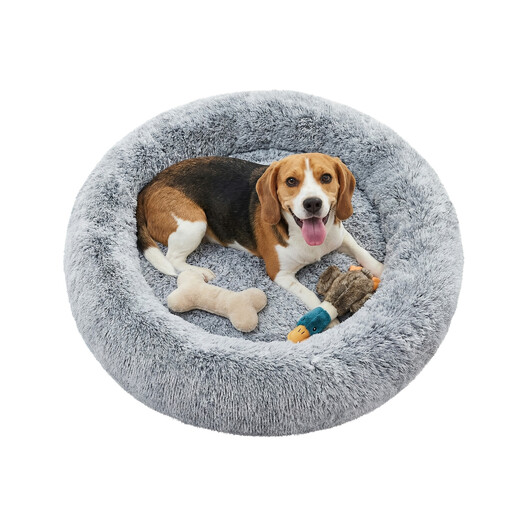
Why it suits this profile: Its manageable round size is suitable for a medium-sized dog and works well in a crate or quiet corner. The cover can be removed with a zip.
The product information explains how to clean the cover and inner core separately. So you’ll know in advance which parts can and can’t be machine-washed.
80 × 20 cm, plush cover, PP filling, removable cover and rubber anti-slip dots.
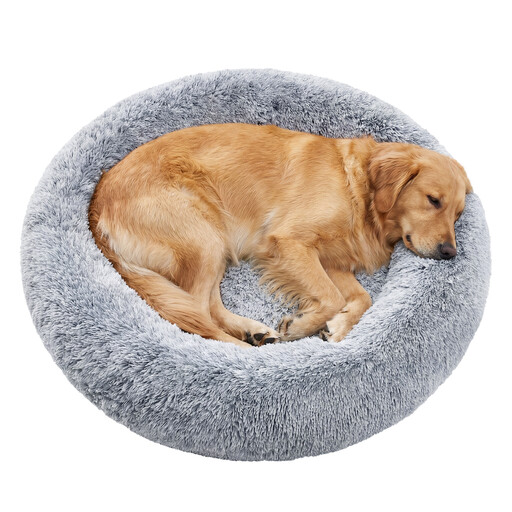
Why it suits this profile: Its 100 cm diameter offers more room for medium-sized to larger dogs that like sleeping in a cosy, enclosed shape.
The product description specifically mentions a removable outer cover, a concealed zip and separate washing instructions for the cover.
Plush polyester, PP filling, removable washable cover and anti-slip base; suitable for indoor use.
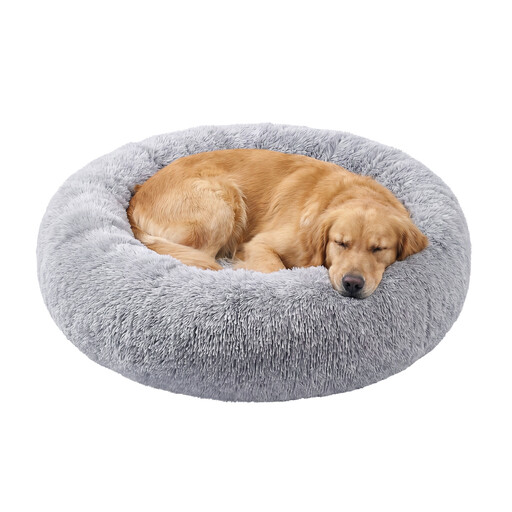
Why it suits this profile: This extra-roomy model is designed for large adult dogs and households where the bed gets heavy daily use.
The size and care instructions are clearly stated. According to the product information, the cover can be washed on a delicate cycle; the inner core is not machine-washable.
120 × 20 cm, long-pile plush fabric, PP filling, removable cover and rubber anti-slip base.
We’ve put together a complete, up-to-date list of products that meet these strict selection criteria and the applicable European safety regulations.
Many donut beds are vacuum-packed. Give the bed a good shake after unpacking and allow the filling time to regain its shape. Some models are recommended to be left for 24 to 48 hours. Then place the bed on a dry, flat surface.
To help your dog settle in, you can put a familiar blanket or toy on the bed. Wash the cover according to the care label, and don’t use bleach or harsh cleaners. Plump up the filling regularly and check the seams, zips and underside for damage.
A donut dog bed is not a crate, restraint or substitute for professional support if your dog has ongoing anxiety. The term “calming dog bed” refers here to the round shape, soft cover and raised edge; according to the brands’ product information, this shape is designed to create a cosy, enclosed place to rest. Every dog has their own preferences.
It can be, as long as there’s enough room inside. Consider your dog’s sleeping length, not just the overall diameter. Models measuring 120 cm or more are a more sensible option to compare for large breeds; a 140 × 140 cm model does need a lot of floor space.
Remove hair and dirt regularly, and wash the removable cover when it’s visibly dirty or smells unpleasant. Always follow the care label. According to the product information, the inner filling of these models is not suitable for machine-washing and should be spot-cleaned.
Its lifespan depends on your dog’s weight, whether they dig or chew, and how often the bed is washed. Plumping it up regularly helps it keep its shape. Check the bed weekly for loose seams, tears and exposed filling. If it’s damaged, replacing it is safer than continuing to use it.
