
Vandaag of morgen in huis

Kwaliteit gegarandeerd

Welkomstaanbiedingen ontgrendelen: GRATIS bezorging | Tot 80% korting | Gratis 30 dagen JoyPlus-proefperiode
Download de app
A donut dog bed looks comfortable, but not every style suits every pet. A bed that’s too small can restrict your pet’s sleeping position, an inner cushion that’s difficult to clean can quickly become impractical, and a thin anti-slip layer won’t always stop the bed moving on a smooth floor. Terms such as “calming” and “orthopaedic” also deserve a level-headed assessment: focus on the dimensions, materials and care instructions.
This buying guide will help you choose a soft dog bed, plush dog bed or round dog bed to suit your dog or cat’s size, sleeping preferences and day-to-day needs.
A 70 cm bed sounds spacious, but the raised rim takes up some of the sleeping area. So measure your pet while they’re lying fully stretched out, then allow extra room all around. Dogs who like to curl up need less space than those who sleep stretched out.
Also look out for variations in size. According to the product information, sewn products may vary by a few centimetres. So don’t try to squeeze the bed into a tight space between pieces of furniture.
With many styles, the entire bed isn’t machine washable. Often, you can remove the centre cushion or cover using a zip. The outer rim and inner filling may only be suitable for wiping down or airing.
Before you buy, check:
A dog bed with a removable cover is usually more practical for muddy paws, shedding or accidents in the home.
A dog bed with an anti-slip base can help reduce movement on a smooth floor. However, rubber grips or anti-slip fabric aren’t a substitute for a stable surface. Place the bed flat on a dry floor, making sure it’s in full contact with the surface. Check the base, seams and zips regularly to make sure they’re intact, particularly if your dog likes chewing their bed.
A round dog bed with a raised rim often suits pets who like to lie against an edge or curl up. A 70 cm bed may be enough for a small dog or cat; a medium-sized dog may need 80 to 90 cm. Styles measuring 100 to 140 cm are available for larger dogs or several small pets.
Look out for the difference between:
Many donut beds in this selection use PP filling. Product descriptions describe this material as resilient and shape-retaining. This doesn’t guarantee a particular lifespan; regular fluffing and proper drying are still important.
Looking for an orthopaedic dog bed for an older dog? Don’t focus on the soft exterior alone. According to the product description, a style with egg-crate foam and a raised rim may provide extra support, but whether it’s suitable depends on your pet’s individual needs. If mobility problems persist, it’s wiser to ask a vet for advice than to rely solely on a marketing term.
A plush dog bed feels warm and soft, but can trap hair and dust. A cover that can be washed on a delicate cycle is therefore handy. Always follow the care label. Some inner cushions aren’t machine washable and should only be wiped down or aired.
Vacuum-packed beds need time to regain their shape after unpacking. Fluff the bed, loosen the filling and, as directed in the product description, allow 24 to 48 hours for it to expand fully.

Why it suits this type of buyer: The 70 cm diameter is designed for small and medium-sized dogs. The round shape, PP filling and raised rim offer a simple introduction to donut dog beds.
The product information mentions a removable centre cushion, an anti-slip base and clear advice on fluffing the bed after it has been vacuum-packed.
70 cm diameter, 20 cm height, plush fabric, PP filling and a centre cushion that can be removed for cleaning, according to the description.

Why it suits this type of buyer: This style suits small to medium-sized dogs and cats. The combination of plush fleece, a height of 20 cm and a removable inner cushion is ideal for households looking to combine comfort with easy care.
The care instructions distinguish between the removable cushion and the inner core. This makes it clear which part should be washed, wiped down or aired.
80 cm diameter, 20 cm height, product weight of 2 kg, plush fleece and an inner cushion that is machine washable according to the description.
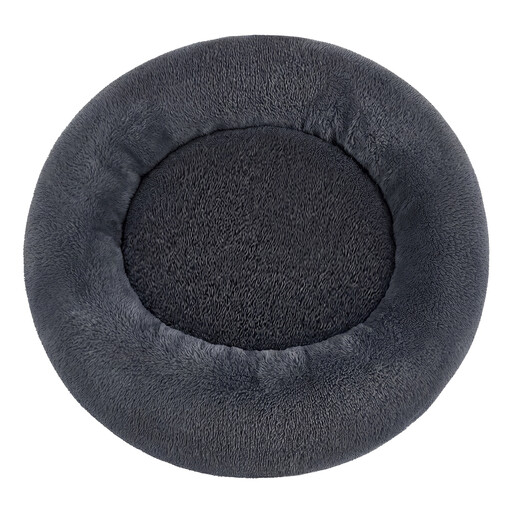
Why it suits this type of buyer: According to the product information, the 120 cm size is designed for large dogs and households with several pets. It’s a practical choice when a compact bed doesn’t offer enough room to move around.
The product details mention an anti-slip base and a removable centre cushion. The warnings also recommend checking for loose seams and damage.
120 x 120 x 20 cm, PP filling, plush fabric and a central cushion that can be removed for cleaning, according to the description.
We’ve put together a full, up-to-date list of products that meet these strict selection criteria and current European safety regulations.
A calming dog bed can provide a familiar place to relax, thanks to its round rim and soft materials. According to product information from several brands, this shape may help create a sense of security. This effect isn’t guaranteed and the bed is no substitute for behavioural therapy or veterinary advice.
Measure your dog from nose to the base of their tail while they’re lying stretched out. Allow extra room all around and take the raised rim into account. A bed measuring 70 to 80 cm may suit small dogs and cats; medium-sized dogs often need 80 to 100 cm. Always check the product’s specific size chart.
It depends on the style. Many beds have a removable, washable cover or centre cushion, while the outer rim or inner core may only be suitable for spot cleaning. Read the care label and use a gentle cycle without bleach.
It can be, depending on the entrance height, firmness and the dog’s mobility. A soft rim may be comfortable to lie against, but a high rim can be difficult for a pet with limited movement to get over. If you’re unsure, choose a style with an easier entrance and ask a vet for advice if problems persist.
