
Vandaag of morgen in huis

Kwaliteit gegarandeerd

Welkomstaanbiedingen ontgrendelen: GRATIS bezorging | Tot 80% korting | Gratis 30 dagen JoyPlus-proefperiode
Download de app
A movie night at home only truly feels like a cinema experience with sound coming from all directions. A helicopter seemingly flying overhead, raindrops tapping on the roof above you—that is the promise of Dolby Atmos. But the soundbar market is saturated with marketing terms that create more confusion than clarity. Before you invest in a new home cinema set, it's crucial to know what to look for to avoid wasting money on a disappointing audio experience.
As a Joybuy Product Recommendation Officer, I'll help you cut through the noise. Here are the most common pitfalls and the specifications that truly matter.
Many soundbars promise an immersive experience, but not all of them deliver. Watch out for these three common missteps:
To avoid these pitfalls, focus on these technical specifications. They are the foundation of a smart purchase.
The numbers in a soundbar's specification (like 3.1.2 or 5.1) represent the number of channels. A traditional 5.1 soundbar has five speakers (left, right, center, and two rears) and one subwoofer. For true Dolby Atmos, you need an additional number that indicates the height channels. For example, a 3.1.2 system has three forward-facing speakers, one subwoofer, and two upward-firing speakers. These speakers bounce sound off the ceiling to your listening position, creating an authentic 3D sound effect. So, always look for that third number.
For the full, uncompressed Dolby Atmos experience, an HDMI eARC (Enhanced Audio Return Channel) port on both your TV and your soundbar is essential. Unlike the older ARC standard or an optical cable, eARC has enough bandwidth to pass through the most advanced audio formats, such as Dolby TrueHD (in which Atmos is often packaged) and soundbar DTS:X, without any loss of quality. Without eARC, you'll get a compressed, inferior version of the audio.
A subwoofer is responsible for the low-frequency effects (LFE)—the deep bass tones you can feel. A soundbar with a wireless subwoofer offers the best of both worlds: the powerful bass needed for cinematic impact and the flexibility to place it where it sounds best (and where there's a power outlet), without an unsightly cable running through your living room.
Not every soundbar is right for every user. Below is a selection tailored to different needs, based on objective specifications.
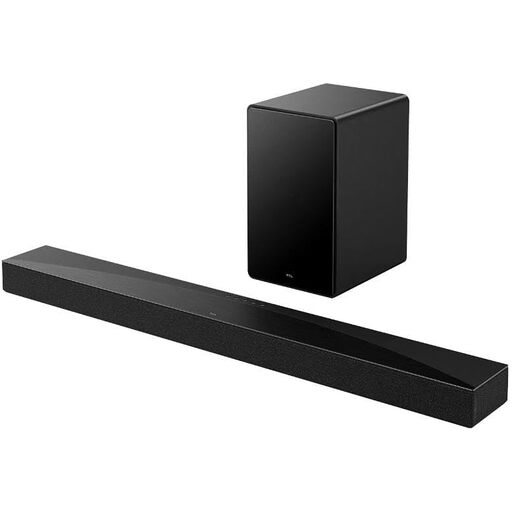
Why This Fits Their Persona: This user wants a complete and powerful cinema experience without the hassle. The TCL Q65H offers a full-fledged 5.1 soundbar setup with support for both Dolby Atmos and DTS:X, complete with a powerful wireless subwoofer. It's an all-in-one package for movie lovers and gamers.
This system delivers true 3D audio via its 5.1-channel configuration and is equipped with the crucial HDMI eARC port, allowing you to avoid the pitfalls of virtual sound and compressed audio.
Offers a very complete set of specifications (5.1 channels, Atmos, DTS:X, wireless sub) for a competitive price. According to the manufacturer, TCL's Ray Danz technology creates a wider soundstage.
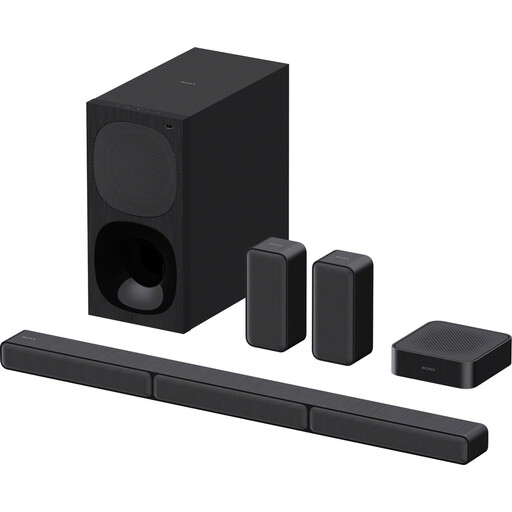
Why This Fits Their Persona: This user wants a reliable and immersive surround experience without the complexity or added cost of Dolby Atmos. The focus is on a traditional 5.1 soundbar setup with the convenience of wireless rear speakers for an uncluttered living room.
This system focuses on what it does well: powerful 5.1 surround sound. It avoids the 'virtual' Atmos trap by providing a solid, physical speaker setup. The wireless amplifier for the rear speakers prevents a tangle of cables.
Delivers a powerful 600W total output and a true 5.1-channel surround experience with Dolby Digital. The wireless rear speakers offer great placement flexibility.

Why This Fits Their Persona: Ideal for those who watch movies late at night or live in an apartment. This neckband speaker creates a personal sound bubble with Dolby Atmos, allowing you to become fully immersed in the action without disturbing housemates or neighbors.
This is not a traditional soundbar and completely sidesteps the 'virtual' sound pitfall. According to Sony, the 360 Spatial Sound Personaliser technology creates virtual speakers around your head for an accurate and personal Atmos experience.
Offers a unique, immersive, and personal Dolby Atmos experience. The 12-hour battery life is more than enough for multiple movies or a long gaming session.
We have compiled a complete, up-to-date list of products that fully meet these strict selection criteria and local regulations.
Yes, for the best quality, you need a TV with an HDMI eARC port. While some soundbars can receive Atmos via a standard HDMI ARC port, this is often a compressed version (Dolby Digital+). Only eARC has the bandwidth for the uncompressed, higher-quality Dolby TrueHD version of Atmos. So, be sure to check your TV's specifications.
A traditional 5.1 soundbar creates surround sound on a horizontal plane: sound from the front, sides, and rear. Dolby Atmos adds a vertical dimension to this with height channels. This creates a 3D bubble of sound where audio can also come from above, making the experience far more immersive.
"Wireless" means that no audio cable is needed between the soundbar and the subwoofer, which provides a lot of flexibility. However, the subwoofer still needs a power cable and must be placed near a power outlet. Its placement also affects the bass response. Placing a subwoofer in a corner can amplify the bass, while placing it further from the walls can produce a more balanced sound. Experimenting with the location is recommended.
