
Vandaag of morgen in huis

Kwaliteit gegarandeerd

Welkomstaanbiedingen ontgrendelen: GRATIS bezorging | Tot 80% korting | Gratis 30 dagen JoyPlus-proefperiode
Download de app
A bag of dog treats may seem like a quick purchase, but the difference between a suitable reward and a poor choice often comes down to the details. Is the treat suitable for your dog’s weight? Can you portion it accurately? And does a claim about dental care really mean you no longer need to brush your dog’s teeth?
These checks help you separate marketing language from useful product information. That way, you can make an informed choice between dog treats, dog chews or everyday dental care. The same basic rules also apply to cat treats and cat snacks.
Words such as “chicken”, “beef” or “poultry” on the front of the pack do not automatically mean that the product consists mainly of that ingredient. So, check the composition and the legally required product name. In flavoured products, the meat percentage may be limited.
For example, a snack described in the product information as tasting of beef and chicken may contain only a few per cent of these ingredients. That does not necessarily make the product unsuitable, but it does help you set realistic expectations.
Some Dentastix for dogs and other dog chews are designed to support everyday dental care through their shape and texture. According to Pedigree’s own research, daily use of Dentastix can reduce the formation of tartar by up to 80%. This is a brand claim, not a guarantee for every dog, and it does not replace check-ups or care recommended by your vet.
Pay attention to the size too. A treat for small dogs is not automatically suitable for a large dog, and vice versa.
A multipack can be convenient, but check the recommended quantity, shelf life after opening and calories per 100 grams. Many dog treats are complementary food. In that case, you should adjust the main meal so that your pet’s total daily intake remains within its needs.
First, check whether the treat is intended for dogs or cats. Cat treats and dental care products for cats have a different composition and size from dog products.
Then consider:
For example, the product information for Pedigree Dog Dental Chews Small Dogs states that they are suitable for dogs weighing 5 to 10 kg from 4 months of age. The medium variant is intended for medium-sized dogs, while the large variant has been developed for larger dogs. Always use the packaging as your guide, as weight limits may vary from one product to another.
Do not look only at the claims on the front of the pack. Compare the ingredients list with the analytical constituents:
A lower-fat snack is not automatically suitable for every dog. The overall composition, portion size and daily activity remain important. For example, g'woon Marrow-Filled Dog Biscuits state that the product contains cereals with gluten. This is useful information for owners who need to avoid certain ingredients carefully.
For training, small, soft dog training treats are practical. You can give them quickly and divide the portion more easily. Larger chews may be more suitable for calm chewing, but stay nearby so you can observe your pet.
Also check the storage instructions. Several treats need to be used within 14 days of opening. Some cat treats, such as Felix Crispies, should be sealed properly and used within four weeks according to the product information. Keeping an unopened pack in a cool, dry place helps preserve its quality.
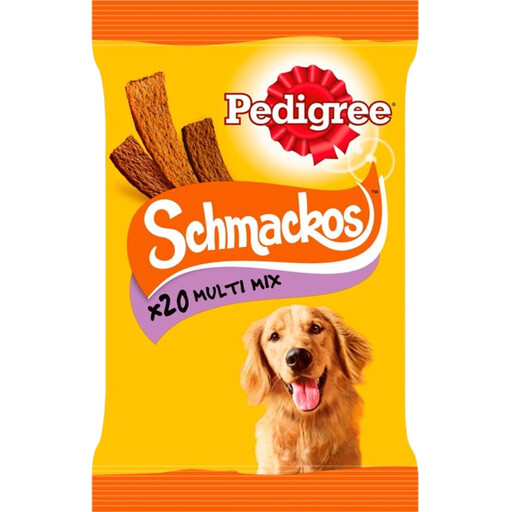
Why it suits this profile: The soft strips can be given as an everyday reward or broken into smaller pieces during a walk. Feeding guidance is provided for small, medium-sized and large dogs.
The stated quantities for each dog size make portion control easier than with treats that have no clear guidance.
Soft texture, suitable as a reward and, according to the product information, keeps for 14 days after opening.
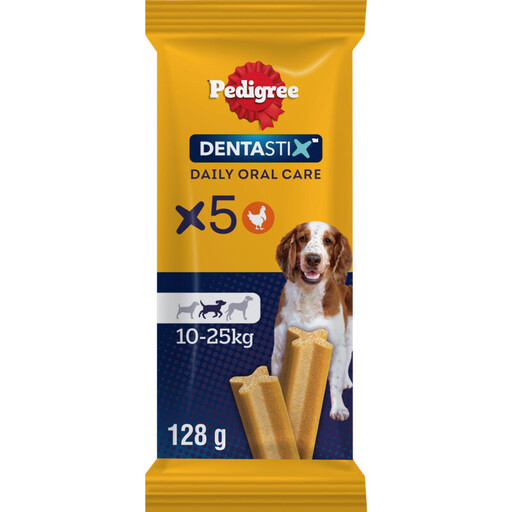
Why it suits this profile: This is a targeted choice for everyday dental care for medium-sized dogs. The product information recommends one chew stick per day and states that there are no added sugars.
The variant is matched to medium-sized dogs, so you do not have to choose the wrong size based on the brand name alone.
X-shaped chewing structure, 1.3% fat according to the product details and daily feeding guidance.

Why it suits this profile: The pack of 56 is ideal for owners who want to give a medium-sized dog one regular chew every day.
The number of pieces is clearly stated, making it easier to plan your supply and daily servings than with individual treats.
56 pieces, intended for medium-sized dogs and, according to the brand’s product information, with no added sugar.

Why it suits this profile: This cat treat is intended for adult cats and has a clear feeding guideline of no more than 17 treats per day for a cat weighing approximately 2.5 kg.
The packaging states the animal type, age and a specific quantity. According to Purina’s own research, the porous texture is designed for everyday dental care; treat this as a product claim, not a guarantee.
Salmon flavour, 35% protein according to the product details, plus calcium and taurine listed as nutrients.
We have put together a complete, up-to-date list of products that fully meet these strict selection criteria and the applicable European safety regulations.
Use treats as a supplement, not as a replacement for complete food. A practical guideline found on many packs is that treats should make up no more than approximately 10% of your pet’s daily calorie intake. The exact recommendation depends on weight, age, activity level and health.
Keep the following points in mind when giving treats:
Choose a size that matches your dog’s body weight and chewing ability. For small dogs, smaller, soft rewards are often easier to portion. According to the product information, Pedigree Dog Dental Chews Small Dogs are intended for dogs weighing 5 to 10 kg from 4 months of age. Always check the current packaging.
This varies from one product to another. Some dental chews are designed to be given daily, while other chew sticks should only be given a few times a week. Follow the feeding instructions and adjust the main meal accordingly. Daily dental care with a treat also does not mean that other oral care is unnecessary.
Yes, provided you use small portions and monitor the total calorie intake. Soft treats such as meat strips or small cheese-flavoured bites are practical during walks and training sessions. You can break larger treats into smaller pieces if this is safe and the product information does not prohibit it.
