
Vandaag of morgen in huis

Kwaliteit gegarandeerd

Welkomstaanbiedingen ontgrendelen: GRATIS bezorging | Tot 80% korting | Gratis 30 dagen JoyPlus-proefperiode
Download de app
A bag or tin of dog food may seem like a quick choice. However, attractive packaging and terms such as “natural”, “grain-free” or “high protein” can be misleading. The right choice mainly depends on your dog’s age, size, activity level and tolerance.
“Dog food with lamb” or “dog food with beef” sounds clear, but always check the full composition. Look at where the ingredient appears in the list and whether it refers to fresh meat, dried meat or general descriptions such as “meat and animal derivatives”. A flavour name on the front is not a complete nutritional analysis.
Grain-free dog food contains no grains, but often includes other sources of carbohydrates, such as peas, potato or sweet potato. Grain-free therefore does not automatically mean that the food will be easier for every dog to digest. If your dog has recurring symptoms or a diagnosed allergy, consult your vet before changing its diet.
A puppy has different nutritional needs from an adult or senior dog. So check that the packaging states that it is complete nutrition, and specify which life stage and breed size it is intended for. A product for adult dogs is not automatically suitable as puppy food.
First choose between puppy food, dog food for adult dogs and senior nutrition. Then look at the size category:
The recommended quantity on the packaging is a starting point. Weight, exercise, age and body condition determine whether you need to adjust the portion.
Wet dog food generally contains plenty of moisture and has a soft texture. This can be practical for dogs that prefer soft food. After opening, keep leftovers refrigerated and usually use them within 48 hours or the stated time period.
Dry dog food is easy to weigh, simple to store and suitable for everyday use. Nutritional values are usually clearly stated per kilogram. Always provide plenty of fresh drinking water. You can combine wet and dry food, provided you keep an eye on the total amount of calories and nutrients.
As well as the ingredients, compare the analytical constituents:
A higher protein percentage is not necessary for every dog. Look at the overall nutritional profile and life stage. For dogs with sensitive digestion, a recipe with a limited number of clearly named protein sources may be easier to assess. Product claims about supporting the skin, coat, joints or digestion come from the product description; do not regard them as medical effects.
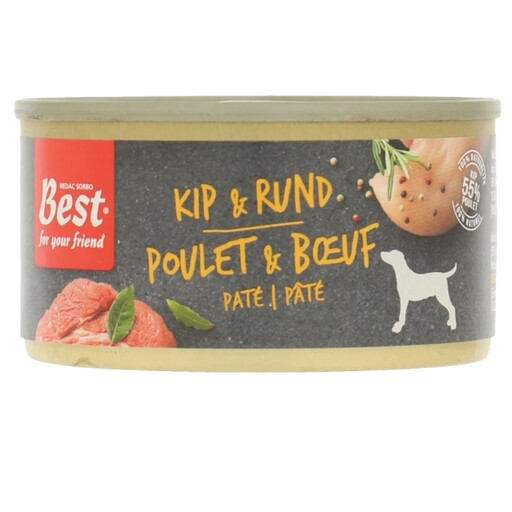
Why it suits this profile: This soft wet food is intended for adult dogs of all sizes and can be served easily at room temperature.
The product information explicitly states that it is for adult dogs, provides complete nutrition and contains chicken and beef. Check the packaging for the exact portion.
Soft pâté texture, chicken and beef as named ingredients, and storage instructions for opened portions.
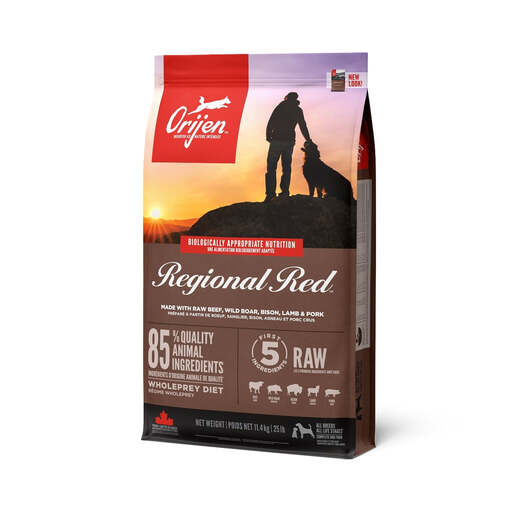
Why it suits this profile: The large bag is aimed at adult dogs and households looking for an extensive dry food recipe with multiple animal-based ingredients.
The composition lists beef, wild boar, bison, lamb, pork, organs and fish separately. This allows you to check the protein sources rather than relying solely on the flavour name.
11.4 kg contents, 38% crude protein according to the product information, and a recommended gradual transition over 7 to 10 days.
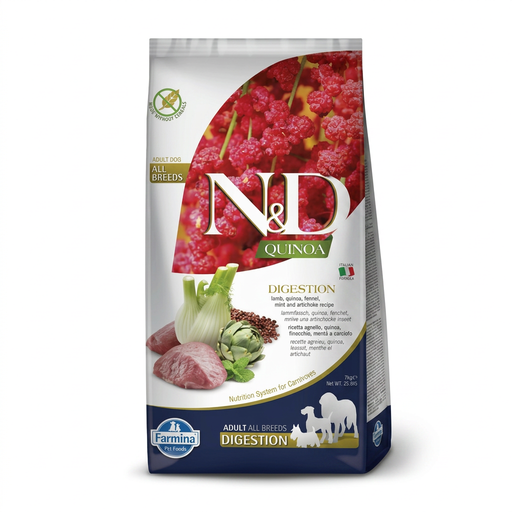
Why it suits this profile: According to the product information, this dry food is intended for adult medium-sized and large dogs and contains lamb, quinoa and several sources of fibre.
The ingredients list names the protein source and added fibre sources, including inulin, fructo-oligosaccharides and psyllium. This gives you more control than a general claim about a sensitive stomach.
25% crude protein, 12% fat and a complete analysis including calcium, phosphorus and omega-3 fatty acids.
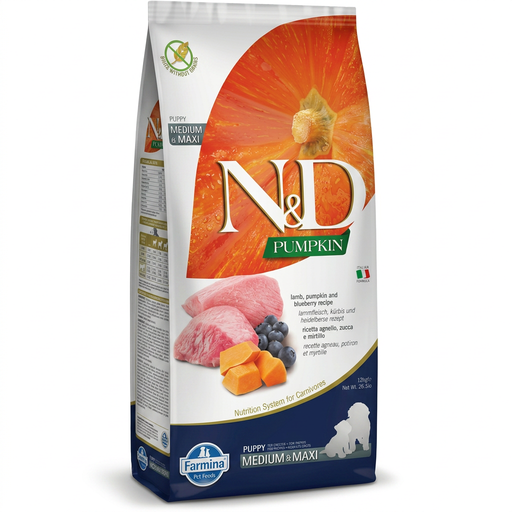
Why it suits this profile: The product information describes this as complete nutrition for puppies of medium-sized and large breeds, with a corresponding feeding table.
The life stage and breed size are clearly stated. This helps prevent you from accidentally feeding adult dog food during your puppy’s growth.
12 kg pack, lamb as the named protein source and a gradual transition over at least 7 days.
We have put together a complete, up-to-date list of products that fully meet these strict selection criteria and the applicable European safety regulations.
Do not switch to new dog food in a single day. Gradually mix the new food with the familiar food, for example over 7 to 10 days. Keep an eye on your dog’s stools, appetite, weight and behaviour. If clear problems occur, stop and contact a vet.
Store dry food sealed, in a cool, dry place. Check the best-before date and reseal the bag after every use. Keep opened wet food refrigerated and follow the storage period stated on the packaging. Always make sure your dog has access to fresh drinking water.
Look for a clear ingredients list, a suitable protein source and stated dietary fibre. Dog food for a sensitive stomach is not a universal medical category. If diarrhoea, vomiting, itching or weight loss persists, it is important to seek advice from a vet.
Neither is automatically suitable for every dog. Wet food contains plenty of moisture and has a soft texture; dry food is practical to portion and store. The choice depends on your dog’s preference, the complete composition and your daily routine.
Unopened dog food remains suitable for use until the date on the packaging, provided it is stored correctly. Opened wet food should be kept refrigerated and usually used within two days. Once opened, dry food remains most reliable when sealed properly and used according to the packaging instructions.
