
Vandaag of morgen in huis

Kwaliteit gegarandeerd

Welkomstaanbiedingen ontgrendelen: GRATIS bezorging | Tot 80% korting | Gratis 30 dagen JoyPlus-proefperiode
Download de app
There is a huge choice of dog food and dog treats. Packaging features terms such as “natural”, “grain-free”, “high meat content” and “for sensitive stomachs”. These descriptions can be useful, but they do not always tell you whether a product is right for your dog. Start by checking the legally defined product name, ingredients, nutritional values and feeding instructions.
Not every product containing meat or fish is complete dog food. A complementary product is intended as a reward, topping or extra treat. For example, INABA Churu Dog states that it is complementary pet food and is not a replacement for a complete meal. Give these treats alongside a complete food and take the total daily quantity into account.
Grain-free dog food contains no grains, but that does not automatically mean it is necessary or suitable for every dog. Grain-free recipes may contain ingredients such as pulses, potato or sweet potato instead. Always check the full ingredients list and look out for known sensitivities.
A picture of fresh meat or a striking flavour says little about the overall composition. Check the following, among other things:
For products making claims about digestion, coat, joints or other properties, do not present these as proven effects. According to the brand’s own product information, certain ingredients may have been added for these purposes, but suitability varies from dog to dog. If your dog has persistent symptoms, allergies or a prescribed diet, it is sensible to consult a vet.
For everyday use, choose a product clearly labelled as complete food for dogs and suitable for your dog’s life stage. For adult dogs, for example, there are recipes for small, medium-sized and large breeds. A treat, chew or liquid snack is generally complementary.
According to the product information, Farmina N&D Quinoa Digestion Adult Mini is complete food for adult dogs of small breeds. The stated analysis includes at least 25% crude protein, at least 12% fat and a maximum of 9% moisture. These are verifiable figures that allow you to compare the product with other options.
Dry dog food is practical to store and easy to weigh out. Its moisture content is usually much lower than that of wet dog food, so you cannot compare the nutritional values on a like-for-like basis. Because of its higher moisture content, wet food often contains fewer nutrients per gram, while dry food is more concentrated.
According to the product description, RENO Dog Chunks Sauce Beef is complete and balanced wet food for adult dogs. The 1.24 kg pack may be convenient for households with several dogs, but check the recommended refrigerator storage time after opening. CESAR Classic Wet Dog Food Chicken contains 150 grams, and the recommendation is to keep leftovers refrigerated for no more than two days.
If you are looking for dog food for a sensitive stomach, it is worth taking the time to read the ingredients list carefully. Look for:
According to the product information, Farmina N&D Quinoa Digestion Adult Medi/Maxi contains lamb, quinoa, fennel, mint, artichoke and various prebiotics. The product is intended for adult medium-sized and large dogs. The claim about supporting digestion is a product claim made by the manufacturer, so focus mainly on the ingredients and discuss persistent gastrointestinal problems with a vet.
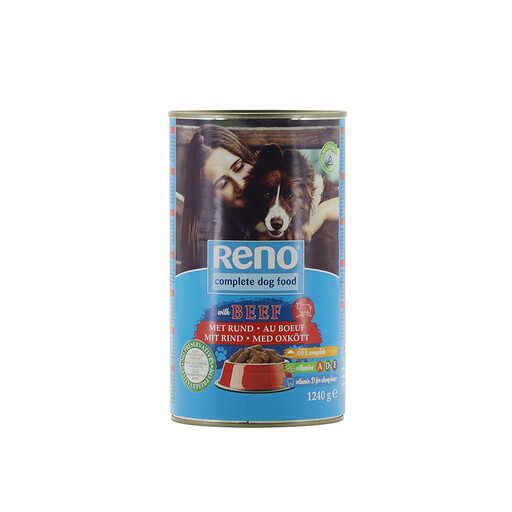
Why it suits this profile: A large pack of wet food for adult dogs can be practical if you have several dogs or feed them regularly.
The product information clearly states that this is complete food for adult dogs, rather than just a complementary treat.
1.24 kg content; beef in gravy; storage advice for opened portions.
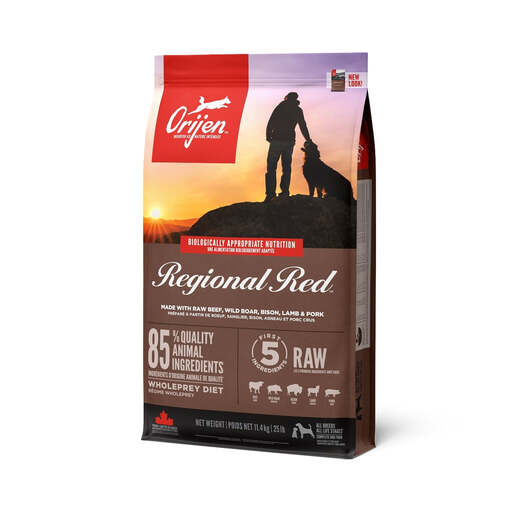
Why it suits this profile: The large bag is aimed at households that want to use dry food as a complete meal and need a generous supply.
The product page states that this is complete food and provides an analytical composition of 38% crude protein, 18% fat and 12% moisture.
11.4 kg pack; several animal-based ingredients; stated omega-3 and omega-6 levels.
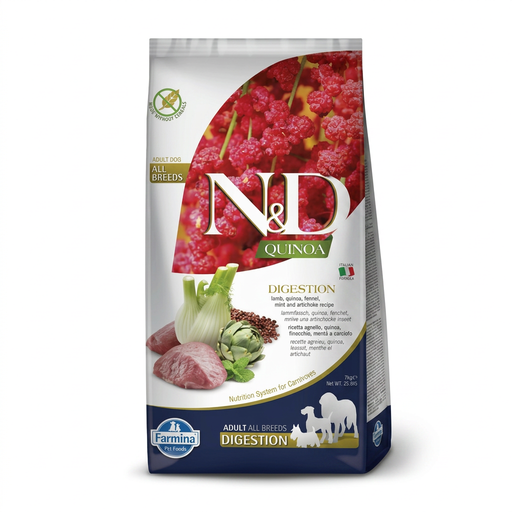
Why it suits this profile: Designed for adult medium-sized and large dogs whose owners pay close attention to ingredients, protein sources and the transition to a new food.
The product description specifically lists the protein source, prebiotics and grain-free recipe, so you do not have to rely solely on the front of the pack.
7 kg pack; lamb as the stated animal protein source; analytical values provided.
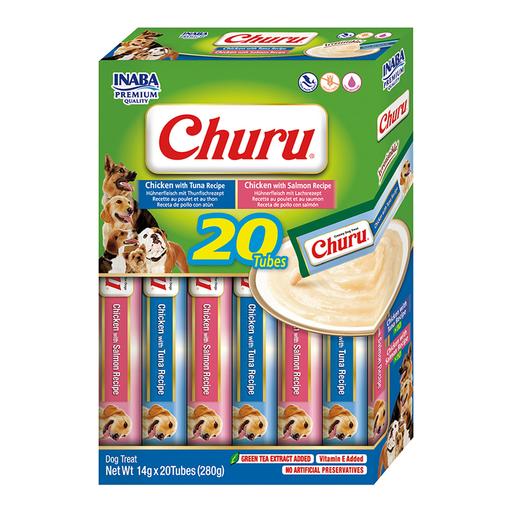
Why it suits this profile: The tubes are intended as treats, rewards or toppings, making them easy to portion.
The product information explicitly states that this is complementary pet food and does not replace a complete meal.
20 tubes of 12 grams; chicken and seafood varieties; moisture content of at least 90% according to the product details.
Dog biscuits, dog treats and chews form part of your dog’s total diet. Follow the guideline on the packaging and preferably give rewards in small portions. According to the product information, a product such as Vitakraft Beef Original Lamb Stick can be broken into pieces. This is practical during training, but check the ingredients if your dog reacts sensitively to beef, pork, lamb or any other ingredients.
The same applies to liquid treats. INABA Churu Dog can be given directly from the tube or mixed into your dog’s usual food. According to the product information, the tube should be refrigerated after opening and used within 24 hours. Always make sure your dog has access to fresh drinking water as well.
Do you also have a cat? Keep cat food and cat treats separate from dog products. Cats and dogs have different nutritional needs. According to the product information, INABA Churu Multipack Chicken & Beef is intended for cats, for example, and not for dogs.
We have put together a complete, up-to-date list of products that fully meet these strict selection criteria and the applicable European safety regulations.
Gradually mix the new food into the old one, usually over a period of around seven to ten days. Start with a small amount of the new food and increase it step by step. Monitor your dog’s stools, appetite and body condition. If clear or persistent problems occur, it is advisable to seek advice from a vet.
This depends on the dog’s size, activity level and usual food. As a practical guideline, treats are often advised to make up no more than around 10% of the daily calorie intake. Use small pieces during training and reduce the main meal if necessary.
Dry food is often easy to store and weigh out in larger bags. Wet food contains more moisture and may appeal to dogs that prefer a softer texture, but opened packs must be kept refrigerated. Compare the cost per meal rather than just the price per pack.
