
Vandaag of morgen in huis

Kwaliteit gegarandeerd

Welkomstaanbiedingen ontgrendelen: GRATIS bezorging | Tot 80% korting | Gratis 30 dagen JoyPlus-proefperiode
Download de app
Dog treats come in many varieties: soft dog treats for training, chicken dog treats for everyday rewards, jerky dog treats for dogs that enjoy chewing, and chew treats for dogs that like to stay occupied for longer. This wide selection does not always make choosing easy. An appealing package reveals little about a treat’s size, ingredients or suitability for your dog.
Pay particular attention to these three common pitfalls:
Look beyond terms such as “high protein”, “grain-free” or “low fat”. Check that the percentages are actually stated on the label. For example, MeatyWay Chicken Jerky Tender Dog Treats list a minimum of 30% crude protein, a minimum of 15% crude fat, a maximum of 1% crude fibre and a maximum of 18% moisture.
A short ingredients list can be easy to understand, but it does not reveal everything about the product’s overall nutritional value. Treats are complementary feed and should not replace a complete meal. Also take your dog’s daily calorie intake into account. A practical guideline shown on product packaging is that treats should make up no more than approximately 10% of the daily energy intake; adjust the regular meal if necessary.
For training, soft, breakable dog treats are usually convenient. You can give your dog a small piece quickly without interrupting the exercise for too long. According to the product description, MeatyWay jerky can easily be broken into smaller pieces.
For chewing enjoyment, texture is especially important. A firm stick or a rawhide-based treat will generally last longer than a soft biscuit. Match the size to your dog’s weight and chewing strength. A small dog should not be given a large, hard stick without supervision. Conversely, a large dog may swallow a small treat too quickly.
Check the following before purchasing:
Always supervise your dog while eating, particularly when giving chew treats for dogs. Break larger pieces of jerky into appropriately sized portions for small dogs. If you are unsure about an ingredient, a food sensitivity or an existing dental issue, consult a vet.
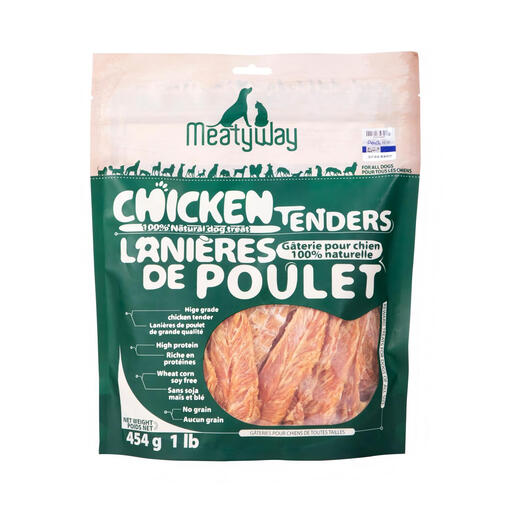
Why it suits this profile: The 454-gram bag is practical for frequent rewards. According to the product description, the soft chicken jerky can be broken into smaller pieces, making it suitable for everyday training.
The analysis specifies concrete nutritional values and lists chicken as a primary ingredient, rather than relying solely on a general flavour claim.
454 grams; minimum 30% crude protein; soft texture; grain-free formula according to the product description.

Why it suits this profile: These small sticks are designed for dogs that need both a reward and a controlled chewing experience. The pack contains 10 sticks.
The size is clearly identified as small. This makes it easier to match the product to your dog’s size than with treats that do not specify a size.
10 sticks; rawhide wrapped in dried chicken; according to the product description, free from added grains, gluten and artificial colourings.
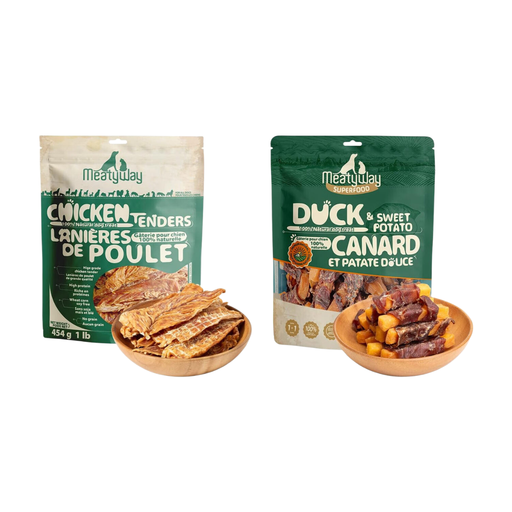
Why it suits this profile: The twin pack contains a total of 908 grams. It is well suited to households that train frequently or reward multiple dogs, provided portions are adjusted to each dog’s size and activity level.
The quantity and composition are clearly stated. However, check the exact fat and protein percentages on the current label, as the product information does not specify them.
908 grams in total; chicken, duck and sweet potato; soft jerky that can be divided into smaller pieces.

Why it suits this profile: The pack is intended for medium-sized dogs weighing 10 to 25 kg and contains 56 sticks for a consistent daily routine.
The size and daily portion are explicitly stated. The claim of up to 80% less tartar comes from Pedigree’s own research and is not a universal guarantee.
56 sticks; suitable for dogs weighing 10–25 kg; no added sugar according to the product information; designed for daily dental care.
We have compiled a complete, up-to-date list of products that fully meet these strict selection criteria and the applicable European safety regulations.
Soft dog treats that are easy to break into small pieces are practical for training. Ideally, choose a size you can give quickly. Check the calorie content and reduce the amount of regular food if necessary.
No. “Natural” is not a complete nutritional assessment. Review the ingredients, analytical constituents, serving size and any additives. Grain-free dog treats are only relevant if your dog needs to avoid grains or you have deliberately chosen that type of formula.
This depends on the type of treat, your dog’s weight, age and activity level. Follow the feeding guidelines on the packaging, supervise your dog while chewing and provide fresh water. A chew treat remains complementary feed and should not replace your dog’s main daily meal.
