
Vandaag of morgen in huis

Kwaliteit gegarandeerd

Welkomstaanbiedingen ontgrendelen: GRATIS bezorging | Tot 80% korting | Gratis 30 dagen JoyPlus-proefperiode
Download de app
Buying a bag of dog treats sounds simple, until you have to choose between soft dog treats, dog biscuits, jerky, dog chews and liquid treats. The packaging often promises a lot: a natural recipe, support for dental health or suitability for sensitive dogs. However, a striking claim does not always tell you enough about how practical the treat is for everyday use.
The most important question is therefore not which treat is presented most attractively, but which treat suits your dog’s size, age, chewing habits and the occasion when you plan to use it.
Grain-free dog treats may suit a dog for which you want to avoid grains, but grain-free does not automatically mean low in calories or suitable for every sensitive stomach. Always check the full ingredients list. Also look at the proportion of animal ingredients, added sugars, fats and the analytical constituents.
With treats containing chicken, duck or sweet potato, the difference between a single-ingredient recipe and a long ingredients list is practically significant. A product containing only chicken may be easier to assess than a treat with several animal and plant-based ingredients.
According to information provided by some brands, chewing may help reduce plaque or tartar. This is a product claim, not a guarantee for every dog. How well it works depends, among other things, on the texture, chewing time and the way your dog eats.
Always give a chew treat under supervision. Remove small broken-off pieces and do not choose a size that your dog can swallow whole. A treat is not a substitute for daily dental care or a check-up by a vet.
Soft dog treats are useful for training and older dogs, but pay attention to the size and portion. A large strip that you have to keep breaking up is less practical than small pieces that can be given straight away. With liquid treats, shelf life after opening is also important. Some products need to be refrigerated and used within 24 hours.
Choose the texture based on the situation:
Do not take the claim “easy to digest” as medical advice. If your dog has a sensitive stomach, food allergy or persistent symptoms, it is wiser to consult a vet.
At a minimum, compare:
Dog treats are complementary food, not a complete meal. Follow the guidance on the packaging and deduct the amount of treats from your dog’s daily food allowance. A commonly used guideline for various products is that treats should make up no more than around 10% of the daily calorie intake, but the exact requirement varies from dog to dog.
For small dogs, breakable treats and small training treats are practical. For large dogs, a bigger chew may be suitable, provided the packaging recommends it. With senior dogs and fussy eaters in particular, check whether your dog finds the texture pleasant.
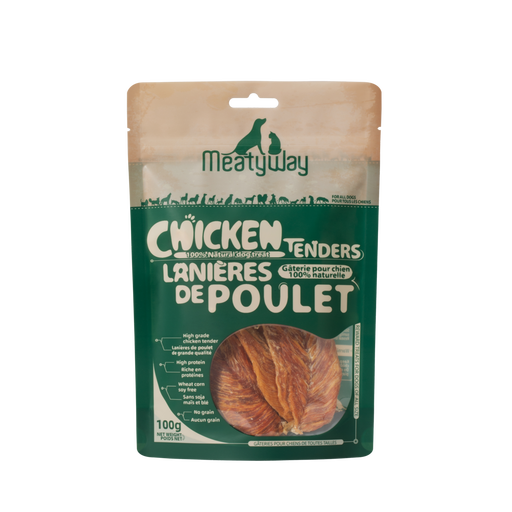
Why it suits this profile: The soft chicken strip is designed for training, rewards and everyday use. According to the product description, you can break the treat into smaller pieces.
The packaging lists a single ingredient: chicken. Always check the label on the pack you receive.
100 grams, at least 70% crude protein, no more than 18% moisture and a soft jerky texture.

Why it suits this profile: The combination of duck and sweet potato is appealing to owners looking for a short ingredients list and a grain-free option.
The product information names two main ingredients and no artificial additives. Check for allergies separately.
Grain-free recipe according to the product description, with duck and sweet potato; suitable for dogs at all life stages.
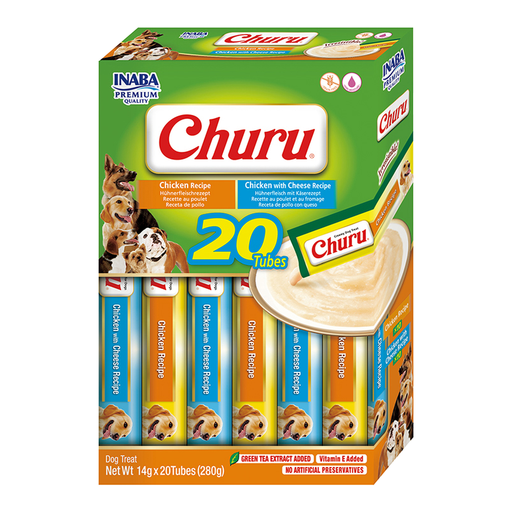
Why it suits this profile: The tubes can be used as a training reward, topper or treat for fussy eaters. The soft format requires no chewing.
The portions are individually packed in tubes. Once opened, the treat should be refrigerated and used within 24 hours according to the product information.
20 tubes, approximately 88% moisture and two chicken varieties; ready to give or mix into your dog’s usual food.
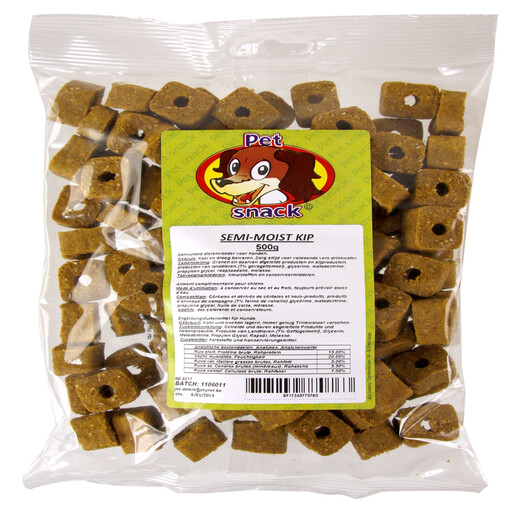
Why it suits this profile: The semi-moist, soft texture is practical for dogs that find hard treats less comfortable, including some senior dogs.
The composition lists cereals and 7% poultry meal. This means you can deliberately rule out this treat when you are specifically looking for a single-ingredient or grain-free option.
500 grams per pack, 20% moisture and a soft texture that can easily be given as a snack or reward.
We have put together a complete, up-to-date list of products that fully meet these strict selection criteria and the applicable European safety regulations.
This depends on your dog’s weight, age, activity level and the energy content of the treat. Follow the feeding guidance on the packaging and keep treats to a small part of your dog’s daily food intake. If necessary, reduce the amount of their main food.
Choose small, soft dog treats that can be eaten quickly. Breakable chicken or jerky treats are practical because you can control the size of the reward. INABA Churu dog treats can also be used, but pay attention to the portion and storage period after opening.
No. According to brands’ own research or product information, chewing may help reduce plaque or tartar, but this is not a universal guarantee. Give the treat under supervision and combine it with suitable daily dental care. If your dog has pain, bleeding gums or a strong odour, ask a vet to assess their teeth and gums.
