
Vandaag of morgen in huis

Kwaliteit gegarandeerd

Welkomstaanbiedingen ontgrendelen: GRATIS bezorging | Tot 80% korting | Gratis 30 dagen JoyPlus-proefperiode
Download de app
Dog treats are useful for training, as a snack between meals or for extra chewing enjoyment. However, attractive packaging does not guarantee that a treat is right for your dog. A small size may be impractical for a large dog, while a hard dog chew may be unsuitable for a young or sensitive eater.
The main pitfalls usually come down to three points:
Do not just look for words such as “natural” or “grain-free”. Check the full composition. For example, MeatyWay Chicken Jerky Tender lists chicken as an ingredient and also provides specific values: at least 30% crude protein, at least 15% crude fat, no more than 1% crude fibre and no more than 18% moisture.
The values differ for other products. INABA Churu Chicken, for example, lists 9% crude protein, 0.4% crude fat and 88% moisture. This makes the treat softer and moister than dried jerky, but also less suitable if you are specifically looking for a dry, high-protein reward.
If your dog has an allergy or is following an elimination diet, pay extra attention to compound ingredients. A treat containing chicken, duck, beef, lamb, soya or lupin is not automatically suitable for a dog that is only allowed one source of protein.
For short training sessions, soft dog treats that can be broken into small pieces are usually the most efficient choice. This means you can often give several rewards without using large pieces of food.
For relaxed chewing, dog chews or firm sticks make more sense. However, chewing time varies from dog to dog. Always supervise your dog, especially if they tend to swallow pieces quickly. With small breeds, you may need to break jerky into smaller pieces to reduce the risk of choking.
Check the shelf life and opening instructions. Examples from the range include:
Always provide fresh drinking water. A treat is supplementary food and does not replace a complete meal. Adjust the portion to your dog’s weight, age, activity level and body condition.

Why it suits this profile: The multipack contains four chicken varieties and 16 portions, totalling 64 grams. Its small size is useful for everyday rewards and short training sessions.
The portion size and net weight are clearly stated. This makes it easier to estimate how much you use in each training session.
Four chicken-based flavours, small pieces, 14% crude protein and 3% crude fat.
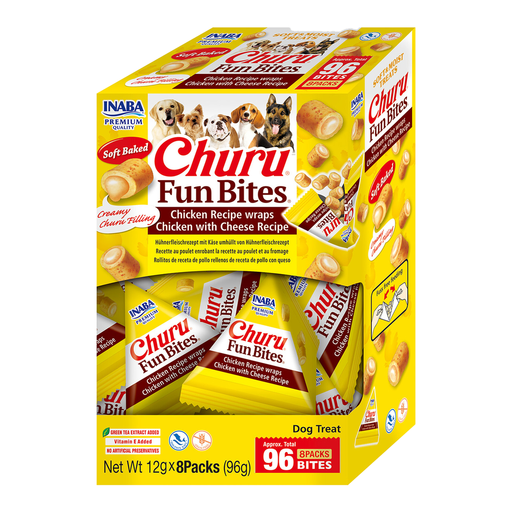
Why it suits this profile: These soft bites combine a chicken coating with a creamy filling. The individual packs are convenient when you want to keep treats fresh or use them while out and about.
The packaging states that there are 8 portions of 12 grams and a maximum moisture content of 72%. This gives you a clearer idea of what you are buying than a treat carrying only a vague claim.
At least 22% crude protein, at least 3% crude fat and a soft texture that is easy to give by hand.
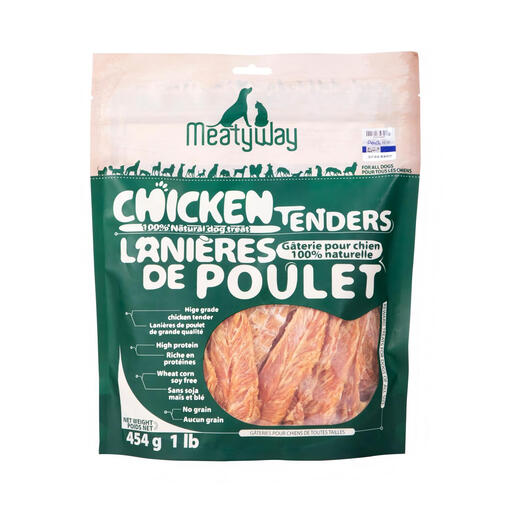
Why it suits this profile: The bag contains 454 grams of chicken jerky. According to the product description, the soft pieces can be broken up for training or given whole to dogs that chew calmly.
The ingredients list names chicken as the only ingredient. The analytical constituents are also clearly stated, rather than relying solely on claims such as “high protein” or “low fat”.
At least 30% crude protein, no more than 18% moisture and a resealable 454-gram bag, according to the product information.

Why it suits this profile: These sticks combine rawhide with dried chicken and are intended as supplementary food. The small variety contains 10 pieces.
The size is specifically marked as small. Even so, check that the stick is suitable for your dog’s chewing habits and supervise them while they eat.
10 sticks per pack, with no added grains according to the product description, and designed for longer-lasting chewing.
For everyday training, small chicken dog treats or soft jerky are easy to portion. A dog treat multipack is useful when you want to alternate between different flavours, but check that all the protein sources suit your dog’s diet.
Looking for grain-free dog treats? Even then, read the full ingredients list. “Grain-free” says nothing about the fat content, portion size or presence of other potential allergens. If you are looking for low-calorie dog treats, check the number of kilocalories or the nutritional analysis in particular. A low fat percentage does not automatically mean that a product is low in calories.
According to INABA’s own product information, Fun Bites contains 15.6 kcal per pack and 69% moisture. Use this information as a starting point, but adjust the daily amount to suit your dog. Claims about supporting dental health, digestion or other physical effects are brand claims and are not guaranteed results for every dog.
We have put together a complete, up-to-date list of products that fully meet these strict selection criteria and the applicable European safety regulations.
This depends on their weight, age, activity level and overall diet. Use the feeding guidance on the packaging and, if necessary, deduct the amount of treats from their main meal. As a practical guideline, several product descriptions state that treats should provide no more than 10% of the daily calorie intake.
Often, yes, because you can give them quickly and easily break them into smaller pieces. However, pay attention to the fat content, ingredients and total amount. For longer training sessions, small pieces are usually more convenient than large strips.
This varies from product to product. Some moist treats must be refrigerated after opening and used within 24 hours. Dry treats generally last longer when stored in a cool, dry place and the bag is sealed properly. Always follow the packaging instructions, including the stated best-before date.
