
Vandaag of morgen in huis

Kwaliteit gegarandeerd

Welkomstaanbiedingen ontgrendelen: GRATIS bezorging | Tot 80% korting | Gratis 30 dagen JoyPlus-proefperiode
Download de app
Buying a bag of dog treats seems simple until you have to choose between soft dog treats, dog training treats, chew sticks and dental dog treats. Packaging often highlights flavour, natural ingredients or dental care, but that information does not always tell you whether a treat is suitable for your dog.
The most common poor purchases arise from three pitfalls:
First, check whether the packaging states that the product is complementary pet food. This means you give the treat alongside your dog’s normal food. A practical guideline is that treats should make up no more than around 10% of your dog’s daily calorie intake. For a dog that gets little exercise, the amount should often be lower.
Also pay attention to the nutritional values. According to the product information, INABA Fun Bites Dog Chicken Wraps Chicken with Sweet Potato contains 82% moisture, 11.5% crude protein and 2.2% crude fat. The INABA Churu multipack states a moisture content of at least 90%, 9.5% crude protein and 0.6% crude fat. These figures are useful for comparison, but on their own they do not mean that a product is suitable for every dog.
For training, small, soft pieces are often more convenient than large chew sticks. You can give the reward quickly without interrupting the exercise for too long. Soft dog treats are also practical for dogs that struggle with hard textures, but always check the recommended age, size and feeding instructions.
Mini sizes are important for small dogs. According to the product description, the Pedigree Jumbone Mini Chicken & Lamb is intended for adult dogs weighing up to 15 kg. G’woon Dental Sticks Mini is specifically offered as a mini version. A treat that is too large can be awkward, while a chew that is too small may be swallowed too quickly.
Read the ingredients list rather than just the front of the packaging. Check, for example:
Treat dental-care claims as a product feature, not a guaranteed result. According to the product description, G’woon Dental Sticks are intended to support oral hygiene. Supervision is still required with dog chews, especially when your dog tries to bite off large pieces.
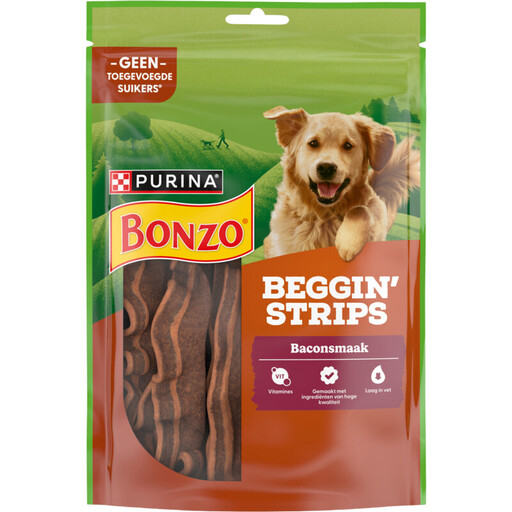
Why it suits this profile: The strips are intended as a complementary snack or reward and can easily be divided into smaller pieces.
The product information clearly states that this is a complementary snack and recommends adjusting the main meal if necessary.
Soft texture, chicken flavour and an energy value of 302 kcal per 100 g according to the product information.
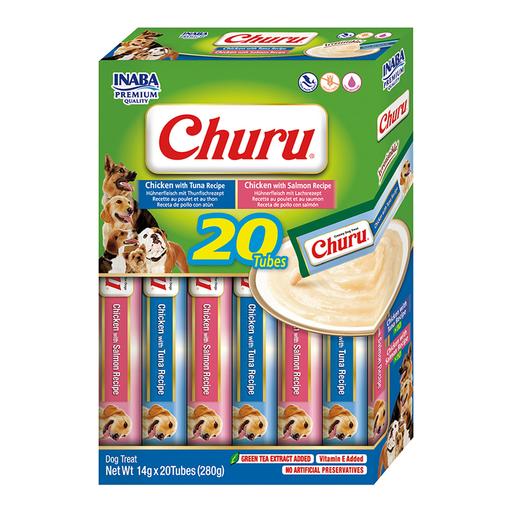
Why it suits this profile: Ideal for dog owners looking for variety and wanting to give a liquid reward during training or mixed into their dog’s usual food.
The multipack contains two flavour varieties and is described as suitable for use as a treat, topper or training reward; it is not a complete meal.
20 portions of 12 g, at least 90% moisture, and chicken with tuna or salmon varieties according to the product description.

Why it suits this profile: A sensible choice for owners who want to schedule a regular daily chewing session for a medium-sized dog.
This variant is designated for medium-sized dogs. This helps you avoid relying solely on a general dental-care claim.
Contains 1% sodium hexametaphosphate and has a recommended usage of one stick per day according to the product details.
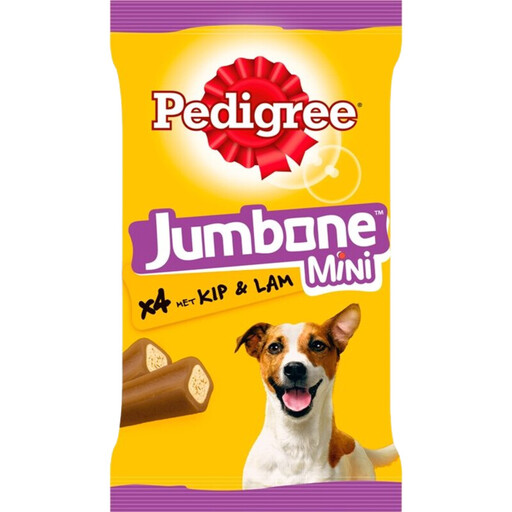
Why it suits this profile: According to the product description, the mini version is intended for small adult dogs weighing up to 15 kg.
The product information gives a clear weight limit and states that the snack is not suitable for very young dogs or dogs weighing under 4 kg.
Chicken and lamb flavour, a firm outer layer with a soft centre, and less than 5% fat per 100 g according to the product information.
We have put together a complete, up-to-date list of products that fully meet these strict selection criteria and the applicable European safety regulations.
That depends on your dog’s weight, age, activity level and overall diet. As a practical limit, treats should provide no more than around 10% of your dog’s daily calories. Also follow the portion instructions on the packaging. Give less if your dog gets less exercise or if their main meal is already energy-dense.
No. According to brands’ own product information, certain sticks or bones may support chewing behaviour and oral hygiene. The effect varies from dog to dog and is no guarantee against plaque or other oral problems. Choose a suitable size, supervise your dog while chewing and discuss persistent problems with a vet.
Always follow the label. The INABA treats mentioned above state that an opened product should be sealed, stored in the fridge and used within 24 hours. For some wet products, such as Rosewood Dog Pâté, the product information states that they can be refrigerated for a maximum of 48 hours. Do not use treats if the packaging is damaged or if their smell or texture has clearly changed.
