
Vandaag of morgen in huis

Kwaliteit gegarandeerd

Welkomstaanbiedingen ontgrendelen: GRATIS bezorging | Tot 80% korting | Gratis 30 dagen JoyPlus-proefperiode
Download de app
A bag of dog treats may seem simple to choose, but the range varies considerably. There are soft dog treats for training, dog treats for in between meals, dog chews and dental sticks for dogs. The right choice depends on your dog’s size, when you plan to use the treat and its ingredients.
Pay particular attention to three common pitfalls:
Small, soft pieces are practical for training. You can give them quickly and your dog does not need to chew for long. For a quiet moment, firmer dog chews are more suitable, provided the size is right for your dog and you supervise them.
When looking at treats for small dogs, choose compact pieces that are not too hard or too large. For treats for medium-sized dogs, it is important that the packaging states a suitable weight range. If this information is not shown on the packaging, check the product description or ask a vet for advice.
A soft treat such as INABA Fun Bites can be used as a reward, between-meal snack or topper. Its soft texture also makes this type of treat suitable when your dog finds hard kibble more difficult to eat. That does not automatically mean the treat is suitable for every dog: always check your dog’s age, weight and any sensitivities.
Do not just compare the flavour on the front of the pack. Also check:
According to the product information, INABA Churu Dog Multipack contains chicken broth, chicken, tuna and salmon. The analytical composition states 9.5% crude protein, 0.6% crude fat and at least 90% moisture. The pack contains 20 tubes of 12 grams. This is a complementary treat, not a replacement for a complete meal.
INABA Bites Dog Multipack contains ingredients including chicken, chicken broth, chicken liver and chicken breast. The product information states 14% crude protein, 3% crude fat and 82% moisture. The small portions can be convenient for training, but adjust the quantity if you give several rewards throughout the day.
Always check the recommended daily amount. For INABA Churu Dog Multipack, the guideline is 1 to 2 tubes per day, depending on the size of the dog. INABA Fun Bites Chicken Wraps with cheese state a guideline of 1 to 2 packs for small dogs, 2 to 3 for medium-sized dogs and 3 to 4 for large dogs. The packaging should always be treated as the definitive source.
Shelf life after opening varies by product:
Always provide fresh drinking water. According to the product information for various products, treats should account for no more than approximately 10% of the daily calorie intake. Supervise your dog when giving chews and check the treat for damage or sharp parts before giving it to them.

Why it suits this profile: Four chicken varieties and 16 small portions make this multipack practical when you want to try different flavours without immediately buying one large pack.
The variety means you are not relying solely on an appealing flavour name. The packaging states the portion size, ingredients and analytical values.
16 pieces, four chicken varieties, bite-sized shape and a stated moisture content of 82%.
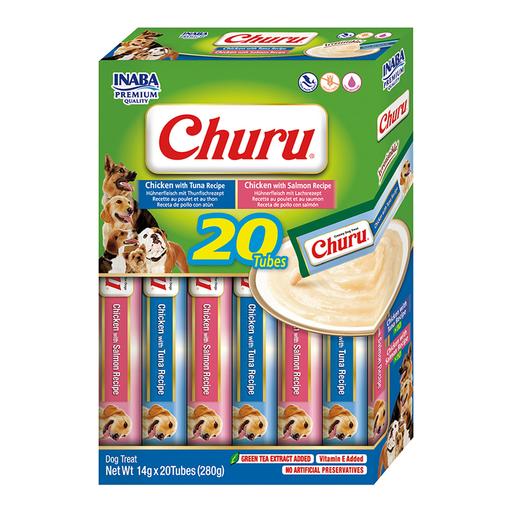
Why it suits this profile: The tube format is useful as a hand-fed reward, topper or training treat for dogs. Two chicken and seafood varieties provide more choice.
The product information clearly states that this is complementary food, including the storage period after opening and a daily guideline.
20 tubes of 12 grams, at least 90% moisture according to the product specification and several possible uses.

Why it suits this profile: According to the product information, these sticks are intended for medium-sized dogs and can be given as a daily reward.
The size is matched to medium-sized dogs. The claim about supporting dental care comes from the brand’s product description and does not replace brushing or a veterinary check-up.
Suitable for medium-sized dogs, 180 grams per pack and a stated guideline of one stick per day.
Use this quick checklist before buying dog treats:
If you are specifically looking for INABA dog treats, you can compare the Churu and Bites varieties in terms of texture, packaging and use. For chewing, dental sticks or sticks containing dried ingredients are more logical than a soft training reward. Pay attention to each dog’s individual reactions and stop giving the treat if in doubt.
We have put together a complete, up-to-date list of products that fully meet these strict selection criteria and the applicable European safety regulations.
This varies depending on weight, age, activity level and condition. As a practical guideline, treats should make up no more than approximately 10% of your dog’s daily calorie intake. Reduce the amount of main food if necessary and follow the advice on the packaging.
Often, yes. Small, soft pieces can be given quickly and take little time to eat during an exercise. However, check the portion size and choose a recipe that is suitable for any allergies or food sensitivities.
According to brands’ own product information, certain dental sticks may support dental care. This is not a guarantee for every dog and does not replace regular dental check-ups. Give the stick under supervision and choose a variety that is suitable for your dog’s size.
