
Vandaag of morgen in huis

Kwaliteit gegarandeerd

Welkomstaanbiedingen ontgrendelen: GRATIS bezorging | Tot 80% korting | Gratis 30 dagen JoyPlus-proefperiode
Download de app
Buying a bag of dog treats seems straightforward, until you realise that not every treat suits every dog. A small dog may struggle with a hard chew, while a large dog can finish a soft dog treat in no time. Terms such as “natural”, “grain-free” and “good for dental health” only mean something when you check the ingredients, texture and nutritional information.
This guide helps you compare dog treats based on verifiable product information. That way, you can avoid paying for attractive packaging only to choose a treat that is unsuitable for your dog’s age, size or intended use.
Packaging often features promises about dental care, digestibility or “healthy” ingredients. These qualities are not automatically proven for every dog. For example, when a brand states that chewing helps to reduce plaque or tartar, this is a claim from the brand’s product information. Results may vary from dog to dog, and such treats are no substitute for daily dental care or advice from a vet.
“Chicken dog treats” can vary considerably. One product may contain chicken as its sole ingredient, while another may also contain cereals, vegetable derivatives, oils or animal derivatives. Always check the full composition rather than relying solely on the image of chicken on the packaging.
Soft dog treats are useful during training and are often easy to break into smaller pieces. Chew bones and sticks are designed to provide longer-lasting chewing enjoyment, but require extra supervision. For small dogs, greedy eaters and older dogs, a hard or large treat is not always practical. Your dog must be able to chew and swallow the treat safely.
Check the ingredients list, which is given in descending order by weight. According to the product information, MeatyWay Chicken Tenders 100g contains chicken as its sole ingredient. The analytical constituents include at least 70% crude protein, at least 5% crude fat and a maximum of 18% moisture. This makes the product appealing to owners looking for a simple composition, but it remains a complementary treat rather than a complete food.
Other dog treats contain several ingredients. For example, PETSNACK Semi-Moist Chicken lists cereals and vegetable derivatives, meat and animal derivatives including 7% poultry meal, glycerine, and oils and fats. According to the product information, the treat contains 20% moisture, meaning its semi-moist texture may suit dogs that prefer soft food.
“Grain-free” does not automatically mean that a product is suitable for every sensitive dog, either. Always check the current packaging and consult a vet if your dog has known food sensitivities.
Small, soft pieces are usually practical for training. You can break a jerky strip into portions and give several rewards without using a large piece each time. The product information for MeatyWay Chicken Jerky Tender Dog Treats states that it has a soft texture which can be broken into smaller pieces. The 454 gram pack is particularly convenient if you train regularly or have multiple dogs.
Other shapes are more suitable for chewing enjoyment. According to the description, the g'woon Dog Chew Bones Box 500g is intended as a chew treat between meals. Its composition lists cereals, oils and fats, meat and animal derivatives including chicken, vegetable derivatives and minerals. The packaging states that it contains no artificial colourings or flavourings. Always supervise your dog while it is chewing and check that the remaining piece does not become too small.
Treats form part of your dog’s daily calorie intake. For g'woon Dog Chew Bones, the guideline states that treats should provide no more than 10% of the daily calories. Adjust the amount according to your dog’s size, age and activity level. This 10% guideline is not a reason to automatically apply the portion size of other products; use the label for those products instead.
Store dog treats in a cool, dry place, seal opened bags securely and check the best-before date on the packaging. Always make sure your dog has access to fresh drinking water. Careful resealing is particularly important for products with a soft or semi-moist texture.
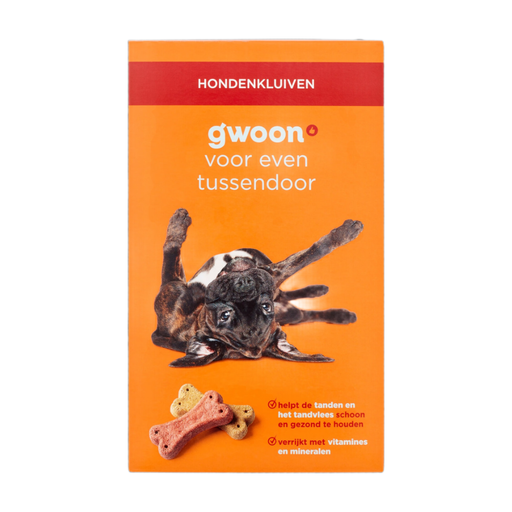
Why it suits this profile: A 500-gram pack is an easy starting point for owners who want to try dog chews without immediately buying several varieties.
The composition is clearly stated, and the usage instructions mention supervising your dog while chewing and limiting treats to a maximum of 10% of daily calories.
Chicken-flavour chew bones, 500 grams of product and, according to the product description, no artificial colourings or flavourings.
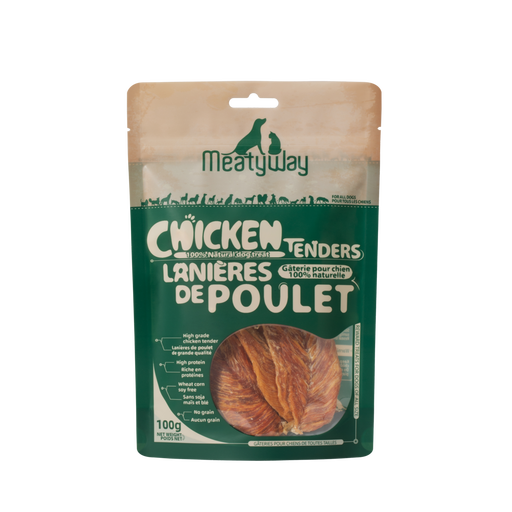
Why it suits this profile: Suitable for anyone looking for a short ingredients list and a soft chicken treat that can be used as a reward or training treat.
The product information lists chicken as the sole ingredient and provides analytical values, so you do not have to rely on the flavour name alone.
Soft jerky texture, easy to break and, according to the product information, analytical values of 70% crude protein and 5% crude fat.
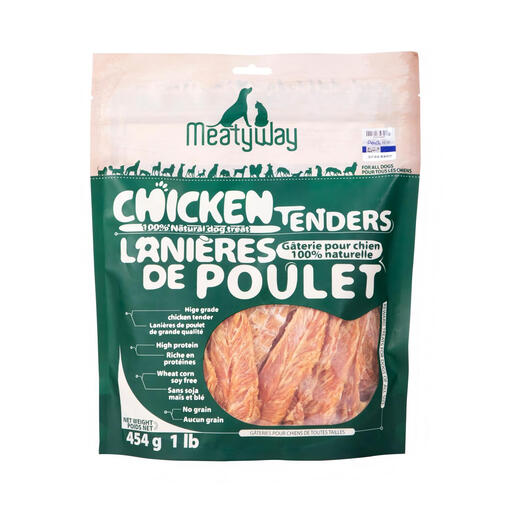
Why it suits this profile: The 454-gram bag is ideal for frequent training sessions, daily rewards or households with multiple dogs.
The soft texture can be divided into smaller pieces. However, check the portion yourself, as a large pack does not make overfeeding any less likely.
According to the product description, grain-free, soft and suitable for breaking into smaller pieces for small dogs or training rewards.
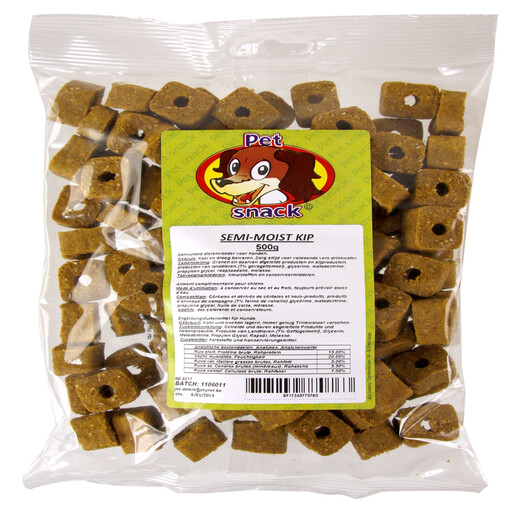
Why it suits this profile: The soft, semi-moist texture is practical for older dogs or dogs that find hard treats less comfortable.
The product description makes the texture clear and states that this is complementary food. This allows you to portion the treat alongside your dog’s regular food.
Semi-moist, soft to chew and, according to the product information, contains 15% crude protein, 5% crude fat and 20% moisture.
We have put together a complete, up-to-date list of products that fully meet these strict selection criteria and the applicable European safety regulations.
That depends on your dog’s weight, age, activity level and the treat’s calorie content. Use the nutritional information on the packaging and reduce the amount of regular food if necessary. As a general product guideline, g'woon states that treats should make up no more than 10% of your dog’s daily calorie intake. If in doubt, give smaller portions and include training treats in the total.
Soft dog treats or semi-moist dog treats are often easier to chew than hard bones. According to the product description, PETSNACK Semi-Moist Chicken is suitable for older dogs. Also consider the size of the piece and observe how your dog eats. If your dog has difficulty chewing, appears to be in pain or suddenly changes its eating habits, it is sensible to seek advice from a vet.
Some products state that the chewing action may help to reduce plaque or tartar. This is a claim from the brand’s product information and is not a guarantee for every dog. Dental-care dog treats should therefore be regarded as no more than a supplement. Choose an appropriate size, supervise your dog while chewing and care for its teeth according to your vet’s recommendations.
