
Vandaag of morgen in huis

Kwaliteit gegarandeerd

Welkomstaanbiedingen ontgrendelen: GRATIS bezorging | Tot 80% korting | Gratis 30 dagen JoyPlus-proefperiode
Download de app
Buying a bag of dog treats seems simple, until you have to choose between soft dog treats, crunchy biscuits, dog treats, dog chews and dental treats for dogs. The packaging often makes plenty of promises, but not every treat is suitable for every dog. A small dog needs different portions from a large breed. A sensitive eater may react differently to grains or beef than a dog without food intolerances.
With this guide, you can compare dog treats by ingredients, size, texture, purpose and nutritional value. This helps you avoid paying for a product that barely gets used at home.
Words such as “dental”, “natural” or “high in protein” do not automatically mean that a treat is suitable for your dog. Always check the ingredients list and analytical constituents. For example, a treat may contain grains, sugars, glycerol or various animal by-products.
Claims about dental care are also no substitute for daily care or a check-up by a vet. If a product says that it helps reduce plaque or tartar, present this as information from the product description or based on the brand’s own research, rather than as a guaranteed result.
A chew suitable for a medium-sized dog may be too large or too hard for a small dog. Conversely, a small treat may be finished quickly by a large dog and provide little chewing enjoyment. Therefore, check the recommended weight range, the size of the pieces and the feeding guidelines.
Dog treats are usually complementary food. They do not replace a complete meal. A practical guideline when choosing between several products is that treats should provide no more than 10% of your dog’s daily calorie intake. If you give lots of rewards during a long training session, you may need to reduce the main meal accordingly, following the feeding instructions.
Read the ingredients before choosing dog treats with chicken, dog treats with beef or a mixed treat. Pay particular attention to:
A product listing may state that a treat does not contain one of the 14 major EU allergens. Even so, always check the current label. If your dog has a known allergy, a short ingredients list is often easier to understand than a mixed composition.
Soft dog treats are useful during training because you can give them quickly and divide them into small portions. According to the product information, INABA Fun Bites Chicken Wraps have a soft exterior and a moist filling. The INABA Churu multipack contains at least 90% moisture according to the listing, and can be given straight from the packaging or mixed into food.
Crunchy dog treats, such as g’woon Marrow-Filled Dog Biscuits, combine a hard biscuit layer with a soft marrow filling. Chews and dog chew treats are designed to keep your dog occupied for longer, but supervision remains important. Never leave your dog unattended while eating a treat, and remove small or broken-off pieces.
Do not just look at the total weight; also check the number of individual portions. A multipack with small sachets is practical for training and remains easier to manage after opening. Moist treats often need to be refrigerated after opening and used within a short time. The product information for INABA Fun Bites and Churu states that an opened pack should be refrigerated and consumed within 24 hours.
Store dry dog treats in a cool, dry place, reseal the packaging and check the use-by date on the label. Do not give your dog a product if the packaging is damaged or its smell, colour or texture has clearly changed.
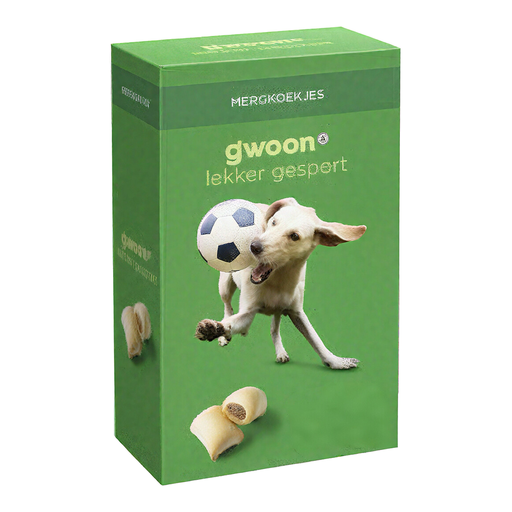
Why it suits this profile: A larger pack of crunchy biscuits with a soft marrow filling is practical for everyday rewards or basic training.
The product information clearly states the texture, the weight of 500 g and the presence of grains containing gluten. This allows you to assess portions and allergens in advance.
Crunchy outer layer, soft marrow filling and no artificial colourings or flavourings according to the product listing.
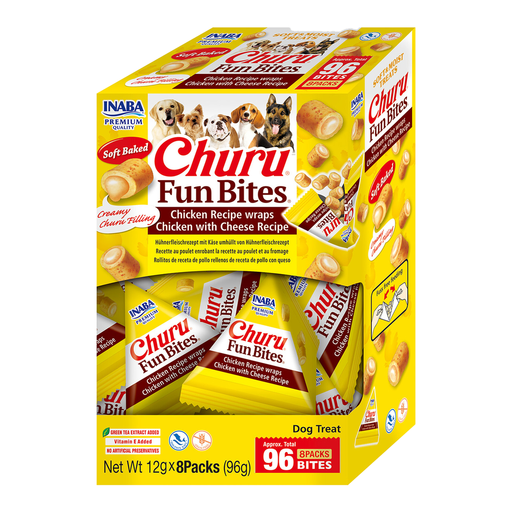
Why it suits this profile: Handy for owners who want to combine different textures and small, measured portions with training.
The product information lists 8 packs of 12 g, 15.6 kcal per pack and a soft texture. This makes portion control more straightforward than with loose treats.
Chicken wrap with a creamy filling, 72% moisture and no grains, preservatives or carrageenan according to the stated composition.

Why it suits this profile: Designed for owners of medium-sized dogs who want to establish a consistent daily treat routine.
The pack is intended for medium-sized dogs and the product information recommends one stick per day. This makes its use clearer than that of an unspecified chew.
According to the product specification, it contains 1% sodium hexametaphosphate, 8% crude protein and 1% fat.

Why it suits this profile: An option for smaller dogs that enjoy spending longer with a chew.
The variant is explicitly labelled as small and contains 10 pieces. Even so, check that your dog can use rawhide safely and supervise them while chewing.
10 sticks wrapped in beef hide with dried chicken; according to the product description, they contain no added grains, artificial colourings, flavourings or preservatives.
We have put together a complete, up-to-date list of products that fully meet these strict selection criteria and the applicable European safety regulations.
For training, choose a small treat that can be eaten quickly. Soft dog treats or strips are usually more practical than large dog chews. INABA Churu Dog Multipack contains 20 portions of 12 g and, according to the product information, can be given as a reward, topping or straight from the tube. For short training sessions, you can also break a biscuit into smaller pieces, provided the texture and size remain safe.
When choosing dog treats with chicken or beef, pay attention to the total amount of animal ingredients. A product with a beef flavour does not always contain beef exclusively, so check the composition for the exact percentages.
No. Dental treats for dogs can add a chewing opportunity, but they are no substitute for suitable dental care. The shape, hardness, chewing time and your dog’s eating behaviour all affect how suitable a product is. Always give a chew under supervision and stop if your dog chokes, appears to be in pain or shows unusual chewing behaviour. If dental problems persist, seek advice from a vet.
This depends on your dog’s weight, age, activity level and the calories per treat. Follow the feeding guidelines on the packaging and, ideally, keep treats below 10% of your dog’s daily calorie intake. During intensive training, many small rewards can still add up to a significant amount. Only adjust the main meal based on the product information or advice from a professional.
Dry biscuits, strips and chews should generally be stored in a cool, dry place and kept tightly sealed. Moist dog treats often need to be refrigerated and used within 24 hours. Check the packaging, use-by date and storage instructions for each product. This helps preserve the flavour and texture while maintaining food safety.
