
Vandaag of morgen in huis

Kwaliteit gegarandeerd

Welkomstaanbiedingen ontgrendelen: GRATIS bezorging | Tot 80% korting | Gratis 30 dagen JoyPlus-proefperiode
Download de app
Dog treats are handy as a reward, a snack or a chew moment. However, an attractive packet doesn’t tell you whether a treat is actually right for your dog. A small dog has different needs to a big chewer, and a training reward should be chosen differently from a treat that lasts longer.
A multipack is practical if you reward your dog every day. For a dog that only gets a treat occasionally, a large packet can actually be inconvenient. So pay attention to the weight, number of pieces and shelf life after opening. Some treats, for example, state that they must be used within 14 days of opening. Soft products may have a shorter storage time and sometimes need to be refrigerated.
Always check the ingredients. “With chicken”, “with beef” or “with salmon” doesn’t automatically mean that ingredient is the main component. With some dog treats, the percentage of animal ingredients is listed separately. Also look at grains, sugars, oils and fats if your dog is sensitive to them.
Brands may also mention benefits such as supporting teeth, immunity or condition. Don’t present such claims as guaranteed results: according to the brand’s own research or product information, these are described properties, not a guarantee for every dog.
Most dog treats in this overview are complementary pet food. They do not replace complete dog food. Keep an eye on the total calorie intake and adjust the main meal if necessary. A practical guideline for training treats is that treats should provide no more than about 10% of daily calories, unless your vet advises otherwise.
For training, small, soft dog treats are often handy. You can give them quickly without interrupting the exercise for long. A soft treat can also be suitable for dogs that prefer not to chew for long.
Chew treats for dogs have a different function. Check that the size matches your dog’s weight and chewing strength. A treat that is too small can be swallowed in one go more easily. Always supervise a hard treat and remove any loose or broken pieces.
Compare at least this information:
For example: Bonzo Beggin’ Strips Snack Speck contains, according to the product information, 15.7% protein, 5.7% fat and 23% moisture. The ingredients list includes, among other things, cereals, meat and animal by-products, glycerol and sugar. This makes this treat suitable for weighing up against other soft dog treats, especially when you pay attention to the full ingredients list.
Store dry dog treats generally in a cool, dry place and seal the packet well. For INABA products, the variants described require opened packets to be refrigerated and used quickly. Always follow the label for exact shelf life, feeding amount and storage.
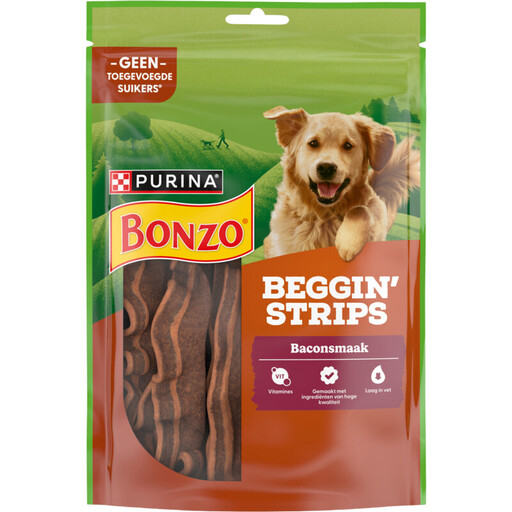
Why this suits the profile: The strips are easy to break apart by hand and are intended as a complementary snack or reward between meals.
The product information states the protein, fat and moisture content, so you don’t have to choose the treat based solely on the bacon flavour mention.
15.7% protein, 5.7% fat, 23% moisture and a clear storage instruction.
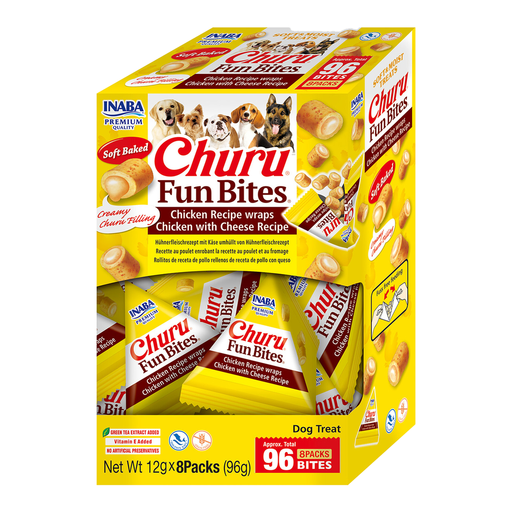
Why this suits the profile: The soft outer layer and creamy filling offer variety for dogs that find different textures appealing.
The portions are individually wrapped: 8 packs of 12 grams. This helps with portion control and limits the problem of an opened large bag.
69% moisture, 15.6 kcal per pack according to the product information and 96 grams total weight.
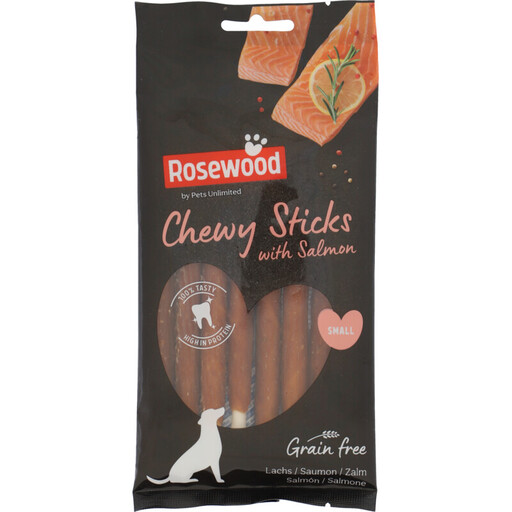
Why this suits the profile: These small chew sticks are aimed at dogs that get a chew moment as well as a reward.
The size is specifically labelled as small. This makes comparing easier, but supervision during chewing is still necessary.
8 pieces, beef hide with dried salmon and, according to the product information, no added grains, gluten, artificial colourings, flavourings or preservatives.
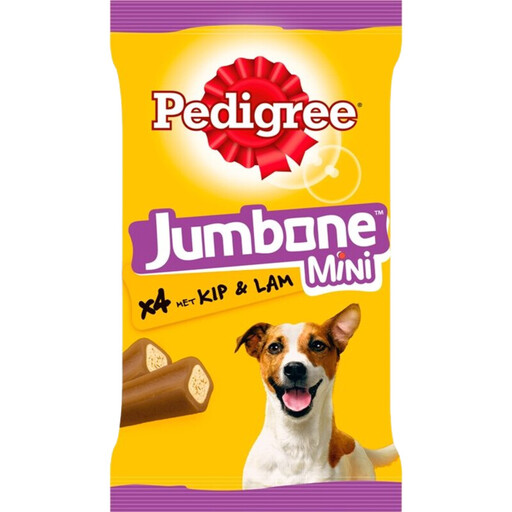
Why this suits the profile: The variant is intended for adult dogs up to 15 kg and has a hard outer layer with a softer inside.
The usage instructions mention a weight limit and age restriction. This makes it clearer whether this treat is suitable for your dog.
4 pieces, suitable for small adult dogs and a stated usage frequency of a maximum of 1 piece per week for dogs of 4–10 kg.
We’ve put together a full, up-to-date list of products that fully meet these strict selection criteria and current European safety regulations.
That depends on weight, age, activity and the calories per treat. Use the feeding guideline on the packet and keep treats preferably to around a maximum of 10% of daily calorie intake. Reduce the main meal if necessary and always provide fresh drinking water.
Small, soft dog treats are usually practical because you can give and portion them quickly. A multipack with individual portions can be handy for regular training sessions. Do check the fat content and the total amount you give during a session.
The duration varies depending on the size, ingredients and your dog’s chewing strength. A chew treat is not a replacement for daily dental care. Choose a suitable size, supervise while chewing and remove small or broken pieces to limit swallowing.
