
Vandaag of morgen in huis

Kwaliteit gegarandeerd

Welkomstaanbiedingen ontgrendelen: GRATIS bezorging | Tot 80% korting | Gratis 30 dagen JoyPlus-proefperiode
Download de app
Buying a bag of dog treats seems simple enough – until you have to choose between dog biscuits, soft training rewards, dried meat and dental chews. The packaging often highlights terms like “natural”, “grain-free” or “low in fat”. On their own, these words don’t tell you whether a treat is right for your dog.
As a Joybuy Product Recommendation Officer, I focus on verifiable information: ingredients, analytical constituents, size, texture, feeding advice and storage instructions. That way, you avoid paying for a product that turns out to be too big, too hard or unsuitable for everyday use.
Many dog treats are complementary pet food. They are intended as a reward or snack and do not replace a complete meal. Even a treat with a high meat content or a short ingredients list remains an extra.
Always check:
Packaging sometimes carries claims about teeth, digestion or energy. According to a brand’s own research, a particular texture might help reduce plaque or tartar. That is no substitute for daily dental care or advice from a vet.
A chew treat for dogs can be suitable as part of a routine, but also pay attention to breakability, size and supervision. A dog that tries to swallow large chunks needs a different type of treat.
“With chicken”, “beef flavour” or “bacon flavour” does not always mean the product is mostly made from that meat. Look at the ingredients list. For example, Pedigree Ranchos states 95% meat and animal derivatives, of which 4% beef. In other treats, grains or plant-based ingredients come first.
Ingredients are usually listed in descending order by weight. If you are specifically looking for natural dog treats, dog treats with chicken, dog treats with salmon or dog treats with duck, it is wise to check the first ingredients.
Also look out for:
A lower fat percentage does not automatically make a treat suitable for every dog. The total amount and the daily diet remain decisive.
For training, small, soft treats that are easy to break are usually the most practical. A soft jerky strip can be divided into several pieces. For a dog that enjoys chewing for longer, firm sticks or bone-shaped treats are a better fit. Choose a size that cannot be swallowed in one go.
With puppies, older dogs or dogs with dental problems, you need to be extra careful with hard products. Always follow the advice on the packaging and supervise while they chew.
First, decide what you need the treat for:
Once opened, some products require refrigeration or consumption within a certain period. Store treats in a cool, dry place, reseal the packaging and always check the best-before information on the label.
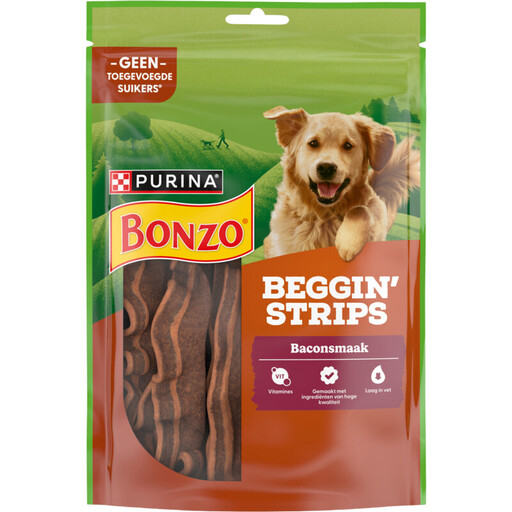
Why this fits the profile: The soft strips are intended as a complementary snack or reward for adult dogs. The bacon flavour can appeal to owners looking for a simple everyday treat.
The product information lists clear analytical values: 15.7% protein, 5.7% fat and 23% moisture. So you don’t have to rely on the flavour name alone.
Soft strip texture, clear nutritional information and stated storage instructions for a cool, dry place.
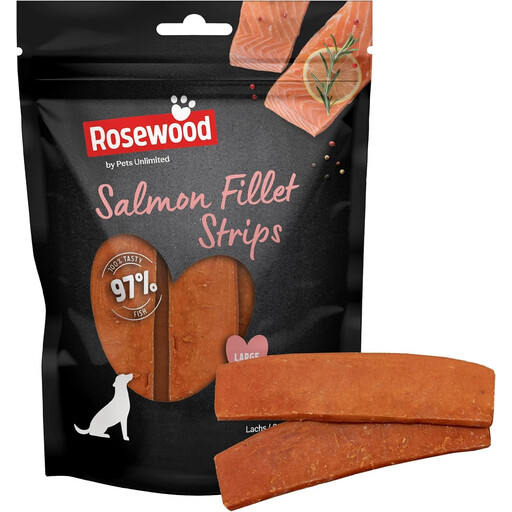
Why this fits the profile: According to the product description, this treat is 97% salmon and low in fat. That makes it interesting for owners specifically looking for dog treats with salmon.
The stated fish content is concrete in the product information. The low-fat claim comes from the product description and should be checked against the label.
150g pack, soft strips and no added grains, gluten, artificial colours, flavours or preservatives according to the stated product details.
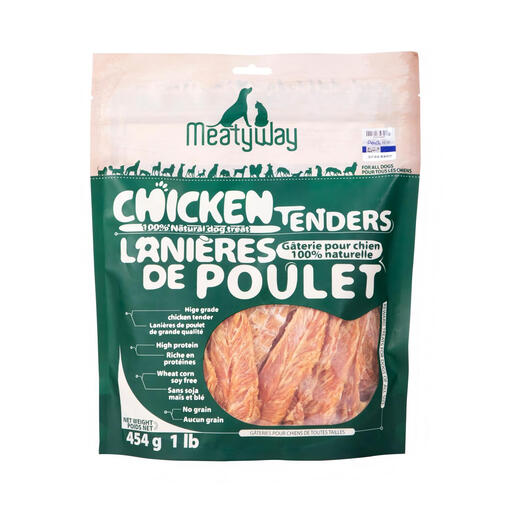
Why this fits the profile: According to the product information, the soft chicken strips can be broken into smaller pieces. That makes them suitable for frequent rewards during training.
The product page lists the concrete values: minimum 30% protein, minimum 15% fat, maximum 1% fibre and maximum 18% moisture. That makes comparison easier.
454g content, grain-free recipe according to the product description and a resealable bag.
We have put together a full, up-to-date list of products that fully meet these strict selection criteria and comply with current European safety regulations.
As a general guideline, treats should make up no more than about 10% of daily calorie intake. The right amount depends on weight, age, activity and body condition. If necessary, reduce the main meal and follow the feeding advice on the packaging.
Choose small, soft dog treats that you can give quickly and break if needed. According to the product information, liquid INABA Churu products can be given straight from the tube or used as a topper. Once opened, they must be sealed, refrigerated and used within the stated time.
No. According to their own product claims, some chews can help limit plaque or tartar through chewing. The result varies from dog to dog. Supervise your dog, choose an appropriate size and discuss persistent dental problems with a vet.
