
Vandaag of morgen in huis

Kwaliteit gegarandeerd

Welkomstaanbiedingen ontgrendelen: GRATIS bezorging | Tot 80% korting | Gratis 30 dagen JoyPlus-proefperiode
Download de app
Buying a bag of dog treats seems simple enough – until you have to choose between dog biscuits, chews for dogs, soft dog treats and dental sticks for dogs. An attractive packet doesn't always tell you everything you need to know. The size, the ingredients and when you plan to use them all determine whether a treat is a practical fit for your dog.
A multipack of dog treats or a 500g bag might be attractively priced. However, a large stock can be inconvenient if your dog only gets a treat now and then. Once opened, freshness decreases. So check the storage instructions and choose a pack you'll use within the recommended period.
Dental sticks and dentastix for dogs are often presented as support for daily dental care. According to Pedigree's product information, the X-shape and texture can help reduce plaque or tartar. This is a claim from the brand, not a guarantee for every dog. A dental stick does not replace brushing or a trip to the vet.
The flavour description on the front may refer to an aroma or a small percentage of the named ingredient. So always check the full ingredients list. For example, the g'woon Beef Strips Dog Wikkel states 18% beef in the product information, while other dog treats mainly contain cereals, vegetable derivatives or animal by-products.
Match the treat to your dog's weight and chewing behaviour. Treats for small dogs need to be small enough to give safely. A product designed for medium or large dogs may be too big or too hard for a small dog.
Look out for these differences:
Never give a treat unsupervised if your dog tries to swallow large pieces.
Check for cereals, gluten, soya, dairy and the animal protein sources used. If your dog has a known allergy, the ingredients list matters more than the flavour name. Also look at crude protein, fat, moisture and energy per 100g if you give the treat daily.
Dog treats are complementary food. They should not replace a complete meal. A practical guideline on the product packaging is that treats should provide no more than about 10% of daily calorie intake. Adjust the main meal if you reward regularly.
Seal opened packs tightly and store them in a cool, dry place. Some soft treats need to go in the fridge after opening and be used within 24 hours. For other products, the period might be, for example, 14 days after opening.
Fresh water should always be available. Follow the instructions on the pack for the daily amount, and take into account your dog's age, weight, activity level and body condition.
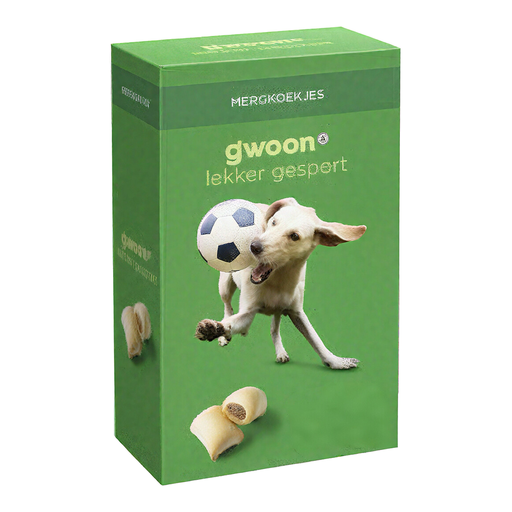
Why this fits the profile: These crunchy biscuits have a soft marrow filling and come in a 500g pack. According to the product information, they are suitable for dogs of various breeds and sizes.
The flavour, texture, net weight and ingredients are clearly stated. Do check the current packaging yourself and be aware of gluten in the ingredients.
500g, crunchy outer layer and soft filling; usable as a reward or training treat.

Why this fits the profile: This multipack combines four chicken varieties in small portions. That means you can alternate flavours and use the treats during training or as a topper.
The piece size and net weight of 64g are clearly stated. Portion out the daily amount so that variety doesn't lead to too many extra calories.
Four chicken varieties, small bites and, according to the product information, no artificial colours or preservatives.

Why this fits the profile: The pack contains 56 sticks for medium dogs weighing 10 to 25 kg. That's practical if you want to plan a daily routine with dental sticks for dogs.
The size is linked to a clear weight category. The stated anti-tartar effect is, according to Pedigree, a brand claim; do not use the product as a substitute for dental care.
56 sticks, suitable for dogs weighing 10–25 kg and with no added sugar according to the product information.

Why this fits the profile: The small version contains 10 sticks with a beef hide wrapped in dried chicken. According to the product information, this version is intended for smaller dogs.
The variant is not generic for all dogs, but specifically labelled as small. Check your dog's chewing strength and supervise during chewing.
10 pieces, small version and a recipe with no added grains or gluten according to the product description.
We've put together a full, up-to-date list of products that fully meet these strict selection criteria and comply with current European safety regulations.
That depends on your dog's weight, age, activity level and the calories in the treat. As a practical guideline, treats should provide no more than about 10% of daily calorie intake. You may need to reduce the main meal and always follow the dosage on the pack.
Small, soft dog treats are usually practical because you can give them quickly and portion them easily. Bites, soft meat strips and small dog biscuits are more convenient for this than large chews. For intensive training sessions, choose a treat with a clearly stated portion size and keep an eye on the total amount.
No. Dentastix and other dental sticks are usually linked to a weight category or size. Check the age and weight indication, supervise your dog and make sure fresh drinking water is available. If your dog has existing dental problems or you're unsure about chewing, it's wise to consult a vet.
