
Vandaag of morgen in huis

Kwaliteit gegarandeerd

Welkomstaanbiedingen ontgrendelen: GRATIS bezorging | Tot 80% korting | Gratis 30 dagen JoyPlus-proefperiode
Download de app
Buying a bag of dog treats might seem straightforward, but the differences in composition, texture and size are significant. A treat that works for a large dog can be too big or too hard for a small dog. What's more, terms like "natural", "grain-free" and "dental care" can give a broader impression than the ingredients list actually justifies.
As a Joybuy Product Recommendation Officer, I filter product information based on verifiable points. This way, you can quickly see which dog treats suit your dog and avoid a bad purchase.
Words like "healthy", "easily digestible" or "good for teeth" don't mean much on their own. Always check the composition, the analytical constituents and the feeding guideline. According to some brands' own information, chewing may help reduce plaque or tartar. This is not a substitute for professional dental care and should not be seen as having a medical effect.
Chicken dog treats are popular, but chicken can be part of a mixed composition. For example, with Pedigree Schmackos, the total composition consists of 40% meat and animal derivatives, alongside vegetable derivatives, cereals, minerals, sugars and fats. A product name with "chicken" therefore doesn't automatically mean chicken is the main ingredient.
Soft dog treats are handy for training because you can easily break them up. A hard chew treat, on the other hand, can last longer but requires more supervision. For small dogs, larger pieces should be adjusted to help prevent choking. Always consider age, teeth, chewing behaviour and body weight.
Choose the texture based on the purpose:
At a minimum, look at:
A grain-free dog treat contains no cereals, but it isn't automatically suitable for every dog. MeatyWay Chicken Jerky, for example, lists chicken as an ingredient and states a minimum of 30% crude protein and a minimum of 15% crude fat. The chicken and duck variants don't state exact percentages for protein and fat. So don't just compare the front of the packet.
Pay attention to the target group on the packaging. There are specific treats for small dogs, treats for medium dogs and treats for large dogs. According to the product information, Pedigree Jumbone Mini Chicken & Lamb is intended for adult small dogs up to 15 kg. The variant for medium dogs is intended for dogs weighing 15 to 25 kg.
A treat for puppies, seniors or dogs with sensitive teeth requires extra attention. Also check whether the treat is a complementary food. The main meal should remain complete, and treats shouldn't be added on top of it without limit. For various products, the guideline states that treats should make up no more than 10% of daily calorie intake; follow the packaging and adjust the main meal if necessary.
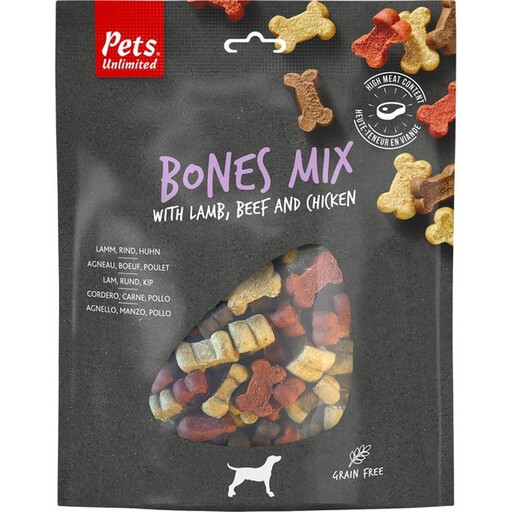
Why this fits the profile: A versatile 150 g treat for rewarding or in-between, suitable for dogs of different sizes.
The ingredients and meat percentage are stated. This means you don't have to rely solely on the flavour name.
Contains 32.5% meat and animal by-products, including chicken, lamb and beef. Free from artificial colours and flavourings according to the product information.
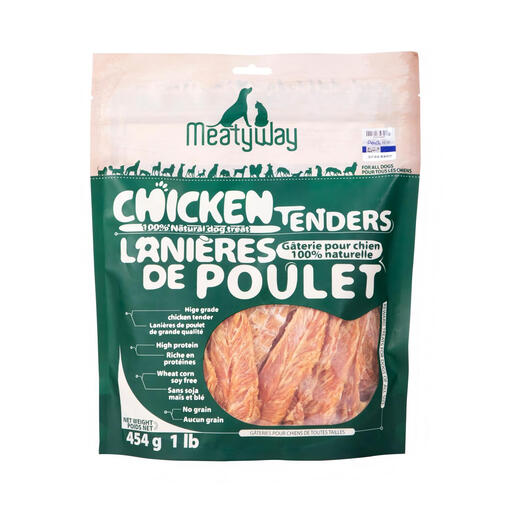
Why this fits the profile: A soft jerky with chicken as a named ingredient, handy for dogs that need small rewards.
The bag states concrete analytical values: minimum 30% protein, minimum 15% fat, maximum 1% fibre and maximum 18% moisture.
Soft texture, easy to break into smaller pieces and a resealable 454 g pack.
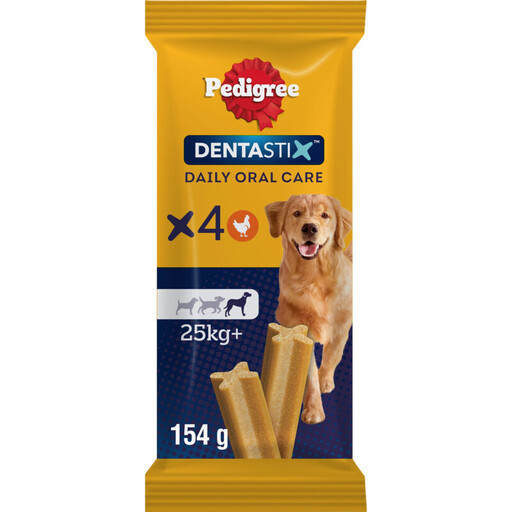
Why this fits the profile: Developed as a daily chew treat for large dogs, with a feeding guideline of one piece per day.
The size is linked to large dogs and the packaging states a daily dosage. However, supervision during chewing is still necessary.
States an analytical fat content of 1.3% and an energy content of 308 kcal per 100 g. According to Pedigree's own research, the product may help with plaque and tartar.
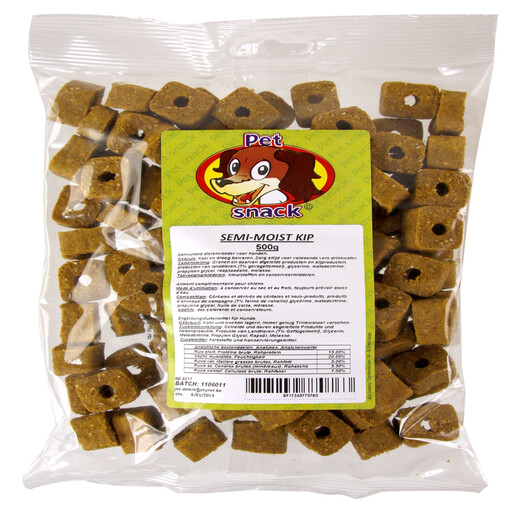
Why this fits the profile: The semi-moist texture is soft and easy to chew, making this treat potentially suitable for older dogs.
The texture and composition are clearly stated. It is not a chew treat for long chewing sessions, but a complementary reward.
Soft semi-moist structure, 15% crude protein and 5% crude fat according to the product information. Pack of 10 bags of 500 g.
We've put together a full, up-to-date list of products that fully meet these strict selection criteria and current European safety regulations.
That depends on weight, age, activity and the energy content of the treat. Use the feeding guideline on the packaging and keep to the practical limit that treats should make up no more than about 10% of daily calorie intake when this is stated on the product. Reduce the main meal if necessary.
Small, soft dog treats or jerky that you can easily break up are practical. This way, you can reward often without giving large pieces. For a sensitive dog, choose a short ingredients list and introduce new treats gradually.
Follow the best-before and storage advice on the packaging. Many products need to be properly sealed after opening and used within 14 days or a few weeks. Store dog treats in a cool, dry place, always provide fresh drinking water and supervise during eating.
