
Vandaag of morgen in huis

Kwaliteit gegarandeerd

Welkomstaanbiedingen ontgrendelen: GRATIS bezorging | Tot 80% korting | Gratis 30 dagen JoyPlus-proefperiode
Download de app
Buying a bag of dog treats seems simple, until you have to choose between dog biscuits, chew sticks, soft meat strips and dental treats. Marketing copy often emphasises flavour, “natural” ingredients or a “high meat content”, while important details about size, ingredients and use can be easy to miss.
As a Joybuy Product Recommendation Officer, I focus on information you can check: ingredients, nutritional information, size, age guidance and feeding instructions. This helps you avoid buying a treat that isn’t right for your dog’s weight, chewing strength or diet.
“Rich in meat”, “grain-free” or “no artificial additives” doesn’t automatically mean a treat is suitable for every dog. Always check the full ingredients list. For example, a product may be grain-free but still contain potato starch, glycerine or sorbitol.
Also check whether the product is labelled as complete pet food or complementary pet food. Most reward treats and dog chews are complementary foods and aren’t a substitute for a complete meal.
A chew stick for a small dog may be too big or too hard. A soft treat for a large dog may disappear quickly and offer little chewing enjoyment. So look beyond the flavour and check the recommended dog size, age and texture too.
Some products specifically state that they aren’t suitable for puppies below a certain age. This guidance should carry more weight than attractive packaging.
Manufacturers describe some products as supporting dental hygiene or helping to reduce plaque. According to the brand’s product description, chewing may play a part, but this doesn’t guarantee clean teeth and isn’t a replacement for regular dental checks or care.
A hard-textured treat isn’t automatically a proper substitute for brushing your dog’s teeth. Choose a dental treat based above all on its size, safety and how your dog chews.
Compare the ingredients and nutritional information for each product. Here are some examples from the range:
A high protein content or low fat content isn’t enough on its own. Consider your dog’s overall daily diet too, and adjust the amount of their main food if needed.
Small fillets, mini jumbones or small sticks are often more practical for small dogs. Firmer chew sticks or larger twisters may be a better match for the chewing habits of medium and large dogs. However, don’t choose a product your dog could break into large pieces and swallow.
Check the following:
Dog treats should be given in moderation. For several products, the guidance is to keep treats to a maximum of 10% of your dog’s daily calorie intake. The right amount depends on your dog’s weight, age and activity level.
Small, soft dog treats are usually more convenient for training than a large chew. According to the product information, a treat such as Vitakraft Beef Stick is easy to break into pieces. This can help you use one stick for several rewards.
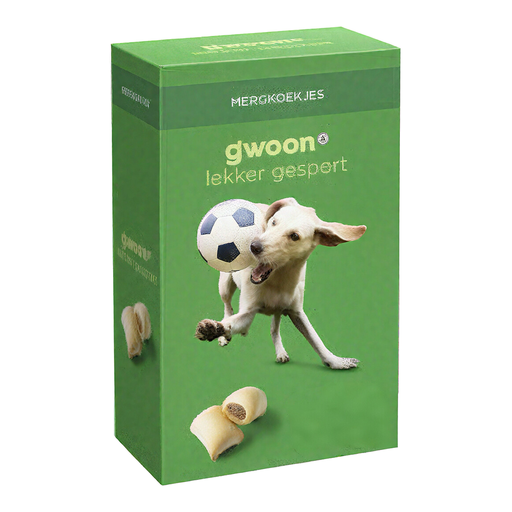
Why it suits this profile: The 500g pack is practical for everyday rewards and training, as long as you tailor the portions to your dog.
The ingredients clearly list cereals, meat and animal by-products. This makes it clear straight away that these aren’t grain-free dog treats.
500g pack, crunchy outer layer and soft marrow filling; according to the product information, suitable for dogs of all breeds and sizes.
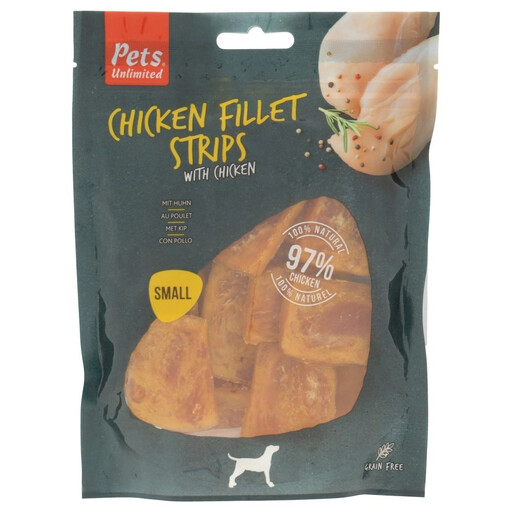
Why it suits this profile: The small size is designed for small dogs and can also be used as a measured reward.
The product information lists the ingredients and gives guidance for puppies under 6 months old. This means you can check the age advice before buying.
92% chicken breast according to the product information; grain-free recipe and resealable packaging.
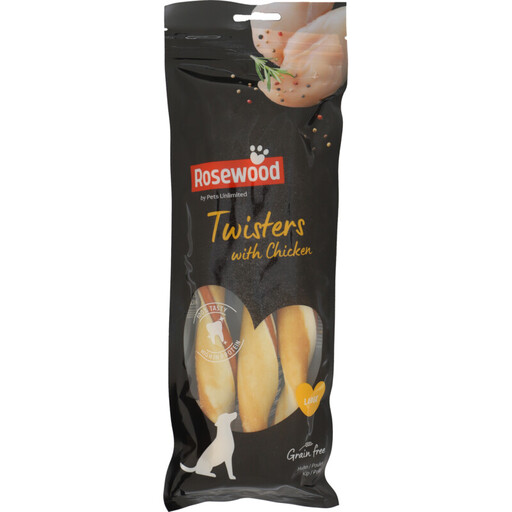
Why it suits this profile: The large version is intended for dogs that enjoy spending longer on a firm chew.
The product information gives the variant, ingredients and analytical values. Always check that the hardness is right for your dog, and supervise them while they chew.
235g pack; chicken variety with 56% chicken according to the product information, 49% protein and 2% fat.
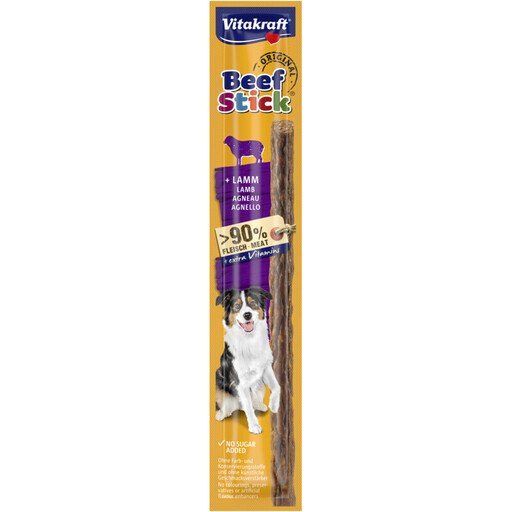
Why it suits this profile: According to the product information, the stick is easy to break into pieces, making it handy for training and portion control.
The feeding guide gives recommended amounts for different weight ranges. This helps you avoid automatically giving a whole stick as a single training reward.
18g per stick; stated meat content of 92.5%, and easy to portion according to the product information.
We’ve put together a full, up-to-date list of products that meet these strict selection criteria and current European safety requirements.
It depends on your dog’s weight, age and activity level, as well as the treat’s calorie content. Follow the feeding guide on the packaging. For several products, the general guidance is to keep treats to no more than 10% of your dog’s daily calorie intake. Reduce the amount of their main food if needed.
Choose small, soft dog treats or a treat you can easily break into pieces. A large chew stick is mainly for chewing enjoyment, rather than for dozens of repetitions during a training session. Keep an eye on the total amount you give your dog, and always provide fresh drinking water.
This depends on its size and hardness, and on how strongly your dog chews. A small dog may take longer to get through a firm treat than a large dog who chews vigorously. Always supervise your dog with a chew and remove any small or sharp leftover pieces. Also check the use-by date and storage advice on the packaging.
