
Vandaag of morgen in huis

Kwaliteit gegarandeerd

Welkomstaanbiedingen ontgrendelen: GRATIS bezorging | Tot 80% korting | Gratis 30 dagen JoyPlus-proefperiode
Download de app
Buying a bag of dog treats might seem straightforward – until you have to choose between soft chews, chewy snacks, dental sticks and chicken or beef-flavoured rewards. Marketing copy often focuses on taste, “natural” ingredients or dental care, but doesn’t always tell you what’s practically relevant for your dog.
As a Joybuy Product Recommendation Officer, I therefore focus on verifiable points: your dog’s weight, the ingredients, the shape, the usage advice and how you store the treat.
A dental stick for a small dog isn’t automatically suitable for a large dog. Conversely, large chewy products can be difficult for a dog of, say, 5 to 10 kg to handle. Always check the target size on the packaging. Some products are specifically designed for small dogs, medium dogs or dogs weighing 25 kg and over.
Dentastix and similar products are marketed for daily dental care. According to Pedigree’s own research, certain Dentastix products can help reduce tartar build-up when used daily. That’s a brand claim about effectiveness, not a replacement for brushing or a vet check-up.
Chewing alone doesn’t guarantee a healthy mouth either. Pay attention to the shape and texture, but also regularly check your dog’s teeth and gums.
Dog treats are supplementary food, not a complete meal. Several small treats a day can add up significantly. As a general guideline, various product descriptions indicate that treats should make up no more than 10% of daily calorie intake. If necessary, reduce the main meal and follow the feeding advice on the packaging.
Choose a size that matches your dog’s weight and chewing strength. On Joybuy, you’ll find, for example:
A treat that’s too small for a greedy large dog can be swallowed more quickly. A hard or large chewy snack can be awkward for a small dog. Always supervise your dog while eating and provide fresh drinking water.
Look beyond the flavour name. “With chicken” or “with beef” doesn’t always mean the product is mainly made from that meat. Check the ingredient list and the analytical constituents.
Examples from the range:
Does your dog have an allergy or food sensitivity? Then read the full ingredient list. A statement that a product contains none of the 14 main EU allergens doesn’t rule out that your dog might react to another ingredient.
Don’t mix up different types of treats:
A treat that’s low in fat isn’t automatically low in calories. Pedigree Jumbone products, for example, state a low fat content, but the total amount and feeding advice remain important.

Why this fits the profile: This option is aimed at medium-sized dogs and has a clear daily usage recommendation. The ingredients include cereals, oils and fats, vegetable protein extracts and 1% sodium hexametaphosphate.
The size isn’t described in general terms, but is specifically linked to medium-sized dogs. This means you can tailor the feeding advice more accurately than with a treat that has no size indication.
Medium variant, 1% crude fat and advice for a maximum of one stick per day, unless stated otherwise.

Why this fits the profile: These small chew sticks combine beef hide with dried chicken and are designed for smaller dogs. The pack contains 10 pieces.
The product description makes the size explicit. It also doesn’t list added cereals, gluten, artificial colours, flavourings or preservatives.
10 small sticks, combination of beef and chicken, designed for longer chewing.
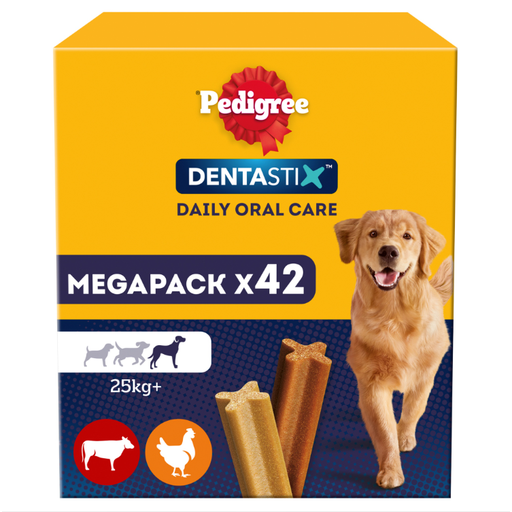
Why this fits the profile: The multipack contains 42 sticks for large dogs of 25 kg and over. That suits daily use when you deliberately schedule a regular treat time for dental care.
The target group is clearly specified as large dogs from 25 kg. The product description also states no added sugar and no artificial colours or flavourings.
42 sticks, suitable for dogs of 25 kg and over, designed for daily use.
Seal opened bags tightly and store treats in a cool, dry place. Various products advise using opened packs within 14 days; some Dentastix variants also have a limited usage period after opening. Always check the label.
Only give a chewy snack when you can supervise. Remove small leftover pieces if your dog tries to swallow them. If you’re unsure about an allergy, swallowing issues or dental health, discuss the feeding advice with a vet.
We’ve put together a full, up-to-date list of products that fully meet these strict selection criteria and comply with current European safety regulations.
That depends on the dog’s weight, age, activity level and the energy content of the treat. As a practical guideline, keep treats to a maximum of around 10% of daily calorie intake. Also follow the specific feeding advice on the packaging.
Dentastix dog products are intended as a supplementary snack for daily dental care. According to Pedigree’s own research, certain variants can help reduce tartar build-up. They don’t replace brushing, regular check-ups or treatment if there are dental problems.
Choose small, soft treats that you can give quickly and break if needed. Examples include soft meat strips, beef strips and small cheese-like bites. Count each reward towards the total amount of food, and choose small portions if you have lots of training sessions.
