
Vandaag of morgen in huis

Kwaliteit gegarandeerd

Welkomstaanbiedingen ontgrendelen: GRATIS bezorging | Tot 80% korting | Gratis 30 dagen JoyPlus-proefperiode
Download de app
Buying a bag of dog treats sounds simple, until you have to choose between dog biscuits, dog chews, soft dog treats and dental sticks for dogs. Marketing copy often focuses on flavour, natural ingredients or dental care, but that does not always tell you how suitable a treat is for your dog.
Pay particular attention to three common pitfalls:
Start by considering when you will use them. For training, you need small, easy-to-break or soft dog training treats. A firmer treat is better for relaxed chewing. If you want to use a treat as part of your dog’s daily dental care, pay particular attention to the recommended dog size and feeding instructions.
Dog treats are usually complementary pet food. They therefore do not replace a complete meal. Check the label for:
A practical guideline given in product information is that treats should account for no more than 10% of your dog’s daily calorie intake. If necessary, reduce the main meal and adjust the amount according to your dog’s age, weight and activity level.
Also look out for allergens. A product may state that it contains none of the 14 main EU allergens, while the ingredients list mentions cereals, milk derivatives or specific animal ingredients, for example. Always check the current packaging, especially if your dog has sensitivities.
A treat should suit your dog’s size and behaviour. A small dog will not benefit from an oversized chew, while a large dog may swallow a small, soft treat very quickly.
A treat with a hard outer layer and soft filling may be appealing, but check that your dog bites off the pieces safely. Stop giving the product if it splinters, becomes too small or your dog tries to swallow large pieces.
Store opened dog treats in a cool, dry place unless the packaging states otherwise. Some moist products need to be refrigerated after opening and used within a short period. Reseal bags and boxes to limit drying out and loss of flavour.
Use the feeding guidelines on the packaging as a starting point. A dog that receives several rewards a day will often need smaller portions. Always make sure fresh drinking water is available.
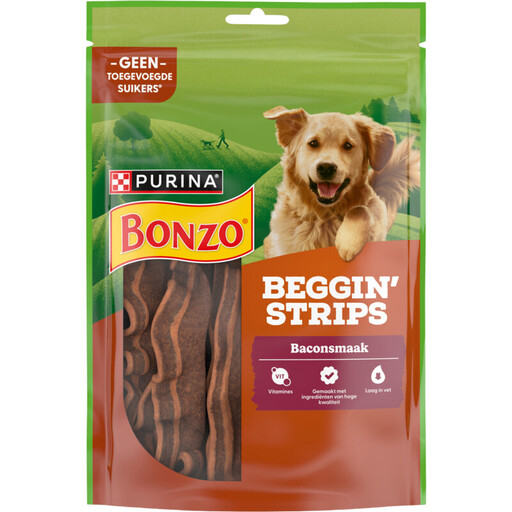
Why it suits this profile: These strips are intended as a complementary snack or reward between meals, making them practical for everyday use.
The product information lists the protein, fat and moisture content, so you do not have to rely on the bacon flavour alone.
Bacon flavour; 15,7% protein and 5,7% fat according to the product details; easy to give between meals.
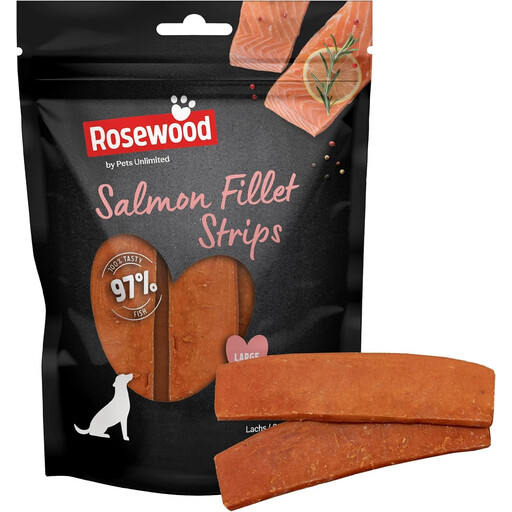
Why it suits this profile: For owners looking for a clearly named main ingredient and a soft texture.
According to the product description, the snack consists of 97% salmon. Check the packaging when the ingredients or nutritional purpose is a deciding factor.
Soft salmon strips; 150 grams; according to the product information, with no added cereals, gluten or artificial colours, flavourings or aromas.

Why it suits this profile: Designed for owners looking to establish a regular chewing routine for a medium-sized dog.
The size is specifically indicated for medium-sized dogs. This helps prevent you from choosing an unsuitable size.
180 grams; 1% fat according to the product details; contains 1% sodium hexametaphosphate according to the ingredients.
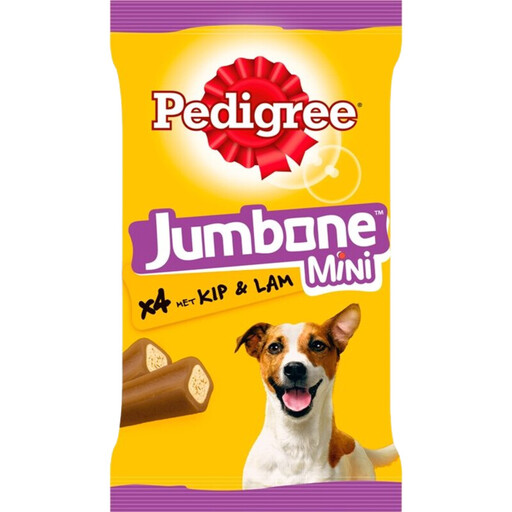
Why it suits this profile: According to the product information, the mini version is intended for small dogs weighing up to 15 kg and for adult dogs.
The feeding instructions specify a limited frequency and exclude dogs weighing under 4 kg and young puppies. This makes the usage limits clearer.
Four pieces per pack; chicken and lamb variety; according to the product information, less than 5% fat per 100 grams.
We have put together a complete, up-to-date list of products that fully meet these strict selection criteria and the applicable European safety regulations.
As a general guideline, dog treats should provide no more than 10% of your dog’s daily calorie intake. The right amount depends on your dog’s weight, age, activity level and main food. Use smaller pieces during training and adjust the meal if you give rewards more frequently.
Choose small, soft or easy-to-break treats. Soft dog treats and strips are practical because you can reward your dog quickly without a long chewing break. However, check the fat content and include all rewards in the daily allowance.
No. According to product descriptions, certain chew sticks may support chewing or oral care, but they do not replace daily dental care or a check-up by a vet. Choose the right size, stay with your dog while they chew and follow the instructions on the packaging.
