
Vandaag of morgen in huis

Kwaliteit gegarandeerd

Welkomstaanbiedingen ontgrendelen: GRATIS bezorging | Tot 80% korting | Gratis 30 dagen JoyPlus-proefperiode
Download de app
Choosing the right dog treats may seem simple, but the packaging doesn’t always tell the whole story. A treat might be presented as a “meat treat”, for example, while also containing cereals, vegetable by-products or sugars. And a large chew stick isn’t automatically suitable for a small dog.
So pay close attention to the ingredients, size and occasion. That way, you can avoid spending money on dog treats that aren’t right for your dog’s age, size or dietary needs.
Check the percentage and where the meat appears in the ingredients list. G’woon Beef Strips Dog Wrap, for example, lists 18% beef. The ingredients also include cereals, oils and fats, vegetable by-products, preservatives and colourings.
A product with a specific meat percentage is easier to compare than packaging that uses terms such as “meat flavour” or “rich in meat” alone. According to the product information, Vitakraft Beef Stick contains more than 90% meat. Even then, it’s important to check the full ingredients list and feeding guidelines.
Some dog chews are described as helping to support dental care. G’woon Dental Sticks Medium, for example, lists cereals, oils and fats, vegetable protein extracts and 1% sodium hexametaphosphate.
That doesn’t mean every dog will get enough dental care from the product. The effects of these products can vary from dog to dog. Use a dental treat as an additional reward and, if in doubt, follow your vet’s advice.
A large, hard chew can be awkward for a small dog. On the other hand, a small treat may disappear too quickly for a large dog. Look for size indications such as small, medium or large, as well as weight guidance and the minimum age.
Your dog’s chewing style matters too. A dog that gulps its food needs more supervision than one that chews calmly. Always supervise your dog when giving treats and make sure fresh drinking water is available.
Don’t just look at the front of the packet. Check:
According to the product information, Rosewood Dog Chicken Fillets Small contains 92% chicken breast, vegetable glycerine and potato starch. The treat is intended for dogs and not for puppies under 6 months. This information can help you make a more targeted choice, but always check the packaging when you buy.
For treats for small dogs, small fillets, short sticks or mini chews are often more practical. According to the product information, Pedigree Jumbone Mini Chicken & Lamb is intended for adult small dogs weighing up to 15 kg. This variety isn’t recommended for dogs under 4 kg or puppies under 9 months.
For medium-sized dogs, a medium dental stick or a firm chew may be more suitable. G’woon Dog Dental Sticks Medium is specifically labelled for medium-sized dogs. Also consider the texture: a dried meat strip, a soft training treat and a firm chew stick are each suited to different occasions.
Dog treats count towards your dog’s overall diet. The product information for several of the treats mentioned recommends keeping treats to no more than 10% of your dog’s daily calorie intake. Reduce their main meal if needed, and adjust the amount to suit their size, age and activity level.
Small, easy-to-break dog training treats are handy for training. A large chew is better suited to a relaxed chewing session than a walk or obedience exercise.
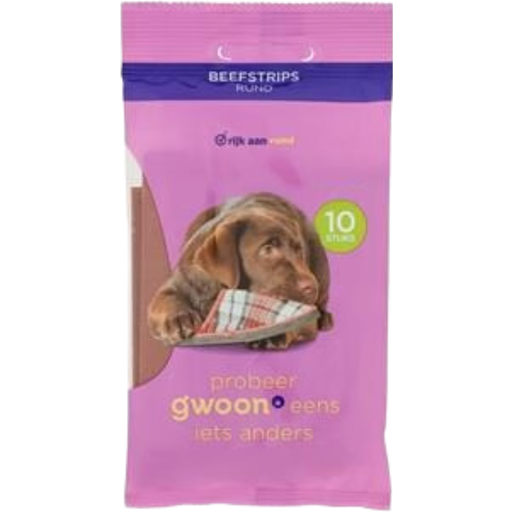
Why it suits this profile: This treat is easy to use as a reward between meals, and its size makes it suitable for training or a quick snack.
The meat content is specified: 18% beef. This makes it clear that the treat isn’t made entirely of meat.
22% crude protein and a handy 90 g pack; not suitable for dogs sensitive to cereals or beef.
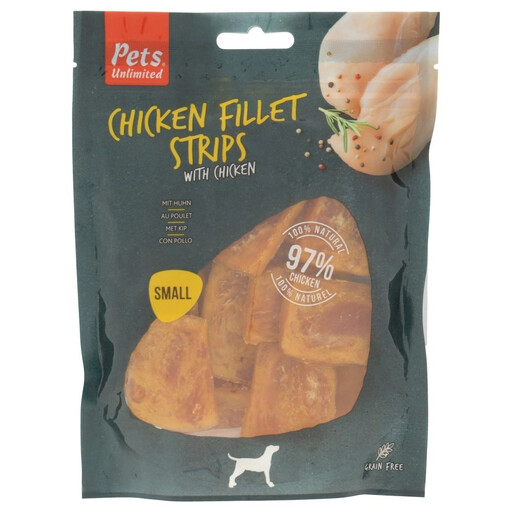
Why it suits this profile: These small fillets are designed for small dogs and can also be used as a supervised reward during training.
The ingredients list specifies 92% chicken breast, making the meat content easy to check rather than relying on a marketing claim alone.
Cereal-free according to the product information, with a resealable pack; not suitable for puppies under 6 months.

Why it suits this profile: This variety is specifically labelled for medium-sized dogs and is intended as a daily chew reward.
The size is clearly stated. The product description recommends one stick a day, under supervision and within the treat limit.
180 g pack, with 17% moisture, 8% crude protein and 1% crude fat.
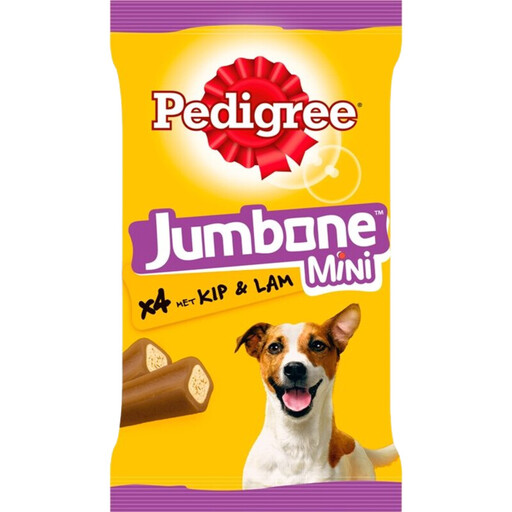
Why it suits this profile: According to the product information, the mini version is intended for small adult dogs weighing up to 15 kg and is suited to a more relaxed chewing session.
The intended dog size and feeding frequency are clearly stated: for dogs weighing 4–10 kg, give no more than one piece per week.
A chew with a hard outer layer and a soft centre; the product information states that it contains less than 2% fat and no artificial colourings or flavourings.
We’ve put together a complete, up-to-date list of products that meet these strict selection criteria and the applicable European safety regulations.
As a general guideline, several products state that treats should provide no more than 10% of your dog’s daily calorie intake. The right amount depends on your dog’s weight, age and activity level, as well as the calories in each treat. Adjust their main meal if needed.
Choose a treat that’s the right size for your small dog’s weight and chewing strength. Options include small fillets, mini chew sticks and treats with clear weight guidance. Never give a large treat without supervision, and always check the minimum age.
No. Grain-free dog treats often contain other sources of carbohydrates, such as potato starch, tapioca or peas. Being grain-free doesn’t in itself tell you anything about the overall fat content, portion size or whether the treat is right for your dog. Compare the ingredients list and speak to your vet if your dog has allergies.
