
Vandaag of morgen in huis

Kwaliteit gegarandeerd

Welkomstaanbiedingen ontgrendelen: GRATIS bezorging | Tot 80% korting | Gratis 30 dagen JoyPlus-proefperiode
Download de app
Buying a bag of dog treats might seem straightforward – until you have to choose between soft dog chews, chewy products, meaty dog snacks and dental sticks. The packaging often promises a lot, but not every treat suits every dog or every occasion.
Pay particular attention to three common pitfalls:
For training, small, soft treats are usually the most practical. You can give them quickly and, if the size allows, break them into smaller pieces. Examples include soft meaty treats, dog biscuits or small cheesy rewards.
For calm chewing, chewy dog treats are a better fit. Think bones, sticks or products with a hard outer layer and a softer centre. Always supervise your dog while they chew. A dog can swallow large chunks, especially if they eat quickly.
For dental care, there are dental sticks for dogs with a specific shape or texture. The packaging usually states which weight or size of dog the product is intended for. A stick for a small dog isn’t automatically suitable for a large dog, and vice versa.
Treats should form part of your dog’s total daily diet. Many manufacturers recommend that supplementary food should make up no more than 10% of daily calorie intake. If necessary, reduce the main meal and follow the feeding guidelines on the pack.
Pay attention to the sizing:
Also check the minimum age. Some products aren’t suitable for puppies or dogs under a certain age. A treat for adult dogs isn’t a complete food and shouldn’t replace the main meal.
The front of a pack often highlights the flavour. The ingredients list gives you a much clearer picture. For a treat with a high meat content, the percentage of meat or animal by-products is usually stated clearly. In other products, grains, vegetable by-products or oils and fats make up a larger part of the recipe.
Examples from the range:
“Healthy dog treats” aren’t one fixed product category. Look at the ingredients, the fat content, the portion size and how often you plan to give the treat.
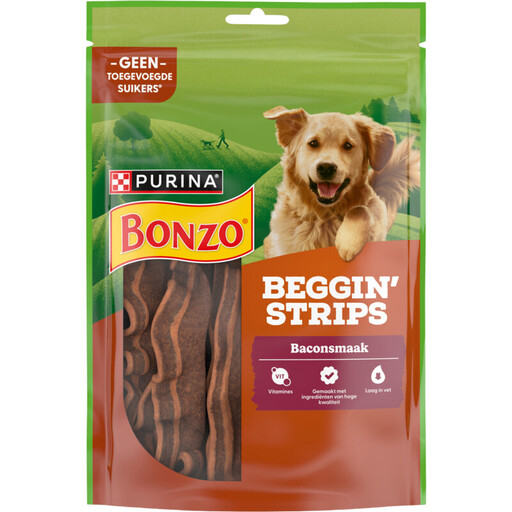
Why this fits the profile: The soft bacon-flavoured strips are designed as a supplementary treat or reward between meals. You can use them on a walk or offer them in small portions.
The product information states clear analytical values: 15.7% protein, 5.7% fat and 23% moisture. This makes it easier to factor the treat into your dog’s daily feeding plan.
Soft texture, bacon flavour and clear instructions to adjust the main meal when needed.
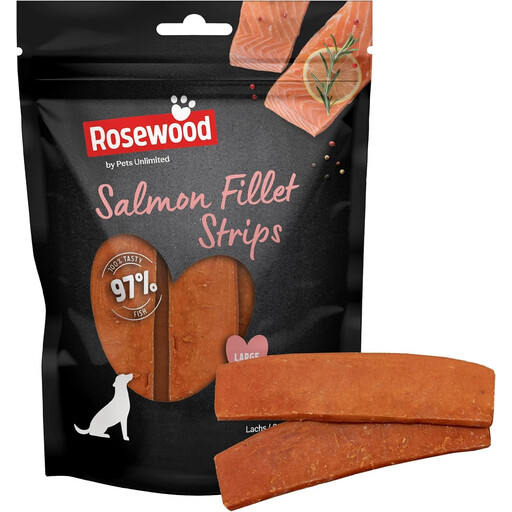
Why this fits the profile: These soft salmon strips are ideal when you’re looking for a treat with a high stated fish content and a clear flavour choice.
The packaging states 97% salmon, no added grains and no artificial colours, flavours or flavour enhancers. Always check the current packaging.
Stated high salmon content, soft strips and 150 g content; handy as a reward after a walk or training session.

Why this fits the profile: A multipack suits owners who want to give a daily dental treat to a medium-sized dog weighing 10 to 25 kg.
According to Pedigree’s own research and product claims, daily use can help reduce tartar build-up by up to 80%. Treat this as a product claim, not a guarantee for every dog.
Suitable weight range of 10–25 kg, multipack with 56 sticks and, according to the product information, no added sugar.
We’ve put together a full, up-to-date list of products that fully meet these strict selection criteria and comply with current European safety regulations.
That depends on your dog’s weight, age, activity level and the calorie content of the treat. As a general guideline, many packs state that treats should provide no more than 10% of daily calorie intake. Follow the feeding advice on the pack and adjust the main meal if necessary.
Dental sticks are designed with a specific shape, texture or composition. According to some brands’ own research, daily use can help reduce plaque or tartar. The results aren’t the same for every dog. Give the stick under supervision and don’t see it as a replacement for brushing or a vet check-up.
Small, soft dog chews or meaty treats that can be broken into pieces are usually the most practical for training. Choose a treat you can give quickly, check the fat and sugar content, and count all rewards towards the daily allowance. For a small dog, small portions are especially important; for a large dog, a slightly bigger size can be more convenient.
