
Vandaag of morgen in huis

Kwaliteit gegarandeerd

Welkomstaanbiedingen ontgrendelen: GRATIS bezorging | Tot 80% korting | Gratis 30 dagen JoyPlus-proefperiode
Download de app
Buying a bag of dog treats might seem straightforward, but the range varies hugely in composition, size and purpose. A soft treat for training is not the same as a chew treat for dogs or a dental stick for daily use. If you only look at the flavour or a flashy claim on the packaging, you could end up paying for a product that doesn’t suit your dog’s age, size or eating habits.
As a Joybuy Product Recommendation Officer, I always start by looking at verifiable information: ingredients, analytical constituents, size, feeding advice and the intended use.
With natural dog treats or grain-free dog treats, it’s important to read the full ingredients list. A product might be grain-free, for example, but still contain relatively high fat or have a vague nutritional analysis. With MeatyWay Chicken Jerky Tender Dog Treats, chicken is listed as the first ingredient and the grain-free composition is stated. The analytical values are also clearly given: minimum 30% protein, minimum 15% fat, maximum 1% crude fibre and maximum 18% moisture.
Other products might claim “high protein” or “low fat” without giving exact percentages. That makes it harder to compare. Use the packaging as your final source and check whether the claim is backed up there.
Dental sticks for dogs are intended as a supplementary treat. According to Pedigree’s product information, daily use can help reduce tartar build-up, clean hard-to-reach teeth and support healthy gums. The claim “up to 80%” is a statement from the brand, so you should read it as a manufacturer’s claim, not a guarantee for every dog.
The shape, hardness and correct size are, however, practically relevant. A stick for a small dog might be finished too quickly by a large dog, while a large stick can be difficult for a small dog to chew. If dental problems persist, advice from a vet is more appropriate than simply giving more treats.
Dog treats should be part of a supplementary feeding plan and should not replace a complete meal. Several product packs advise that treats should make up no more than about 10% of daily calorie intake. If you give lots of small rewards during a long training session, reduce the main meal accordingly if needed.
Also pay attention to the difference between a soft training treat and a long-lasting chew treat. A jerky that breaks easily is often easier to portion than a large chew stick.
Don’t just look at words like “chicken dog treats” or “bacon dog treats”. Check:
According to the product information, Bonzo Beggin’ Strips Snack Speck contains grains, meat and animal by-products, glycerol, and milk and milk by-products. The analytical composition states 15.7% protein and 5.7% fat. The product is a supplementary treat with a bacon flavour, not a complete meal.
For treats for small dogs, a small size or a treat you can easily break is practical. According to the description, MeatyWay Chicken Jerky is broken into smaller pieces for small breeds. For treats for medium dogs, products like g’woon Dog Dental Sticks Medium are designed for dogs in that weight range.
For treats for large dogs, such as Pedigree Dentastix Maxi, suitability for dogs from 25 kg is stated. Always supervise your dog when giving a chew treat. A dog that tries to swallow large pieces faces a different risk to a dog that chews calmly.
Most dog treats should be stored in a cool, dry place. Some products also have a short use-by period after opening. For example, Pedigree states a period of 14 days after opening for several dental sticks; other packs state four weeks. Always check the label of the exact variant.
A resealable bag is handy for training treats, but make sure you close the pack properly to prevent drying out or loss of aroma.
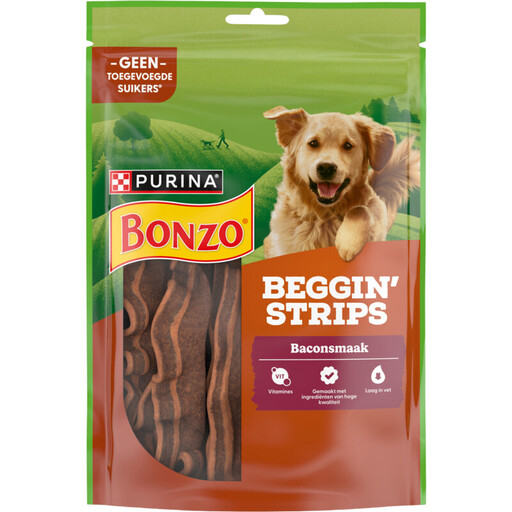
Why this fits the profile: A soft treat with a bacon flavour for rewards between meals. The strips are suitable for giving sparingly during daily use.
The packaging states the analytical values, including 15.7% protein and 5.7% fat. This makes it easier to fit the treat into your dog’s daily feeding plan.
Bacon flavour, soft texture and clear nutritional analysis. It is a supplementary treat for adult dogs.

Why this fits the profile: For owners who want to give their small dog a longer chewing activity with a treat that contains no added grains.
The size is specifically labelled as small, and the composition states no added grains, gluten, artificial colourings, flavourings or preservatives.
10 pieces per pack, beef hide with dried chicken strips and a chew structure for longer-lasting activity.
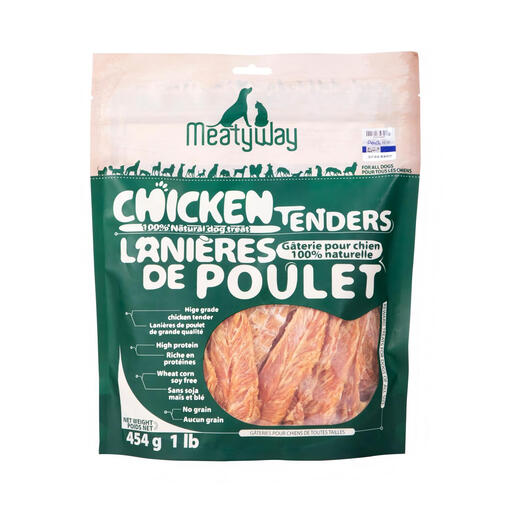
Why this fits the profile: The soft jerky can be broken into small pieces, making it practical for repeated rewards during training.
The description lists chicken as an ingredient and gives concrete values: minimum 30% protein, minimum 15% fat and maximum 18% moisture. This makes portions easier to control.
Grain-free composition according to the product description, resealable 454 g bag and an easy-to-break structure.

Why this fits the profile: For dog owners who want to link a regular treat to their daily routine and are looking for a pack for medium-sized dogs.
The variant is designed for medium dogs weighing 10 to 25 kg. According to Pedigree’s own research, the X-shape can help with daily dental care; this remains a brand claim.
Multipack with 56 sticks, no added sugar and clear feeding advice for daily use.
We’ve put together a full, up-to-date list of products that fully meet these strict selection criteria and comply with current European safety regulations.
As a practical guideline, treats should provide no more than about 10% of daily calorie intake. The exact amount depends on your dog’s weight, age, activity level and the type of treat. Break large dog treats into smaller pieces when using them during training.
No. Check the weight, age and size on the packaging. A dental stick for small dogs is different from a variant for large dogs. Keep an eye on your dog while they chew and make sure fresh drinking water is always available.
Soft treats that you can quickly divide into small pieces are usually the most practical. Chicken dog treats, bacon dog treats and soft jerky can be appealing, but always check the fat content and the ingredients. Choose several small portions rather than one large reward per exercise.
