
Vandaag of morgen in huis

Kwaliteit gegarandeerd

Welkomstaanbiedingen ontgrendelen: GRATIS bezorging | Tot 80% korting | Gratis 30 dagen JoyPlus-proefperiode
Download de app
Dog treats come in many forms: soft rewards, crunchy chews, dental sticks or dried meat snacks. With so much choice, it can be hard to compare them. A packet labelled “natural”, “dental” or “with chicken” doesn’t always tell you enough about the ingredients, the size or how to use it properly.
So it’s worth watching out for three common pitfalls:
Start with the ingredients list. Ingredients are usually listed in descending order by weight. Don’t just look at the front of the packet – also check:
A single-ingredient treat can be a straightforward choice when you want to know exactly what you’re feeding. The MeatyWay Chicken Tenders 100g lists chicken as the only ingredient and, according to the product information, contains at least 70% crude protein and a maximum of 5% crude fat. The manufacturer describes the treat as grain-free and free from artificial additives. If your dog has allergies, always check the label yourself and consult a vet if you’re unsure.
With composite dog treats, several animal and plant-based ingredients may be present. That’s not necessarily a bad thing, but it makes the choice less suitable for dogs with known food sensitivities.
The right texture depends on the purpose and the dog. Soft dog treats and semi-moist treats are practical for training because you can give them quickly or break them into smaller pieces. Examples include soft chicken strips, pâté-style rewards and small training treats for dogs.
For longer chewing, there are dog chews, bones and sticks. Pay attention to the dimensions and your dog’s chewing style. A treat for small dogs shouldn’t be so large or hard that the dog struggles to pick it up. Treats for large dogs, on the other hand, need to be big enough that they can’t be swallowed in one go.
Always supervise your dog while they’re chewing. Remove a treat if it splinters, becomes too small or is swallowed unusually quickly.
A treat is supplementary food, not a replacement for a complete meal. The product information usually advises keeping treats to a maximum of 10% of daily calorie intake. Adjust the main meal if you reward regularly.
For training, small, easy-to-break dog treats are handy. For daily chewing enjoyment, you can choose a firmer product. With dental treats for dogs, it’s important to follow the recommended size and quantity. A dental stick for a small dog isn’t automatically suitable for a medium or large dog.
Also pay attention to the storage instructions. Some opened treats must be used within 14 days, while moist treats should be kept in the fridge after opening and used within 24 to 48 hours.
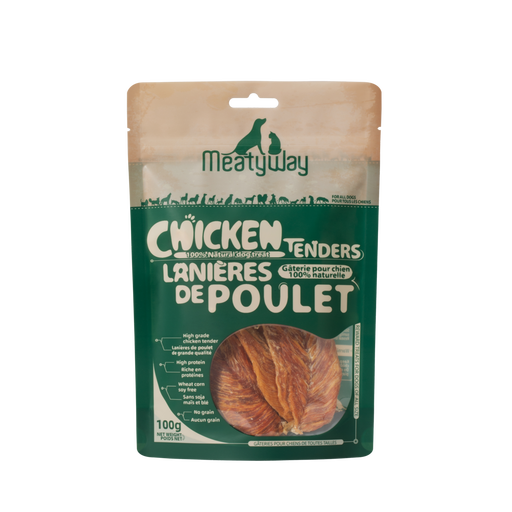
Why this fits the profile: According to the product information, this treat has just one ingredient: chicken. The soft jerky texture is easy to break into smaller pieces for training or a controlled reward.
The ingredients list is straightforward and the portion can be easily reduced by hand. Always check the current packaging if your dog has food sensitivities.
100 g content, at least 70% crude protein according to the product information, and a soft texture.
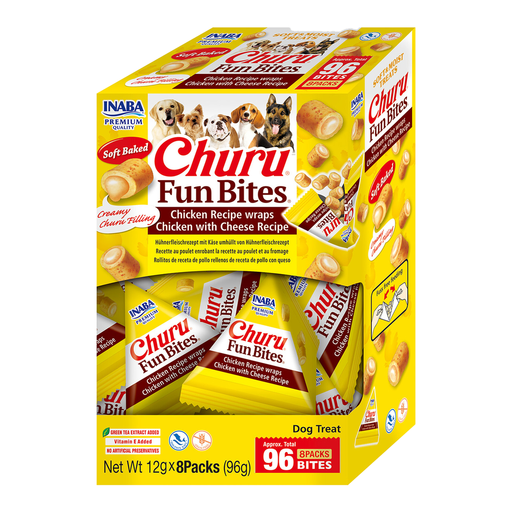
Why this fits the profile: The combination of a soft outer layer and creamy filling offers variety for dogs that quickly get bored with standard treats.
The product information states portion packs of 12 g, so opening and dosing stays straightforward. Keep refrigerated after opening.
8 individual packs, 69% moisture according to the product information, and suitable as a training reward.

Why this fits the profile: The pack is designed for medium-sized dogs weighing 10–25 kg that have a daily dental treat as part of their routine.
The size and target group are clearly stated. According to Pedigree’s own research, daily use can reduce tartar build-up by up to 80%; this remains a brand claim.
56 sticks, intended for dogs weighing 10–25 kg, with no added sugar according to the product information.
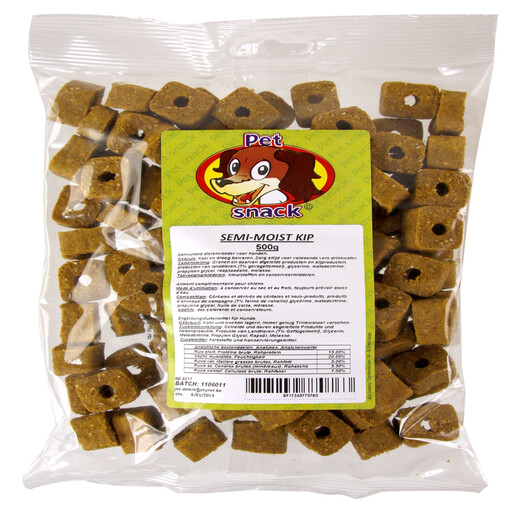
Why this fits the profile: The semi-moist, soft texture is easy to chew and portion out during multiple training sessions.
The texture is clearly described and the pack contains 10 bags of 500 g. Check the shelf life after opening and seal each bag tightly.
Soft bite, chicken as the stated animal component, and a bulk pack for frequent use.
We’ve put together a full, up-to-date list of products that fully meet these strict selection criteria and comply with current European safety regulations.
Choose small, soft or easy-to-break treats. That way you can reward often without giving a large number of calories each time. Soft dog treats, chicken strips and semi-moist treats are practical for this. Keep an eye on the total daily amount and reduce the main meal if needed.
Follow the feeding instructions on the packet. Some dental sticks are intended for daily use, while other chews are only suitable a few times a week. The right size depends on your dog’s weight. Always provide fresh drinking water and supervise while chewing.
Store dry dog treats in a cool, dry place and seal the packet well. According to the product information, moist treats sometimes need to go in the fridge. INABA, for example, advises keeping opened packs refrigerated and using them quickly. Always check the shelf life information on the label.
