
Vandaag of morgen in huis

Kwaliteit gegarandeerd

Welkomstaanbiedingen ontgrendelen: GRATIS bezorging | Tot 80% korting | Gratis 30 dagen JoyPlus-proefperiode
Download de app
Buying a bag of dog treats seems simple until you have to choose between dog biscuits, soft dog treats, dog chews and dried meat treats. Marketing copy often highlights words such as “natural”, “healthy” or “high in meat”, but these terms do not always tell you enough about the ingredients, portion size or suitability for your dog.
This guide helps you compare dog treats using checkable criteria. That way, you can choose a treat for training, a daily reward or longer-lasting chewing enjoyment without spending money unnecessarily.
Chicken dog treats, duck dog treats and salmon treats for dogs may sound appealing, but always check the full ingredients list. “With chicken” does not automatically mean that chicken is the main ingredient. For example, G’woon Beef Strips list 18% beef alongside cereals, plant-based ingredients and additives.
So check:
Some brands describe their treats as dental-care treats for dogs or claim that chewing helps reduce plaque and tartar. According to the product descriptions from brands including Rosewood and MeatyWay, the chewing action may contribute to this. However, this is a brand claim and is not a substitute for brushing your dog’s teeth or seeking veterinary advice.
Use these types of treats as an addition rather than a replacement. Also consider the shape and hardness: a hard chew is not automatically suitable for every dog.
A treat for a large dog may be too big or difficult for a small dog to chew. Conversely, a small treat may offer little chewing enjoyment to a large dog. Check the recommended dog size, whether the treat can be broken and its texture.
For training, small, soft dog treats are usually practical. For calmer chewing, firmer sticks or bone-shaped treats may be more suitable, but always supervise your dog and remove any small broken-off pieces.
The ingredients list shows what is actually in the treat. According to the product information, MeatyWay Chicken Tenders list only chicken as an ingredient. The analytical composition states that, per 100 grams, the product contains at least 70% crude protein, at least 5% crude fat, no more than 1% crude fibre and no more than 18% moisture.
Another example is Petsnack Semi-Moist Chicken. According to the product information, this semi-moist treat contains cereals and vegetable by-products, with 7% poultry meal. This may be suitable if you are mainly looking for a soft reward, but less so if you specifically want grain-free dog treats.
For dog training treats, it is useful to choose something you can portion quickly. Soft jerky is often easy to break into smaller pieces. According to the product information, MeatyWay Chicken and Duck Jerky Tenders and the sweet potato variant are soft and easy to break.
For longer-lasting chewing, sticks with a firm core are another option. Rosewood Twisters Chicken Chew Sticks are indicated for large dogs. With this type of dog chew, choose a size that your dog cannot swallow in one go and stay nearby while they chew.
Dog treats are supplementary food and should not replace your dog’s usual meals. Adjust the main meal if you give rewards regularly. The right amount depends on your dog’s weight, age, activity level and feeding routine.
As a general rule, store opened dog treats in a cool, dry place and seal the packaging properly. Always check the best-before date and the specific feeding guidelines on the label. Also make sure fresh drinking water is available.
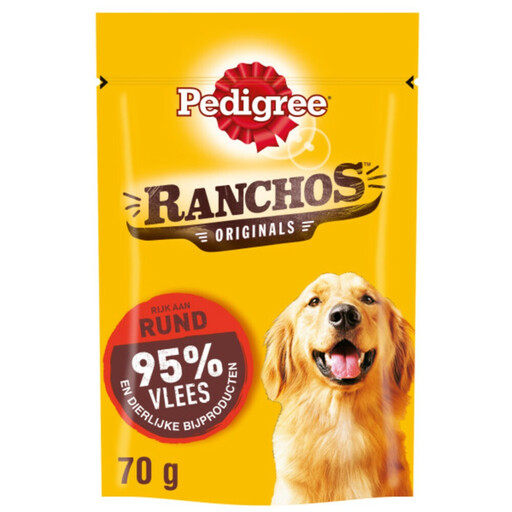
Why it suits this profile: A compact bag with clear feeding guidelines for small, medium-sized and large dogs. Handy if you want to try out different dog treats first.
The product information lists the ingredients and feeding advice for each dog size, making it less likely that you will give portions that are too large.
70 grams, at least 30% protein according to the product information, and suitable for dogs of different sizes.
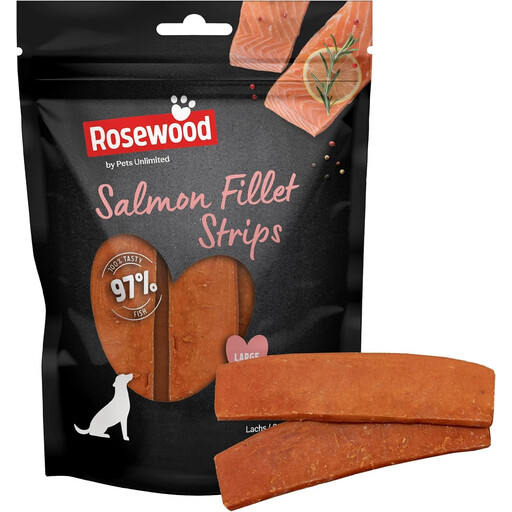
Why it suits this profile: A soft salmon treat for dogs who enjoy a distinctive fish flavour and a larger size, for example after a walk.
The product description states that it contains 97% salmon and is free from added cereals, gluten and artificial colourings, flavourings and taste enhancers.
150 grams, a soft texture and a recipe containing 97% salmon according to the product information.
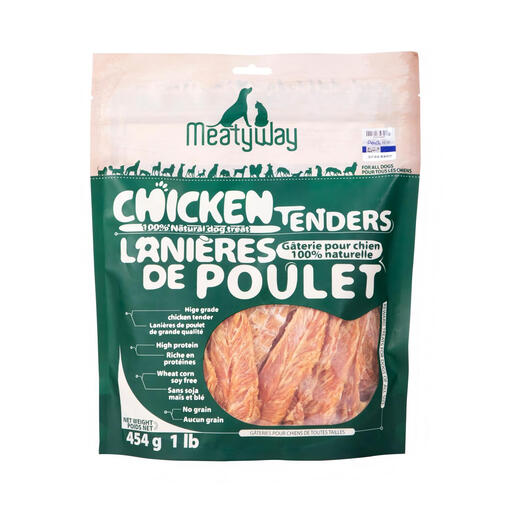
Why it suits this profile: The 454-gram bag is ideal for people who train frequently or give small rewards every day and want a treat that can be broken into pieces.
According to the product information, the soft jerky can be divided into smaller pieces. This prevents training rewards from being unnecessarily large.
454 grams, chicken listed as an ingredient, and a soft, breakable texture for training and rewarding.
We have put together a complete, up-to-date list of products that fully meet these strict selection criteria and the applicable European safety regulations.
This depends on your dog’s weight, activity level and main diet. Follow the feeding guide on the packaging and give treats as supplementary food. Some products recommend that treats make up no more than 10% of your dog’s daily calorie intake. If you give lots of rewards, adjust the usual meal accordingly.
A soft texture may be easier to chew, but suitability varies from dog to dog. According to the product information, Petsnack Semi-Moist Chicken is also offered for older dogs. However, check the ingredients and ask a vet for advice if your dog has dental or dietary problems.
No. According to their own product claims, certain chews may help reduce plaque or tartar through the chewing action. This is not guaranteed and does not replace daily dental care or check-ups. Choose a size that your dog can chew safely and stay with them while they chew.
