
Vandaag of morgen in huis

Kwaliteit gegarandeerd

Welkomstaanbiedingen ontgrendelen: GRATIS bezorging | Tot 80% korting | Gratis 30 dagen JoyPlus-proefperiode
Download de app
Buying a bag of dog treats seems simple enough, until you have to choose between dog biscuits, chew bones, dental sticks and soft dog treats. A snack that is suitable for a Labrador may be too large or too hard for a Chihuahua. Attractive claims about dental care can also give an incomplete picture.
So watch out for these three common pitfalls:
The size of a treat should suit your dog’s weight and jaw. A treat that is too small can be swallowed quickly. A treat that is too hard or large may be unsuitable for a puppy, senior dog or dog with sensitive teeth.
Examples from the range:
The recommended size for dog dental sticks is usually shown on the packaging. For example, g’woon Dental sticks Medium are intended for medium-sized dogs. Pedigree Dentastix has separate varieties for small, medium-sized and large dogs.
Dog treats are usually complementary pet food, not a complete meal. According to the product information provided, treats should generally account for no more than 10% of your dog’s daily calorie intake. Adjust the main meal if your dog receives treats regularly.
Check, among other things:
g’woon Marrow-Filled Dog Biscuits contain grains with gluten and have a crunchy outer layer with a soft marrow filling. They are therefore practical as a reward or training treat, but less suitable if your dog does not tolerate grains or gluten well.
Dog treats and small dog biscuits are useful during training, as you can give several small rewards. Dog chews are designed for longer chewing and can help reduce boredom. A treat positioned as supporting dental care often has a ridged or specially shaped design.
According to Pedigree’s own research, Dentastix can reduce tartar formation by up to 80% when used daily. This is a brand claim, not a general guarantee for every dog. The product description also states that the texture helps reach hard-to-access teeth and supports healthy gums. So use a dental treat as a supplement, not as a replacement for brushing or a professional dental check-up.
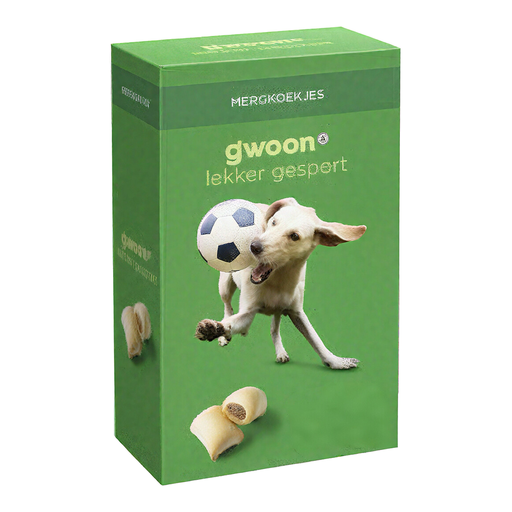
Why it suits this profile: The 500-gram pack provides a practical supply of rewards and training treats for dogs of different breeds and sizes.
The product information clearly states that the biscuits are suitable for all breeds and sizes. However, check the portion size and gluten content.
Crunchy outer layer, soft marrow filling and no artificial colourings or flavourings according to the product description.

Why it suits this profile: A large multipack is a good fit for households with a medium-sized dog that receives a regular dental treat every day.
The pack is specifically designed for medium-sized dogs. According to Pedigree’s own research, daily use can reduce tartar build-up by up to 80%; always check the wording on the current packaging.
56 sticks, no added sugar according to the product information and an X-shaped texture.

Why it suits this profile: A medium-sized dog that chews for a short time each day gets a snack that can be used both as a reward and as a chewing treat.
The size is specified for medium-sized dogs. The composition includes grains, oils and 1% sodium hexametaphosphate, among other ingredients.
180 grams, 1% crude fat according to the product details and designed as a daily dental treat.

Why it suits this profile: According to the product information, this variety is intended for dogs weighing 5–10 kg from 4 months of age.
The size is linked to a weight range rather than being a one-size-fits-all option. According to Pedigree’s own research, daily use can reduce tartar build-up by up to 80%.
1.3% fat according to the analytical constituents, no added sugar and 1 stick per day as the stated recommended use.
We have compiled a complete, up-to-date list of products that fully meet these strict selection criteria and the applicable European safety regulations.
Give your dog a new treat under supervision at first. Pay attention to how quickly your dog chews and whether small pieces break off. Stop giving the treat when it becomes small enough to be swallowed whole. Always make sure fresh drinking water is available too.
Store opened packs in a cool, dry place and follow the shelf-life instructions on the label. Some products must be used within 14 days of opening. If your dog has a known food allergy, check the ingredients, even if the packaging states that the product contains none of the 14 major EU allergens.
If your dog has pain, bleeding gums, strong-smelling breath or difficulty eating, consult a vet. A dental treat is not a treatment.
As a practical guideline, treats should provide no more than around 10% of your dog’s daily calorie intake. The right amount depends on your dog’s weight, age, activity level and main food. During intensive training, you can use smaller pieces and adjust the meal accordingly.
No. Dental sticks and other dog treats designed to support dental care can encourage chewing and, according to brand claims, help reduce tartar. They do not replace tooth brushing, check-ups or professional cleaning. You should also choose a size that suits your dog’s weight.
This varies by product. The product information for several of the treats mentioned states that they should be used within 14 days of opening. Seal the pack properly, store the treat in a dry place and always follow the date and instructions on the packaging.
