
Vandaag of morgen in huis

Kwaliteit gegarandeerd

Welkomstaanbiedingen ontgrendelen: GRATIS bezorging | Tot 80% korting | Gratis 30 dagen JoyPlus-proefperiode
Download de app
A dog does not automatically benefit from a toy just because the packaging says it is “durable”, “interactive” or “dental care”. The right choice depends on your dog’s size, play style and the materials they can handle. If you focus only on a cheerful design or a low price, you may quickly end up buying a toy that is barely used or becomes damaged after just a few days.
In this guide, you’ll learn what to look for when choosing dog toys, which features can be verified and which type is suitable for puppies, small dogs, medium-sized dogs and strong chewers.
A toy that is suitable for a small dog may be too small for a large dog. Conversely, a heavy nylon toy may be difficult for a puppy to pick up. Always check the dimensions, recommended weight and intended user group.
A toy measuring 16.5 × 8 cm, such as the Blinkit Pink Star, is intended for puppies and small dogs according to the product information. This makes it less suitable for medium-sized or large breeds.
Materials such as nylon, natural rubber, latex, TPR and fabric each have a different usage profile. A sturdy material may withstand chewing better, but it can also be harder on your dog’s teeth. A soft plush toy feels comfortable, but may tear more quickly if your dog chews intensely.
No dog toy is suitable for unlimited use without supervision. Check the seams, loose parts, squeakers and outer layer regularly. Replace the toy as soon as any parts come loose or break off.
According to product descriptions, a ridged or textured surface may help clean the tooth surface while your dog chews. This does not mean that dental-care dog toys replace professional dental care. Think of this feature as part of your dog’s daily routine, not as a medical treatment.
Claims about reducing boredom, stress or separation anxiety should also be read with caution. According to the brands’ own information, chewing or interactive play may help dogs use up energy. The effect varies from one dog to another.
Choose the material based on what your dog actually does:
A ball must not be so small that your dog can take it completely into their mouth and swallow it. At the same time, they should be able to grip the toy properly. Also look out for:
Electronic dog toys should also come with battery information. Keep a USB-C cable out of your dog’s reach and only use a moving ball in an open space where it cannot become trapped behind anything.
Washable dog toys are practical if you often play outdoors. According to the product information, the Blinkit interactive latex balls can be cleaned with water and left to air-dry. Do not use boiling water, bleach or a microwave.
For a longer lifespan:
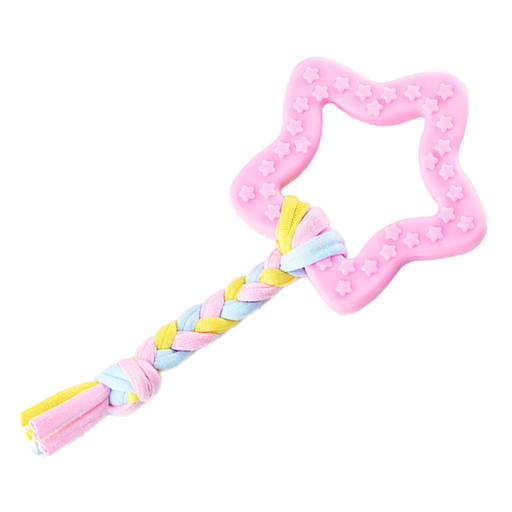
Why it suits this profile: According to the product information, this compact dog rope measuring 16.5 × 8 cm is made for puppies and small dogs. It supports chewing, tugging and simple games of fetch.
The size and recommended user group are clearly stated. This reduces the chance of choosing a toy that is too large or too heavy for a small dog.
TPR with fabric; suitable for tugging and chewing; intended for puppies and small dogs.

Why it suits this profile: For owners looking for an interactive toy that offers more than just a squeaker. According to the product information, this natural-rubber toy is suitable for small and medium-sized dogs weighing up to around 15 kg.
The product information specifies a clear target group and care instructions. The toy can be filled with treats, but supervision is still required.
Natural rubber; unpredictable rolling and bouncing; suitable for treats; dishwasher-safe according to the product information.
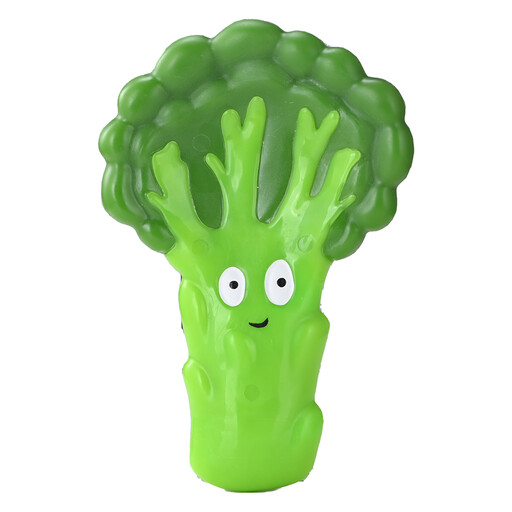
Why it suits this profile: According to the manufacturer, this dog chew toy is intended for moderate to strong chewers. It measures 11 × 3.5 × 16.5 cm and can also be used for throwing and fetching.
The nylon construction is more clearly suited to vigorous chewing than soft plush. Nevertheless, the product information recommends regular checks and immediate replacement if damaged.
Nylon material; suitable for moderate to strong chewers; size and design are specified; suitable for chewing and fetching.
For a puppy, soft materials and a suitable size are important. Puppy toys should be easy to pick up and must not contain small, detachable parts. For small dogs, compact toys such as a small dog rope or soft ball are often more practical.
Dogs that enjoy tugging benefit from a sturdy handle or knot. If you mainly want to encourage exercise, you can choose dog-fetch toys such as a ball or inflatable football. Always check that the ball’s diameter is suitable for your dog’s mouth.
A dog that chews a lot needs a different type of toy. In that case, look for nylon or rubber and avoid toys where the stuffing or squeaker is easily accessible. When choosing dog toys for all breeds, your dog’s individual play style remains more important than the breed label alone.
We’ve put together a complete, up-to-date list of products that fully meet these strict selection criteria and the applicable European safety regulations.
That depends on the material and the way your dog plays. Check toys after use for tears, fraying, loose seams and exposed parts. If there is visible damage, replace the toy immediately, even if it still seems appealing.
Dog toys with squeakers may be suitable for interactive play, but supervision is important. As soon as your dog can reach the squeaker or stuffing, there is a risk of swallowing it. Only use the toy while the outer layer and seams remain intact.
No. According to the product information, textures on chew toys may help clean teeth while your dog chews, but this does not replace regular dental care. If you have any concerns about your dog’s teeth or chewing behaviour, ask a vet for advice.
