
Vandaag of morgen in huis

Kwaliteit gegarandeerd

Welkomstaanbiedingen ontgrendelen: GRATIS bezorging | Tot 80% korting | Gratis 30 dagen JoyPlus-proefperiode
Download de app
Good dog toys should suit your dog’s age, size and play style. A puppy has different needs from an adult dog that chews intensively every day. Yet many products look similar because of terms such as “extra strong”, “dental care” or “for all breeds”. These descriptions only become meaningful when you also consider the material, dimensions and usage warnings.
A toy may look sturdy, but its lifespan depends on the material and your dog’s chewing behaviour. Soft latex or plush may be suitable for retrieving and short periods of play, but that does not automatically make it suitable as a durable chew toy for a powerful chewer. So check whether the product information specifies the material, such as TPR, nylon, natural rubber or fabric.
A small toy can be difficult for a large dog to hold and may pose a greater risk of pieces breaking off during intensive chewing. Conversely, large dog toys may be too heavy or awkward for small dogs. Pay attention to the exact dimensions and intended user group. “For all dogs” does not mean that every dog will enjoy the same level of comfort while playing.
According to the product description, a ridged surface may help with mechanical cleaning while chewing. It does not replace normal dental care and does not have a medical effect. So view dental-care dog toys as a supplement to everyday play, not as a solution for tartar or dental problems.
Choose the material based on the activity:
A dog rope or tug toy combining TPR and fabric can offer several ways to play. For chewing only, a compact nylon or rubber toy is often the more logical choice.
Consider the length, width and shape. According to the product information, a product measuring 16.5 × 8 cm is mainly intended for puppies and small dogs. A ball with a diameter of around 15 cm is designed for throwing, chasing and retrieving, but always check that your dog can carry it safely.
The shape also matters. A bone, broccoli or geometric rubber toy may be easy to grip, while a smooth ball offers less grip during tug-of-war.
First decide what you need the toy for:
Use dog toys under supervision, especially during the first play sessions. Check them after use for loose threads, cracks, deep bite marks and broken pieces. Replace the toy immediately if your dog could swallow any part of it.
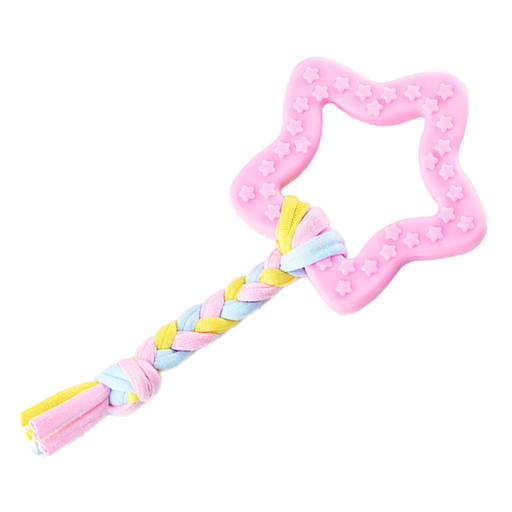
Why it suits this profile: According to the specifications, this compact toy is intended for puppies and small dogs. It combines chewing, tugging and retrieving in one design.
The product information clearly states the size of 16.5 × 8 cm and lists TPR and fabric as the materials. This makes the choice less dependent on general marketing terms.
TPR and fabric; suitable for tugging, chewing and interactive play; designed for puppies and small dogs.
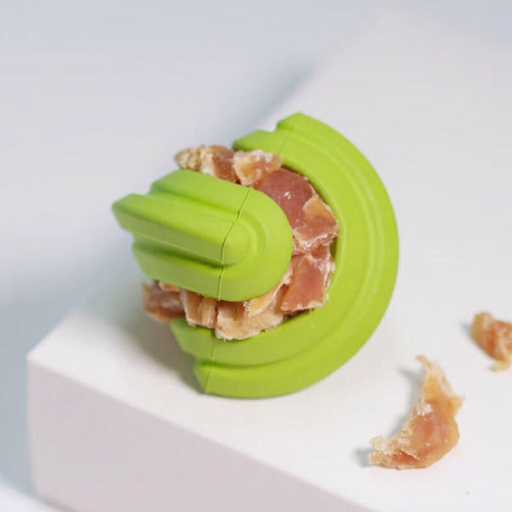
Why it suits this profile: For owners looking for mental stimulation as well as chewing. According to the product description, the natural rubber toy can be filled with treats or xylitol-free peanut butter.
The product information specifies natural rubber, supervision and replacement if cracks appear. This makes it clear that even a sturdy toy needs to be checked.
Natural rubber; space for treats; rolling and bouncing shape; clean with warm soapy water according to the product information.
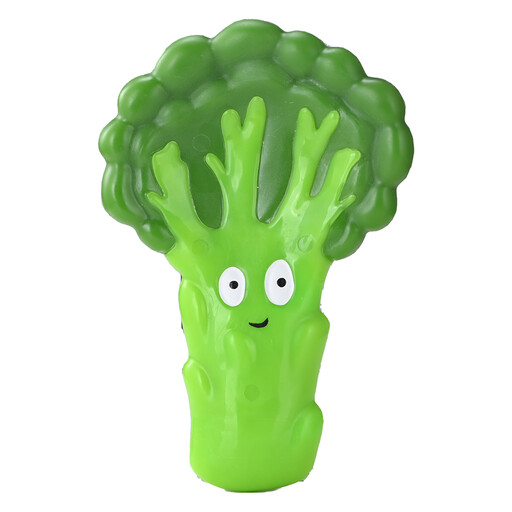
Why it suits this profile: The manufacturer positions this nylon toy for dogs with moderate to strong chewing needs. The shape is designed for chewing, throwing and retrieving.
The product details specify nylon, model NL01057 and dimensions of 11 × 3.5 × 16.5 cm. This means you can compare the fit and material in advance.
Nylon construction; suitable for interactive games of fetch; a size that your dog can hold and carry according to the specifications.
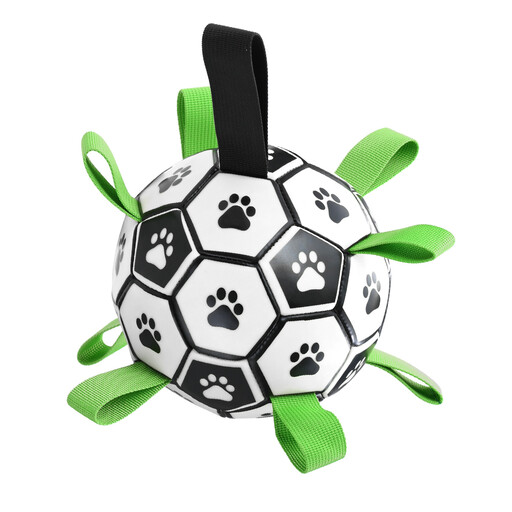
Why it suits this profile: At around 15 cm, this ball is designed for chasing, throwing and retrieving at home, outdoors or during a walk.
The product description specifies the diameter and inflatable design. Once deflated, the ball takes up less space when stored or transported.
Approximately 15 cm in diameter; lightweight design; suitable for throwing, chasing and retrieving; foldable for storage.
We have compiled a complete, up-to-date list of products that fully meet these strict selection criteria and the applicable European safety regulations.
Choose a small toy that is easy to hold and has clearly stated dimensions. TPR or flexible rubber may be suitable for gentle chewing and tugging. Always check whether the manufacturer lists puppies as an intended user group. A toy described as suitable for small dogs is not automatically suitable for every puppy; breed, weight and chewing strength vary.
This depends on the material, frequency of use and chewing behaviour. A nylon toy may last longer for a moderate chewer than a fabric toy, but there is no fixed lifespan. Inspect the product regularly and replace it as soon as deep grooves, cracks or loose pieces appear.
No. According to product descriptions, ridges or textured surfaces may help with mechanical cleaning while chewing, but this is no guarantee against dental problems. Use the toy as part of your dog’s daily care routine and ask a vet for advice if you notice any problems.
