
Vandaag of morgen in huis

Kwaliteit gegarandeerd

Welkomstaanbiedingen ontgrendelen: GRATIS bezorging | Tot 80% korting | Gratis 30 dagen JoyPlus-proefperiode
Download de app
A new toy may seem like an easy choice, but not every piece of dog toy is right for every dog. A small puppy may struggle to hold a large toy, while a powerful chewer can damage soft materials in no time. A squeaky toy that seems fun at first indoors can also create a great deal of noise for some households.
So don’t just focus on colour, shape or phrases such as “extra strong”. Consider the size, material, type of play and warnings on the product page. This will reduce the risk of buying the wrong product and help you choose more carefully between chew toys for dogs, a dog ball or an interactive dog toy.
A product may be described as a durable dog toy, but this tells you very little without information about its material and intended use. A fabric toy with strong stitching may be suitable for gentle play, but that does not automatically make it suitable for a dog that chews hard for long periods.
So check:
“For all breeds” is no substitute for a specific size. A 15 cm ball may be easy for small and medium-sized dogs to handle, but less suitable for a very small dog. Conversely, small toys can become damaged more quickly by a large dog or become unsafe if they disappear into its mouth.
Measure the size of an existing toy that your dog uses comfortably. Also consider the weight, grip and whether your dog can pick up the toy easily.
Some products state that their texture may help clean tooth surfaces or reduce plaque during chewing. This is a product claim, not a replacement for normal dental care or advice from a vet. So treat dental-care dog toys as a play option, not a medical solution.
For puppies and gentle chewers, flexible TPR, soft latex or a combination of fabric and rubber may be comfortable. For medium to powerful chewers, nylon or a more robust rubber construction is often more suitable. However, check regularly for any pieces that may break off.
A soft squeaky dog toy can appeal to dogs that respond to sound. If your dog quickly removes the squeaker from the toy, supervision is especially important. Loose stuffing, squeakers and pieces of fabric must not be swallowed.
Use the product dimensions as a starting point:
A statement such as “suitable for all dog sizes” should always be considered alongside the actual dimensions and safety warnings.
A dog that enjoys playing together may get more out of a dog rope, tug toy or fetch toy. For independent play, a toy that rolls, bounces or can hold treats may be more interesting. A toy intended for outdoor use should also be easy to rinse clean.
Washable latex or rubber is practical after use in grass or shallow water. Fabric toys often need to be wiped down and dried thoroughly. Always follow the manufacturer’s care instructions, and do not use harsh cleaning products unless recommended.
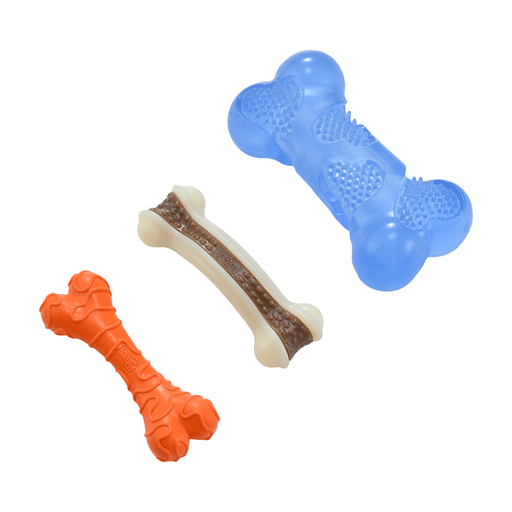
Why it suits this profile: A set offers several ways to play for households that first want to find out whether their dog prefers chewing, tugging or fetching. According to the product description, the cheese and bone shapes are designed for dogs of different sizes.
The product information specifies the material, supervised use and checks for wear. This makes it clearer when the toy needs to be replaced.
Set for chewing and interactive play; rinse with water and leave to air-dry.

Why it suits this profile: This natural rubber toy is designed for rolling, bouncing and hiding treats. It is a good fit for owners looking for mental stimulation as well as chewing.
The irregular shape makes the way it is used clear: the toy does not roll and bounce in exactly the same way every time. The manufacturer recommends supervision and stopping use if cracks appear.
Natural rubber; suitable for treats or xylitol-free peanut butter; clean with warm soapy water or on the top rack of the dishwasher.
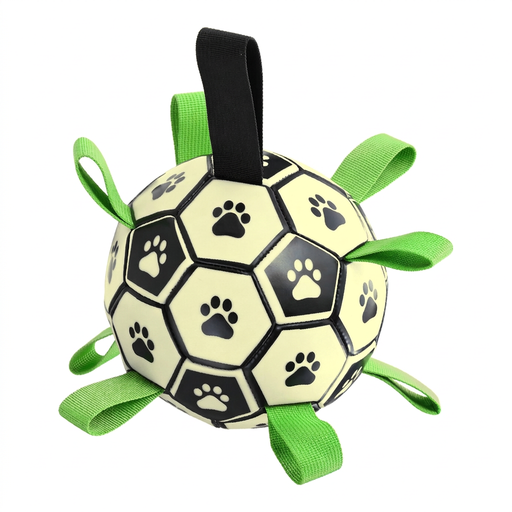
Why it suits this profile: For owners who want to fetch, play tug or play outdoors in low light. According to the product information, the ball has a diameter of approximately 15 cm and is designed for small and medium-sized dogs.
The size and target audience are specified more clearly than with a general breed claim. Check the ball and nylon strap for cracks or loosening after every use.
Suitable for land and shallow water according to the product description; fluorescent effect; nylon handle for throwing and tugging.
No dog toy can withstand chewing indefinitely. Before and after play, check for:
Do not let a dog with a strong urge to chew play unsupervised with a soft toy, rope or squeaky toy. Replace the product as soon as its construction is visibly weakened. Clean the toy according to the label and allow it to dry completely before giving it to your dog again.
We have put together a complete, up-to-date list of products that fully meet these strict selection criteria and the applicable European safety regulations.
Choose an appropriate size and a material that is not unnecessarily hard. A TPR and fabric dog rope, such as a model for puppies and small dogs, may be suitable for gentle chewing and tugging. Always supervise your puppy, especially while it is teething.
This depends on the material, how long the toy is played with and your dog’s chewing habits. A nylon chew toy may last longer than plush for a powerful chewer, but nylon should also be checked regularly for damage. There is no fixed lifespan that applies to every dog.
Yes, as long as the size and material are suitable for the dog and the toy remains intact. Rotate between a dog ball, fetch toy, dog rope and chew toy. This provides variety and prevents one product from being subjected to constant heavy use.
