
Vandaag of morgen in huis

Kwaliteit gegarandeerd

Welkomstaanbiedingen ontgrendelen: GRATIS bezorging | Tot 80% korting | Gratis 30 dagen JoyPlus-proefperiode
Download de app
A dog that enthusiastically takes to a toy can sometimes destroy it within minutes. A ball may turn out to be too large, a squeaker may come loose, or an interactive toy may need recharging more often than expected. Choosing the right dog toys is therefore about more than colour or an eye-catching shape. Size, material, play style and supervision all determine whether a purchase is suitable for your dog.
In this guide, you’ll learn what to look for in dog chew toys, a dog ball, a dog rope toy and intelligent dog toys. You’ll also find practical recommendations for puppies, small dogs, medium-sized dogs and enthusiastic chewers.
Terms such as wear-resistant, bite-resistant or indestructible do not mean much on their own. Even a sturdy toy can become damaged when a dog chews intensively. Always check the stated material, dimensions and warnings. Nylon cores, natural rubber, latex, rope and TPR each have different properties.
Stop using a toy as soon as you notice cracks, loose threads, exposed components or deep grooves. Durable dog toys are not automatically suitable for every dog.
A 15 cm dog ball may work for small and medium-sized dogs, but it is not suitable for every dog. A toy that is too small can be swallowed. One that is too large may be difficult to pick up and reduce the enjoyment of play.
Pay attention to the product page’s recommendations and compare them with your dog’s mouth size, weight and play style. Puppies also require extra supervision, as they can pull toys apart more quickly.
A ridged surface or chew texture may, according to the product description, be designed to stimulate the teeth and gums during play. This is not a substitute for regular dental care or professional advice. Claims about reducing boredom or separation anxiety should also be understood as an intended use, not a guaranteed result.
A brand or supplier’s own research may mention such effects, but you should focus primarily on the specific product details and safety instructions.
Always check the exact dimensions. A toy measuring 16.5 × 8 cm is used differently from a 6 cm ball. Also consider the recommended dog size:
TPR and latex are flexible, while nylon and rubber generally offer a firmer structure. Rope toys provide grip for tug-of-war, but loose fibres can pose a risk if your dog eats them. Fabric toys with squeakers or crinkle components require particularly close inspection.
Also check how the components are attached. A dangling handle, exposed squeaker or damaged outer layer means the toy should no longer be used.
First decide which behaviour you want to encourage:
Before buying, check whether the product is dishwasher-safe, has removable components or can only be cleaned with a damp cloth.
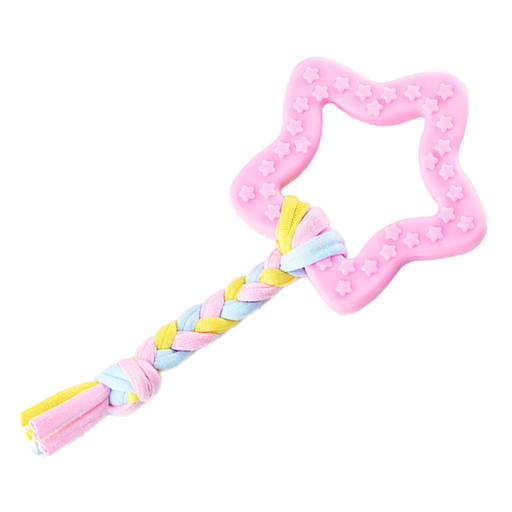
Why This Fits Their Persona: A compact choice for puppies and small dogs that enjoy tugging, fetching or chewing together with their owner.
The product information clearly states the 16.5 × 8 cm dimensions and recommends the toy for puppies and small dogs, not powerful chewers.
TPR and fabric construction; suitable for tugging and chewing; relatively easy-to-handle size.
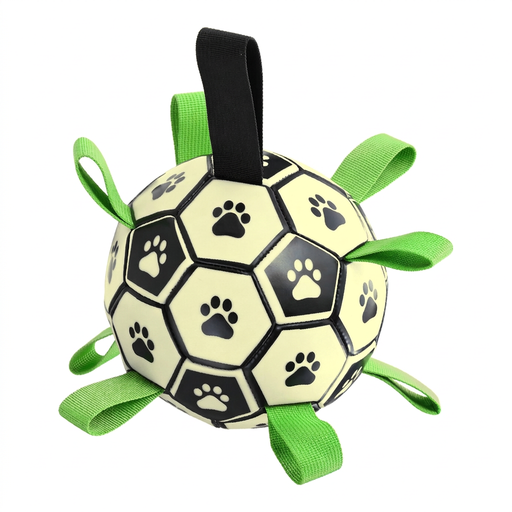
Why This Fits Their Persona: Designed for dogs that love running, fetching and playing outdoors, including in low light or shallow water.
The approximately 15 cm diameter and the warning covering small and large dogs make it easier to verify whether the size is appropriate.
Nylon handle; described as suitable for land and water; glow effect in dark conditions.
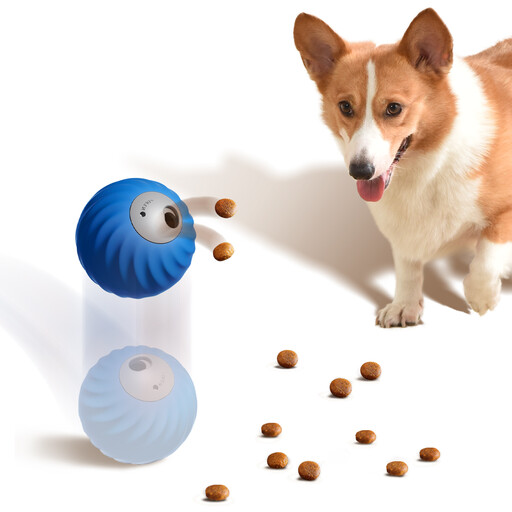
Why This Fits Their Persona: For owners looking to combine movement, treat-finding and independent indoor play.
The product information specifies two play modes, a treat compartment and supervision during use. This makes it clearer what the toy can and cannot do.
USB-C rechargeable; replaceable plush cover; movement and treat dispensing in one product.
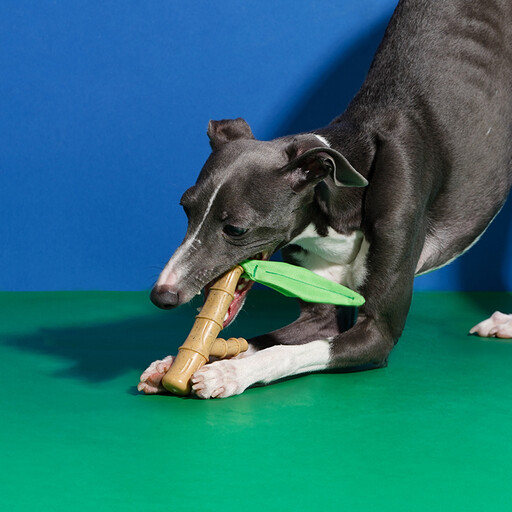
Why This Fits Their Persona: A chew toy for dogs that enjoy independent play and want variety alongside a dog rope toy or ball.
The stated nylon construction with wood shavings and the instruction to replace the toy if cracks or deep grooves appear provide clear inspection points.
Measures 12 × 5.5 × 2.5 cm without leaves; described as suitable for chewing and fetching.
Rotate toys instead of making everything available at once. Clean balls and rubber models according to the product instructions and allow them to dry completely. Electronic products must be switched off and dry before charging.
Inspect every toy before and after use. Pay particular attention to:
Do not leave your dog unsupervised with new squeaky dog toys, chew toys or electronic toys. If any part is swallowed, contact a veterinarian immediately.
Browse a current selection of products and compare materials, sizes and play styles before making your choice.
Choose a size that the puppy can easily hold but cannot swallow. Soft latex or TPR models may be suitable for light chewing. Inspect the toy regularly and supervise your puppy during the first play sessions.
There is no fixed timeframe. Replace a toy as soon as you notice cracks, loose parts, deep grooves, fraying or an exposed squeaker. Powerful chewers may need replacements sooner than dogs that mainly enjoy fetching.
Electronic models need to be charged and kept dry. A treat-dispensing toy also needs to be cleaned after use. A simple dog ball, rope toy or rubber chew toy usually requires less maintenance, but should still be inspected regularly for damage.
