
Vandaag of morgen in huis

Kwaliteit gegarandeerd

Welkomstaanbiedingen ontgrendelen: GRATIS bezorging | Tot 80% korting | Gratis 30 dagen JoyPlus-proefperiode
Download de app
A basket full of dog toys does not automatically mean your dog can play with them safely and for a long time. A squeaker can quickly come loose, a rope can start to fray, and a toy that is suitable for a puppy may be too small or too fragile for an adult dog that likes to chew. The right choice therefore depends on the dog’s size, play behaviour and the toy’s purpose.
In this guide, you’ll discover what to look for in interactive dog toys, chew toys for dogs and boredom-busting toys for dogs. You’ll also find several product options suited to different situations.
Marketing terms such as “extra strong” or “bite-resistant” mean little without information about the material, dimensions and intended use. Even nylon, natural rubber and TPR can become damaged when a dog chews very forcefully. Always check the toy before and after use.
Pay particular attention to:
Stop using the toy immediately if any parts come loose. No toy is designed to be given to every dog without supervision.
Dog toys with squeakers can attract attention and make fetching more appealing. For some dogs, however, the sound is too stimulating, particularly indoors or during quiet periods. A damaged squeaker can also become a small component that the dog tries to chew out.
Choose a squeaky toy mainly for supervised play and check that its construction remains intact. For independent chewing, a simple toy without a detachable sound module may sometimes be more practical.
A dog toy for small dogs should be easy to hold, but must not be so small that it could be swallowed. For medium-sized dogs, sufficient strength and a suitable diameter are important. Puppies also have smaller teeth and may need softer materials.
So don’t just look for the label “for all breeds”. Also check the length, width, diameter and recommended target group.
The choice of material determines what the toy is suitable for:
Read claims about dental-care dog toys sensibly. According to the product descriptions of some brands, a ridged or textured surface may help clean the teeth while chewing. This does not replace normal dental care or checks by a vet.
Use this practical classification as a starting point:
Choose the toy according to what your dog enjoys doing:
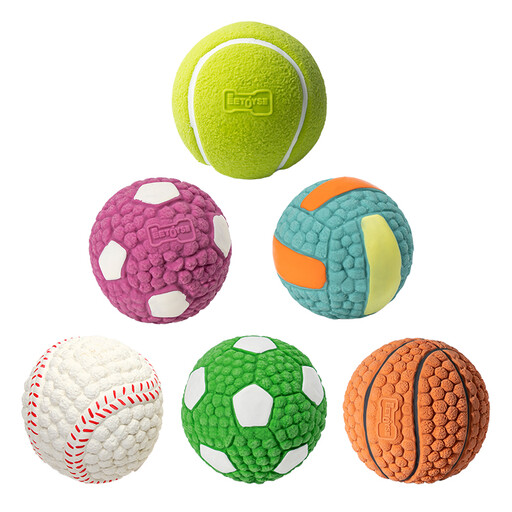
Why it suits this profile: A set of six balls provides variety for fetching, training and indoor play. The different ball shapes allow you to switch toys when one needs cleaning.
The product information lists the dimensions, latex material and the warning to check regularly for signs of wear. This provides more guidance than a general claim about durability alone.
Six pieces, washable with water, with a squeaker and texture for fetching and supervised chewing.

Why it suits this profile: According to the product information, it is suitable for small and medium-sized dogs weighing up to around 15 kg. The geometric shape makes it roll and bounce unpredictably, while you can add treats or xylitol-free peanut butter.
The recommended dog size is more specific than “for all breeds”. The care instructions state that it should be washed with warm soapy water, rinsed thoroughly and left to dry completely.
Natural rubber, space for treats, unpredictable rolling and suitability for supervised mental stimulation.
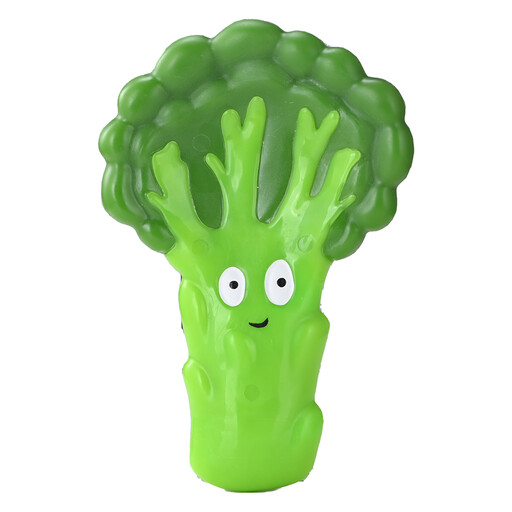
Why it suits this profile: The product description is aimed at dogs with moderate to strong chewing behaviour. The nylon model measures 11 × 3,5 × 16,5 cm and can also be used for throwing and fetching.
The target group and size are specified. The warning remains important: even with nylon, you should check for breaks and replace the toy as soon as it becomes damaged.
Nylon construction, suitable for throwing and fetching, with a size that is easy to hold.
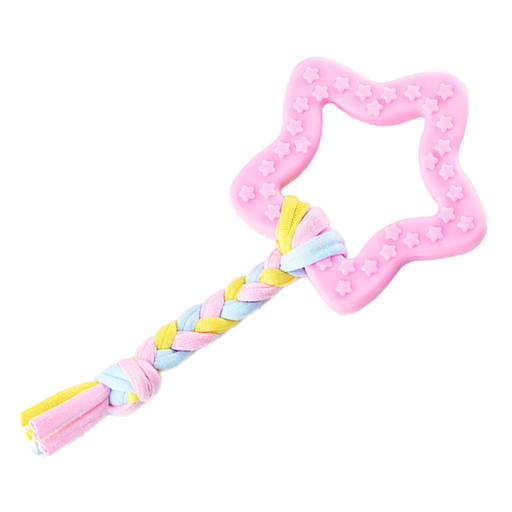
Why it suits this profile: According to the product information, this toy measuring 16,5 × 8 cm is intended for puppies and small dogs. The combination of TPR and fabric supports chewing, tugging and supervised fetching.
The target group is clearly defined. The manufacturer warns that it is not intended for strong chewers or medium-sized and large dogs.
TPR and fabric, suitable for tugging and fetching, with a manageable size for small dogs.
We’ve put together a complete, up-to-date list of products that fully meet these strict selection criteria and the applicable European safety regulations.
A good usage routine extends the practical lifespan of a toy:
A toy can help reduce boredom by providing exercise or a simple task. It is not a substitute for walks, training or attention. If problematic behaviour or severe stress persists, advice from a vet or behaviourist is more sensible than buying more toys.
Choose a size that the puppy can hold comfortably but cannot swallow. A flexible TPR toy or a soft, sturdy rope may be suitable for supervised play. Check the toy more frequently while the puppy is teething, as chewing behaviour can change during this time.
This varies according to the dog, material and intensity of play. A toy may last a long time with a gentle player, while a strong chewer can damage it quickly. So check the condition of the product rather than relying on a fixed promised lifespan.
Some models are designed for independent play, but supervision is needed the first few times. Take extra care with toys that contain a squeaker, battery, cover or loose components. Remove the toy if your dog bites pieces off or tries to swallow them.
