
Vandaag of morgen in huis

Kwaliteit gegarandeerd

Welkomstaanbiedingen ontgrendelen: GRATIS bezorging | Tot 80% korting | Gratis 30 dagen JoyPlus-proefperiode
Download de app
A bored dog will find something to do. That could mean a damaged shoe, a ripped-open cushion or a noisy dog constantly demanding attention. Well-chosen dog toys support daily exercise, play and variety. However, not every toy is suitable for every dog.
Marketing claims such as “indestructible”, “for all breeds” or “dental-care” sound appealing, but without technical details they do not tell you much. The right choice depends on your dog’s size, chewing strength and the way you play together.
A 15 cm ball may be convenient for small and medium-sized dogs, but unsuitable for a very small puppy. Conversely, a small toy may be swallowed or chewed apart more quickly by a large dog. Always check the dimensions and the recommended dog size.
Pay attention to the shape, too. A ball, dog chew or dog tug toy should be easy to grip without making your dog open its mouth unnaturally wide.
No toy is guaranteed to withstand every dog. A soft latex ball, plush toy and nylon dog chew all have different properties. A product suitable for everyday chewing may still become damaged by a dog that bites hard and for long periods.
Check the toy before and after use. Loose threads, tears, exposed stuffing, a detached squeaker or a fraying nylon strap are all reasons to remove the product.
Squeaky dog toys can spark curiosity, but some dogs become overstimulated by noise. A glow-in-the-dark effect makes a ball easier to see in low light, but it does not replace supervision during evening walks. An interactive toy with a treat opening also requires monitoring: make sure your dog does not bite off and swallow pieces of the material.
Choose the material according to the activity:
Interpret claims about dental-care dog toys in practical terms. A ridged surface or rope may come into contact with teeth and gums while your dog chews, but it is not a substitute for regular dental care or veterinary checks. Brand statements about reducing plaque are product claims; do not treat them as a guaranteed effect.
Do not measure the toy by length alone. Also consider:
A toy should not be so small that your dog can get it fully to the back of its mouth. The appropriate size can also change quickly for puppies. Check again as your dog grows.
Washable materials are practical in a British household, especially after playing in wet grass or shallow water. Follow the specific cleaning instructions. Some toys can be rinsed, while others may only be cleaned with a damp cloth. Do not use harsh cleaning products unless this is stated to be suitable.
Do not replace dog toys according to a fixed schedule. Instead, base your decision on wear and tear. A toy’s lifespan depends on how long it is played with, your dog’s biting strength, how it is stored and the type of material.
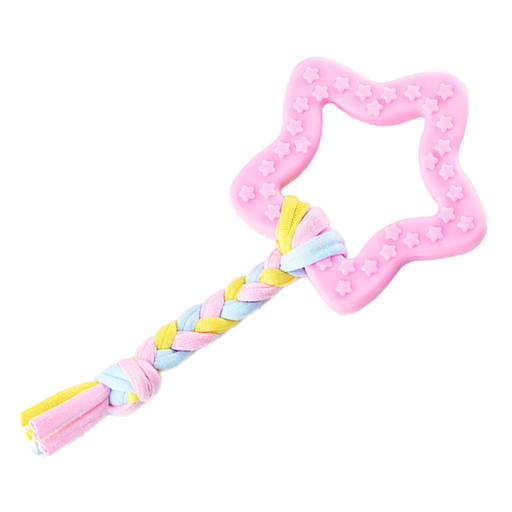
Why it suits this profile: The combination of chewing, tugging and fetching makes this a versatile toy for puppies and small dogs.
The 16.5 × 8 cm size and recommended target group are clearly stated. This makes it easier to match your choice to the dog’s size.
TPR and fabric; suitable for tugging and fetching; according to the product information, designed for puppies and small dogs.

Why it suits this profile: If you are looking for mental stimulation, a rubber toy with a treat opening can combine calm chewing with rolling and play.
The function is clearly defined: according to the product information, treats or xylitol-free peanut butter can be placed in the shapes. This makes its purpose clearer than a general claim about intelligence.
Natural rubber; rolls and bounces; suitable for filling with food; according to the product information, suitable for small and medium-sized dogs weighing up to approximately 15 kg.
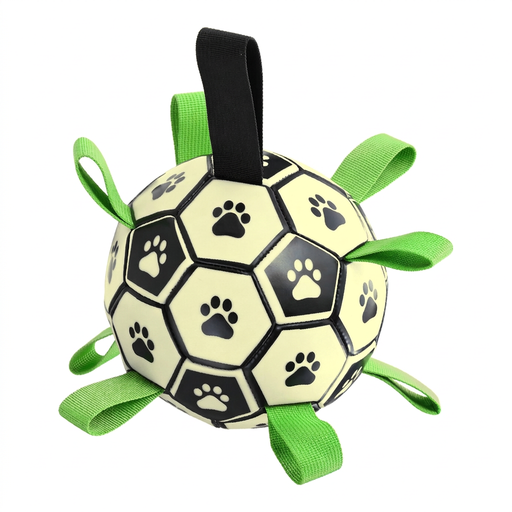
Why it suits this profile: For outdoor fetching, this ball offers several ways to play on land and in shallow water.
The product information states a diameter of approximately 15 cm, a nylon handle and use on land and in water. This provides clear points to check before buying.
Glow-in-the-dark effect according to the product description; nylon strap for throwing and tugging; stated as suitable for small and medium-sized dogs.
We have put together a complete, up-to-date list of products that fully meet these strict selection criteria and the applicable European safety regulations.
A varied selection is often more practical than one toy for everything. For example, combine a fetch ball for outdoor play, a dog chew toy for calm play and an interactive dog toy with a treat opening for mental stimulation.
Choose a size that the puppy can hold securely without being able to get it fully into its mouth. Flexible materials such as latex or TPR may be suitable for gentle chewing, but check the toy regularly. Puppy toys with squeakers or fabric require extra supervision, as loose parts can be pulled off.
This varies according to the material and chewing behaviour. A toy used for gentle fetching may last longer than one that is chewed intensively every day. Do not look only at the “durable” claim; consider the material, thickness, seams and replacement advice. Once the toy becomes damaged, replacing it is safer than continuing to use it.
Play provides variety and exercise, but the effect differs from dog to dog. A treat ball, dog fetch toy or toy that rolls unpredictably may require more engagement than a simple plush toy. Introduce new activities gradually and stay nearby when your dog is inclined to swallow parts.
