
Vandaag of morgen in huis

Kwaliteit gegarandeerd

Welkomstaanbiedingen ontgrendelen: GRATIS bezorging | Tot 80% korting | Gratis 30 dagen JoyPlus-proefperiode
Download de app
A squeak, scent or eye-catching shape can make a toy appealing to your dog. But that doesn’t automatically mean it’s suitable for everyday play. When choosing dog toys, many owners focus on appearance and price, while size, material and supervision are just as important.
A product description may say a toy is suitable for strong chewers, but no toy can withstand every dog. Nylon, rubber, TPR and braided fabric all respond differently to chewing, pulling and biting. Check toys regularly for cracks, deep grooves, loose threads and exposed parts.
A ball or chew toy should be large enough that it can’t disappear completely into your dog’s mouth, while still being easy for them to handle. A product suitable for a puppy or small dog won’t necessarily suit a medium or large dog. Check the shape and thickness as well as the length and width.
According to the product description, a ridged surface may come into contact with teeth and gums while your dog chews. This isn’t a substitute for regular dental care or advice from a vet. Claims such as “removes plaque” or “reduces tartar” should be treated as information from the brand, not as a guaranteed result.
For dog chew toys, the material and construction are key:
Compare the product’s size with your dog’s jaw size. According to the product information, a toy measuring 16.5 × 8 cm is intended for puppies and small dogs, while a ball of around 15 cm is marketed for various breeds. The recommended audience should guide your choice: toys for small dogs aren’t automatically suitable for large dogs.
Choose a toy to suit the way your dog likes to play:
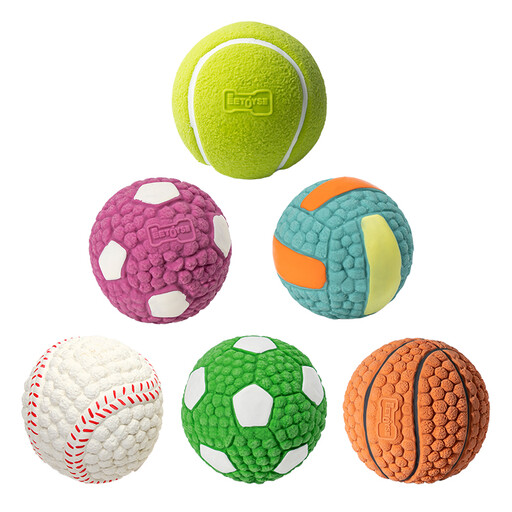
Why it suits this need: The set includes six balls to add variety to fetch, indoor play or short training sessions.
The different sizes and washable latex mean you don’t have to rely on a single toy. Use under supervision, especially with dogs that chew strongly.
Six toys, built-in squeaker, soft latex and washable with water, according to the product information.

Why it suits this need: Ideal for owners who want to offer mental stimulation as well as a chew toy, with a design for rolling, bouncing and hiding treats.
The recommended audience is clearly limited to small and medium-sized dogs weighing up to around 15 kg. This makes it easier to choose the right size than with toys marketed for all breeds.
Natural rubber, unpredictable rolling and bouncing, space for treats, and cleaning instructions provided in the product information.
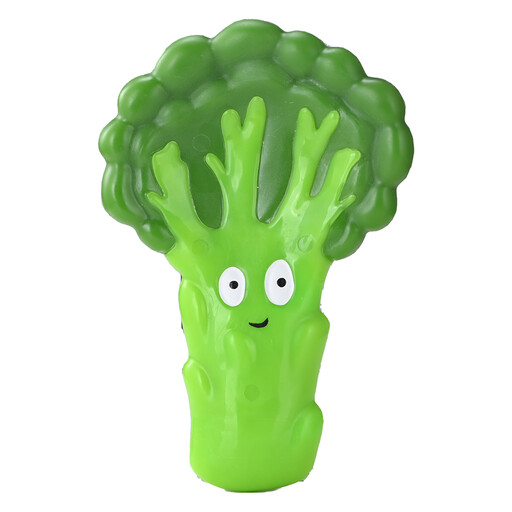
Why it suits this need: According to the product description, this nylon toy is designed for moderate to strong chewers and can also be used for throwing and fetch.
The material and recommended chewing strength are clearly stated. Still, check the nylon regularly and replace the toy if it becomes badly worn.
Nylon, broccoli shape, dimensions of 11 × 3.5 × 16.5 cm, and suitable for throwing and fetch.
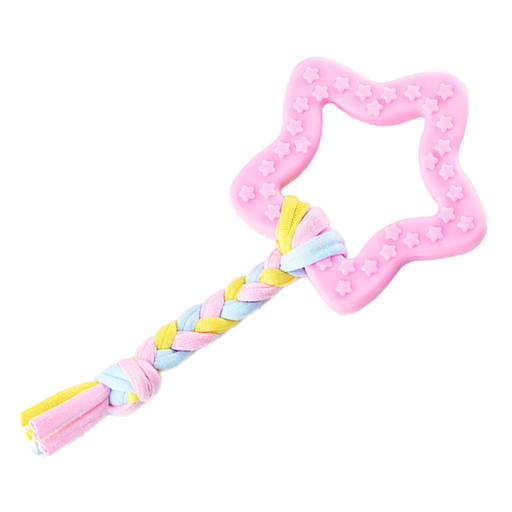
Why it suits this need: According to the product information, its 16.5 × 8 cm size and TPR-and-fabric construction are designed for puppies and small dogs.
The product information clearly states that this toy isn’t intended for aggressive chewers or medium and large breeds.
TPR and fabric, suitable for chewing and tug games, in a size that’s right for small dogs.
We’ve put together a complete, up-to-date list of products that meet these strict selection criteria and the applicable European safety regulations.
Choose puppy toys in an appropriate size and made from a relatively flexible material, such as latex or TPR. Always check whether the product is specifically recommended for puppies or small dogs. Supervise your puppy, especially while they’re teething.
There’s no set timeframe. Replace a toy as soon as you notice cracks, deep grooves, loose fibres, sharp edges or an exposed squeaker. This can happen sooner with strong chewers than with dogs who mainly play fetch.
No. According to the product description, the toy’s texture may help it come into contact with teeth and gums while your dog chews, but it doesn’t replace regular dental care. If dental problems persist, it’s a good idea to consult a vet.
