
Vandaag of morgen in huis

Kwaliteit gegarandeerd

Welkomstaanbiedingen ontgrendelen: GRATIS bezorging | Tot 80% korting | Gratis 30 dagen JoyPlus-proefperiode
Download de app
A dog can start playing enthusiastically with a new toy and chew it to pieces the same day. That’s not just a waste of money – loose stuffing, rope fibres or plastic parts can be swallowed. When choosing dog toys, it’s not just about colour or a fun shape; it’s primarily about material, size and supervision.
A product may be advertised as tough or chew-resistant, while the product page doesn’t mention the material, dimensions or usage restrictions. So check whether specific materials like rubber, latex, nylon, TPR, cotton or polyester are listed. Also pay attention to the target audience: toys for puppies aren’t automatically suitable for an adult dog that chews powerfully.
A toy that’s too small can be swallowed; one that’s too large is difficult to grip. Look at the dimensions as well as your dog’s weight and jaw strength. Toys for puppies and small dogs require different proportions than toys for medium-sized dogs.
A ribbed surface or chew structure can make contact with teeth and gums during play. However, brands cannot guarantee that plaque or tartar will be removed without evidence. Put it plainly: according to the product description, the toy is intended to support dental health during chewing. It doesn’t replace a check-up or care from a vet.
Claims about reducing boredom, stress or separation anxiety are also not guaranteed results. According to some product descriptions, interactive play can help burn off energy, but every dog reacts differently.
For everyday use, materials such as natural rubber dog toys, TPR and nylon are practical to compare. Natural rubber is flexible and can be suitable for rolling, bouncing and hiding treats. Nylon is generally shape-retaining and is often linked in product descriptions to dogs with a moderate to strong chewing need.
Soft toys with squeakers are gentle and appealing for dogs that like to carry or cuddle. They are less suitable as chew toys for a dog that quickly bites through seams. A dog rope supports tugging and fetching games, but fraying should be checked regularly.
First, decide what you want the toy for:
Wash dishwasher-safe rubber or latex according to the instructions on the product page. For the Blinkit balls, for example, it’s recommended to wash them with water and air-dry them. Do not use boiling water, bleach or harsh cleaners when this isn’t permitted.
Check toys before and after use for cracks, fraying, loose seams and exposed squeakers. Replace them immediately if damaged. A lifespan in months can’t be predetermined for many dog toys; durability depends on bite strength, playtime and maintenance.
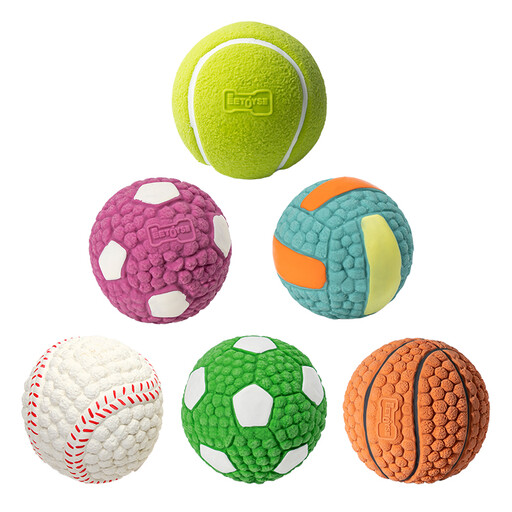
Why this fits the profile: A set of six balls offers variety for fetching and indoor play. The stated diameters are 6 and 7.5 cm; check beforehand that this is a safe fit for your dog.
The product information lists material, dimensions, washing instructions and the warning that the toy is not intended for aggressive chewers without supervision.
Six latex balls, squeaker, relief texture and washable surface; suitable for fetching and interactive play.

Why this fits the profile: For owners looking for a reusable toy with a treat reward. The product description mentions natural rubber, unpredictable rolling and use with snacks or xylitol-free peanut butter.
The recommended target audience is stated as small and medium-sized dogs up to around 15 kg. The instructions mention warm soapy water, a soft brush and air drying.
Natural rubber, treat opening, varied rolling and bouncing behaviour and dishwasher-safe according to the product information.
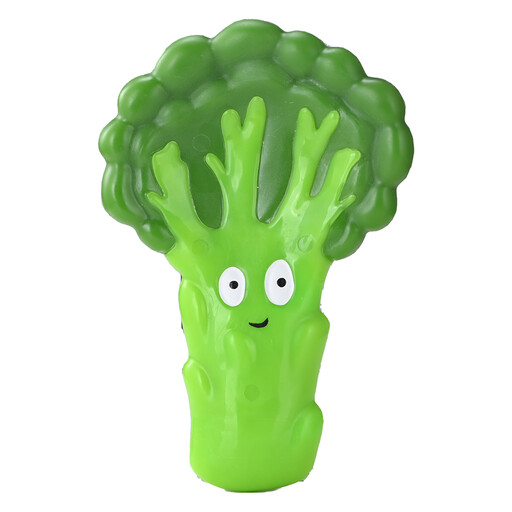
Why this fits the profile: Aimed at dogs with a moderate to strong chewing need. The nylon toy measuring 11 × 3.5 × 16.5 cm can also be used for throwing and retrieving.
The product information explicitly mentions the material, size and suitable chewing strength. Regular inspection remains necessary; damaged toys should be thrown away.
Nylon construction, fixed dimensions and use for chewing, tugging, throwing and fetching.

Why this fits the profile: The ball is aimed at medium-sized dogs that chase moving objects. Two play modes and USB-C charging allow for indoor variety.
The product description mentions the target audience, battery type, charging method and a warning that the product is not suitable for aggressive chewers.
Unpredictable movements, replaceable plush cover and USB-C rechargeable lithium battery.
We’ve put together a full, up-to-date list of products that fully meet these strict selection criteria and current European safety regulations.
Choose a size that the puppy can hold comfortably but cannot swallow. Soft materials like TPR or a light fabric can suit young dogs, while hard nylon is more intended for dogs with a stronger chewing need. Always supervise and replace the toy as soon as cracks, fraying or loose parts appear.
That depends on the material, playtime and bite strength. A dog rope can fray more quickly than a rubber toy; a plush toy with a squeaker can become damaged when a dog bites through it. So check regularly rather than assuming a fixed lifespan.
Dog toys for boredom can provide extra variety, especially when you alternate between searching, chewing, tugging and fetching. Interactive toys with treats or movement demand more attention than a toy that just lies on the floor. They don’t replace walks, training and contact with your dog.
