
Vandaag of morgen in huis

Kwaliteit gegarandeerd

Welkomstaanbiedingen ontgrendelen: GRATIS bezorging | Tot 80% korting | Gratis 30 dagen JoyPlus-proefperiode
Download de app
A basket full of dog toys does not automatically mean your dog will play with them for long. A squeaker can be chewed out within minutes, a ball may be too large to pick up comfortably and an interactive toy may be unsuitable for a powerful chewer. If you only look at colour, discounts or eye-catching marketing claims, you risk buying the same type of product several times.
The most common pitfalls are:
For small-dog toys, a compact and lightweight model is usually more practical. A puppy or small dog should be able to grip the toy properly without it going too far into its mouth. For medium-dog toys, a larger and sturdier design is often suitable, but your dog’s individual play style remains important.
Pay attention to the following:
A diameter of 6 cm, 15 cm or 18 cm makes for very different uses. Always check the stated dimensions rather than relying only on the “for all breeds” label.
Cotton rope, latex, TPR, natural rubber, corduroy and polyester all have different usage characteristics. A soft plush toy is pleasant for gentle play, while a woven outer layer or rubber core is better suited to fetching and active tugging. No single material is suitable for every dog.
Pay particular attention to:
According to the product descriptions of various brands, certain structures may withstand wear more effectively. This is a product claim, not a guarantee that the toy will withstand aggressive chewing. Replace the dog toy immediately if you notice any visible damage.
Interactive dog toys are suitable when you want to play together or encourage your dog to search, chase or fetch. A treat ball or adjustable treat dispenser can provide mental stimulation, while a bouncing ball mainly encourages movement and curiosity.
A few practical combinations:
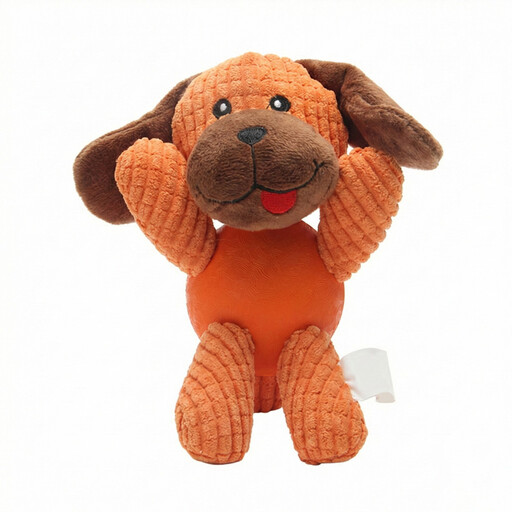
Why it suits this profile: A combination of soft plush, corduroy and natural rubber for gentle chewing and play. The built-in rustling and squeaking function provides extra stimulation without you having to buy several toys straight away.
The specification states the material and that the toy should be used under supervision. The product description presents the seams and combination of materials as more wear-resistant, but supervision is still needed with enthusiastic chewers.
Plush cotton, natural rubber, a squeaker and a medium-sized design; wipe clean with a damp cloth.

Why it suits this profile: For anyone looking for movement and variety as well as chewing. According to the product information, this version is designed for medium-sized dogs and features two play modes, a replaceable plush cover and USB-C charging.
The size is clearly specified and the cover is removable. It is not intended for aggressive chewers; the charging cable and electronic core require extra supervision.
Two interactive modes, a USB-C battery and a replaceable, washable outer cover.
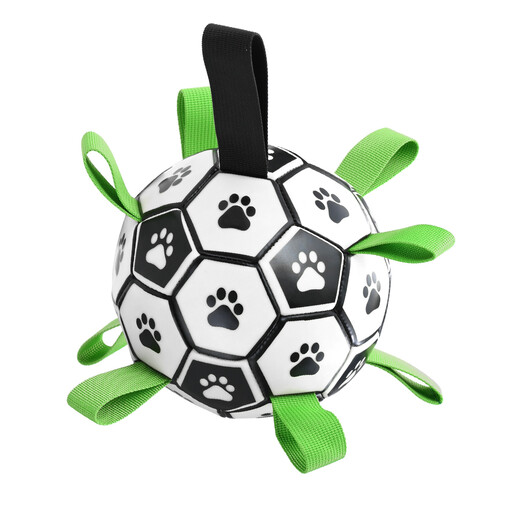
Why it suits this profile: An inflatable ball for fetching, chasing and outdoor play. Deflating it makes it easier to store or take with you on a walk.
The 18 cm diameter and instruction not to overinflate make its use more specific. The ball is not intended for aggressive chewers and should be checked regularly for punctures.
Lightweight design, woven outer layer and compact storage after deflating.
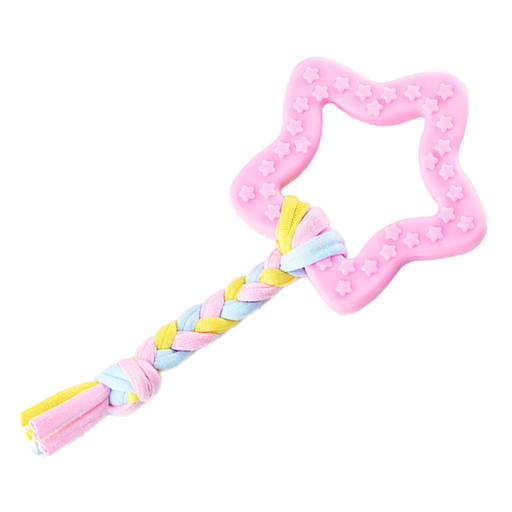
Why it suits this profile: The 16.5 × 8 cm size and combination of TPR and fabric are designed for puppies and small dogs. The toy is intended for chewing, tugging and fetching under supervision.
The recommended target group and dimensions are clearly stated. The product is not intended for medium-sized or large breeds, or for aggressive chewers.
TPR and fabric, suitable for tugging and a handy 16.5 × 8 cm size.
Rotate your dog’s toys instead of making them all available at once. This often keeps your dog’s interest levels higher and allows you to check each toy when it is taken out of rotation. Clean toys according to the product instructions: some models can be rinsed, while others should only be wiped with a damp cloth.
Always follow this checklist:
We have put together a complete, up-to-date list of products that fully meet these strict selection criteria and the applicable European safety regulations.
Choose a lightweight, easy-to-handle toy without small detachable parts. Puppy toys made from soft latex or flexible TPR may be suitable for gentle chewing, but check the material regularly. Supervise your puppy during its first play sessions.
This depends on the material and your dog’s play style. Replace the toy as soon as you notice cracks, loose seams, fraying, exposed filling or a loose squeaker. Toys that still work but have become badly misshapen are also best replaced.
Mechanical toys, treat balls and ropes do not need electricity. Electronic models with a rechargeable battery, such as a smart bouncing ball, mainly use energy while charging. Make sure the charging cable remains out of your dog’s reach and only charge the product according to the instructions.
