
Vandaag of morgen in huis

Kwaliteit gegarandeerd

Welkomstaanbiedingen ontgrendelen: GRATIS bezorging | Tot 80% korting | Gratis 30 dagen JoyPlus-proefperiode
Download de app
A dog does not automatically benefit from a colourful toy with a squeaker. The size may be wrong, a rope can quickly fray and an electronic toy is not suitable for every chewer. If you only focus on appearance or claims such as “extra durable”, you may end up buying something that sits unused in the cupboard after just a few play sessions.
As a Joybuy Product Recommendation Officer, I filter the most important product information down to practical points. This allows you to compare dog toys based on material, dimensions, purpose and supervision, rather than marketing claims.
A toy for a puppy or small dog is not automatically suitable for a medium-sized or large dog. A small component could be swallowed. Conversely, tough dog toys for strong chewers may be too hard or too large for a young dog.
Always check:
No dog toy stays intact indefinitely. Nylon, rubber, latex, cotton and fabric each have different usage profiles. A sturdy nylon toy may be better suited to intensive chewing, while a soft fabric toy is mainly suitable for fetching or calm interactive play.
Durability claims come from the brand or seller, so do not treat them as a guarantee. Look at the stated material, the construction and the warning for aggressive chewers.
A ridged surface or rope may move along the teeth and gums while your dog chews. According to the product description, this may help remove surface dirt or massage the gums. That does not mean dog toys replace dental care or a check-up by the vet.
Use terms such as dog toys for cleaning teeth realistically: this is a play and chewing aid, not a medical product.
Your dog should be able to grip the toy properly without it disappearing completely into its mouth. For puppies and small dogs, compact models such as a star, bone or small ball are often easier to hold. For large dogs, a bigger size is usually more practical.
Pay attention to the diameter of balls. The product information for the Blinkit set, for example, mentions balls measuring approximately 6 cm and one ball measuring 7.5 cm. The right size depends on your dog’s jaw and play behaviour.
Think in advance about what you need the toy for:
Washable latex balls are practical for frequent use. Fabric toys are often cleaned with a damp cloth. Electronic models must not be submerged in water. Always follow the specific cleaning instructions on the product page.
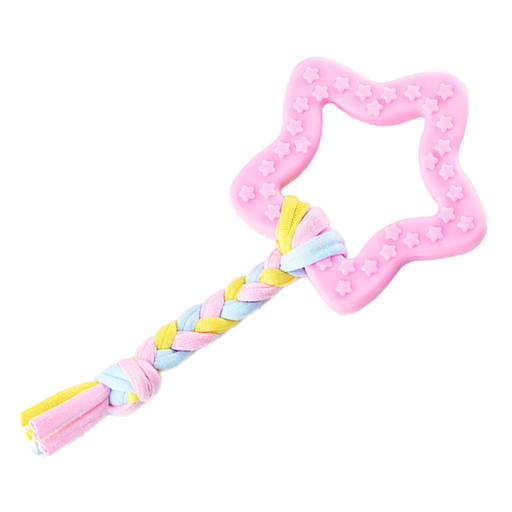
Why it suits this profile: According to the product information, this compact 16.5 × 8 cm toy is intended for puppies and small dogs. It combines chewing, tugging and fetching.
The recommended target group and size are clearly stated. It is not intended for aggressive chewers or medium-sized and large breeds.
TPR and fabric; suitable for tugging and fetching; easy-to-handle size for small dogs.

Why it suits this profile: The natural rubber shape is designed to roll and bounce unpredictably. According to the product description, the toy can be filled with treats or xylitol-free peanut butter.
The shape offers more than chewing alone, making it suitable for owners looking for mental variety. However, always check for cracks.
Natural rubber; suitable for treats; rolling and bouncing for interactive dog play.
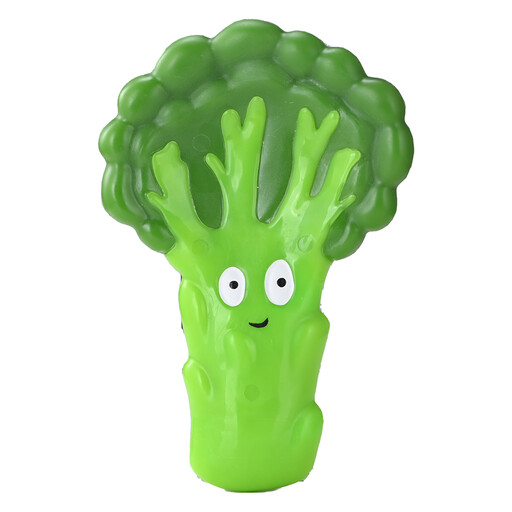
Why it suits this profile: According to the product description, this 11 × 3.5 × 16.5 cm nylon model is intended for medium-sized to strong chewers and can also be used for throwing and fetching.
The material and target group are clearly specified. The toy will not withstand chewing indefinitely: inspection and timely replacement are necessary.
Nylon construction; suitable for vigorous chewing; can be used as a fetch toy for dogs.
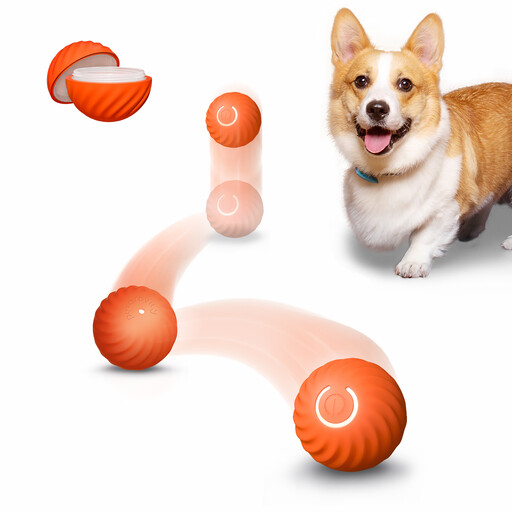
Why it suits this profile: According to the product information, the ball has two play modes, a USB-C rechargeable battery and a replaceable plush cover. It is intended for smaller dogs.
The product information clearly identifies the smaller target group and warns against use by aggressive chewers. Supervision remains essential.
Unpredictable movements according to the product description; rechargeable via USB-C; removable cover.
Let your dog explore a new dog toy under supervision at first. Check the product before and after use for:
Replace a toy as soon as it becomes damaged. Store ropes and fabric toys in a dry place, and allow washed materials to air-dry completely. Rotate different types of toys so that play remains varied and not everything wears out at the same time.
We have put together a complete, up-to-date list of products that fully meet these strict selection criteria and the applicable European safety regulations.
Choose a compact, flexible toy without parts that can easily come loose. Dog toys for puppies made from latex, TPR or soft materials may be suitable for gentle chewing. Always check the product’s recommended age, size and warnings.
That depends on the material, frequency of use and chewing strength. A fabric toy with a squeaker may wear out faster than nylon or rubber, but sturdy materials also need to be checked regularly. There is no fixed lifespan that applies to every dog.
Interactive dog toys can encourage movement, searching or playing together. A ball with unpredictable movements or a rubber toy containing a treat can provide extra stimulation. It does not replace training, exercise or attention. If ongoing problems such as anxiety or destructive behaviour occur, it is advisable to consult a vet or animal behaviourist.
