
Vandaag of morgen in huis

Kwaliteit gegarandeerd

Welkomstaanbiedingen ontgrendelen: GRATIS bezorging | Tot 80% korting | Gratis 30 dagen JoyPlus-proefperiode
Download de app
A dog doesn’t automatically benefit from every colourful toy in the pet shop. The wrong size can be difficult to grip, a squeaker can quickly become exposed, and a tough chew toy might be unsuitable for a puppy. So when you buy dog toys, it pays to look beyond just the shape or an appealing product claim.
Words like sturdy, bite-resistant and durable dog toys only mean something when the material, finish and recommended dog type are also clear. A latex toy may be suitable for gentle chewing, but less appropriate for a dog that tears pieces off. Nylon or natural rubber can offer more resistance, but even then, supervision is still needed.
According to product information from various brands, no toy is intended for unlimited use by aggressive chewers. So check the toy before and after use, and replace it as soon as seams come loose, tears appear or internal parts become visible.
Dog toys with a squeaker often grab attention quickly. However, a squeaker can come loose after intense chewing. With a puppy or a dog that swallows objects, supervision is especially important. What’s more, a sound toy doesn’t work equally well for every dog: some animals are motivated by squeaking, others by movement, food rewards or playing together.
A ball that is 15 or 18 cm may be suitable for a medium-sized dog, but awkward for a small dog. A toy that is too small can pose a choking hazard; one that is too large is difficult to carry. Look at your dog’s mouth size, bite strength and play style rather than just the breed.
Choose the material based on the purpose:
A so-called teeth-cleaning dog toy can, through its texture, provide contact with teeth and gums during chewing. That does not replace daily dental care or a check-up by a vet. So be cautious when making claims about dental care: according to the product description, the surface is designed for this purpose, but the actual suitability depends on use and the dog.
If in doubt, measure a toy and compare it with what your dog can safely carry. Pay attention to:
For small dogs and puppies, soft materials and a size that is easy to grip are often more practical. For medium and larger dogs, bigger balls and thicker chew toys can be a better fit, as long as the size isn’t too large to pick up comfortably.
A product that is difficult to clean will, in practice, be used less often. Washable latex balls can be handy for daily use. Plush toys are usually cleaned with a damp cloth; always follow the label.
With interactive dog toys that have a battery, such as a moving ball, you need to consider:
Store toys in a dry place, out of direct sunlight and out of your dog’s reach when you are not around.
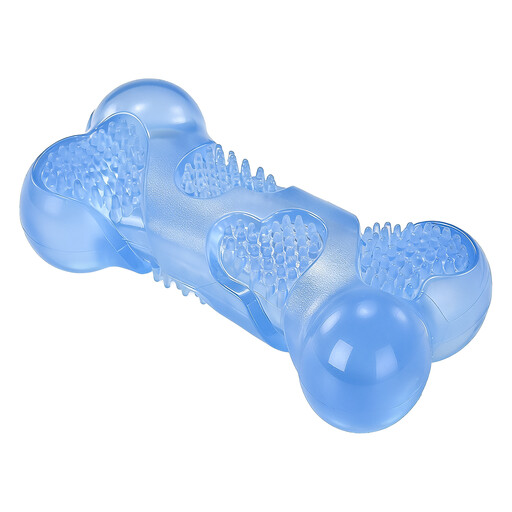
Why this fits the profile: This bone-shaped toy is intended for puppies and small dogs, combining chewing with a squeaking sound. According to the product description, it is made of latex and designed to be easy to grip.
The target audience and material are clearly stated. This makes it easier to distinguish from hard chew toys for larger dogs. Use it under supervision, though.
Latex, squeak function and bone shape; suitable for puppies and small dogs according to the product information.

Why this fits the profile: This natural rubber toy is, according to the product information, intended for small and medium-sized dogs up to around 15 kg. You can put treats or xylitol-free peanut butter inside it.
The recommended dog size and material are specifically described. The unpredictable rolling and bouncing movement makes it less reliant on sound alone.
Natural rubber; suitable for treats; according to the product information, cleanable with warm water and also dishwasher-safe on the top rack.
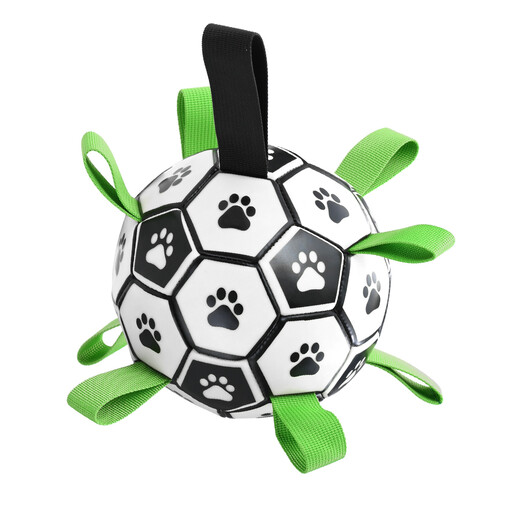
Why this fits the profile: For dogs that love to run, chase and fetch, this inflatable dog ball is designed for throwing, following and retrieving. According to the product description, it has a woven outer layer and a diameter of approximately 18 cm.
The size and intended use are clearly indicated. By letting the air out of the ball after use, it takes up less storage space.
18 cm diameter; lightweight design; inflatable and suitable for fetch under supervision.
Let your dog calmly inspect a new dog toy first. With moving or squeaky toys, start with short play sessions. Only use a tug toy together with your dog, and don’t let him use it as an unsupervised chew object if it isn’t intended for that.
A practical checklist:
Rotate several toys. This often keeps interest higher, and you can clean or replace one temporarily. For dogs that chew a lot, a nylon chew toy may be more suitable than plush, while a puppy usually benefits from a softer puppy toy.
We’ve put together a full, up-to-date list of products that fully meet these strict selection criteria and comply with current European safety regulations.
That depends on the material, play style and condition. Replace a toy immediately if there are tears, loose parts, exposed stuffing or a visible squeaker. A fixed replacement date is less reliable than regular checks.
Choose puppy toys that are not too small, are easy to grip and have no loose parts. Latex, TPR and soft rubber can, according to the product description, be suitable for gentle chewing, but supervise the first few times. A puppy with a strong bite can also damage soft toys quickly.
Electronic toys need to be charged and may contain parts that are not waterproof. A rubber treat ball or a washable ball generally requires less maintenance. So don’t just look at the purchase price, but also at cleaning, replaceable parts and the expected wear and tear with your dog.
