
Vandaag of morgen in huis

Kwaliteit gegarandeerd

Welkomstaanbiedingen ontgrendelen: GRATIS bezorging | Tot 80% korting | Gratis 30 dagen JoyPlus-proefperiode
Download de app
A new toy often looks appealing because of its bright colours, sounds, or labels like “extra strong”. Yet a striking design says little about whether it’s right for your dog. A small puppy has different needs from a fully grown retriever, and an enthusiastic chewer can destroy soft plush in no time.
As Joybuy Product Recommendation Officer, I filter product information based on practical points: size, material, use and maintenance. This way, you avoid paying for features that don’t match your dog’s play style.
A product description may state that a toy is suitable for all breeds or sizes. Still, check the dimensions, hardness and type of play. A ball that’s 6 cm in diameter could be too small for a large dog, while a tough chew toy might be difficult for a small puppy to hold.
Also consider the risk that a dog might try to take the whole toy into its mouth. When in doubt, larger, easy-to-handle toys are a safer choice than a small component.
Words like “durable”, “tear-resistant” and “for strong chewers” are often based on the brand’s product description. According to the supplier’s own information, a particular material may be more resistant to chewing, but the lifespan depends on your dog’s teeth, bite force and play behaviour.
A dog rope toy, latex ball or plush toy should therefore be checked regularly. Loose threads, tears, an exposed squeaker or loose stuffing are signs to replace the product immediately.
Squeaky dog toys can grab your dog’s attention, but the noise might be annoying at home. What’s more, some dogs may try to remove the squeaker. Always use this type of toy under supervision, especially with puppies and dogs that chew toys open.
Textures that, according to the product description, help clean teeth are no substitute for regular dental care. See dog toys for teeth cleaning as a play option, not a medical solution.
Choose the toy based on jaw size and play style:
Common materials include latex, natural rubber, TPR, polyester, fleece or cotton. Each material has different properties:
A product made from multiple materials can be more versatile, but also has more parts that could come loose.
Check the seams, edges, squeaker and any loose parts before and after play. Washable dog toys are practical in a household where they’re used daily. Always follow the product instructions: some balls can be rinsed with water, while toys with a sound module should only be cleaned with a damp cloth.
Don’t let your dog play unsupervised with toys that could be chewed apart. Stop using them immediately if parts come loose. If a part is swallowed, contact a vet.
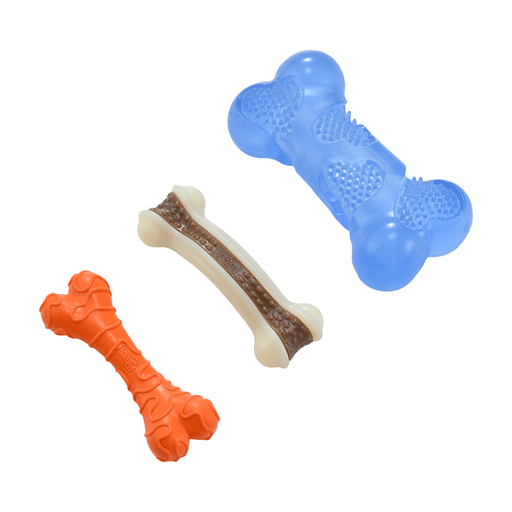
Why this fits the profile: The set combines chewing, tugging and throwing in one product. According to the product description, there are sizes for small, medium and large dogs; check the exact packaging and dimensions before purchase.
The instructions advise supervision and checking for wear. This makes it clear that “durable” is no reason to skip inspection.
Cheese and bone shapes; suitable for interactive play; can be rinsed with water according to the product information.

Why this fits the profile: This interactive dog toy is, according to the product information, intended for small and medium dogs up to around 15 kg. The unpredictable rolling and bouncing motion is suitable for dogs that need mental stimulation.
The target group and maximum dog size are clearly stated. This makes the choice more targeted than a general claim for all breeds.
Natural rubber; suitable for treats or xylitol-free peanut butter; dishwasher-safe according to the product information.
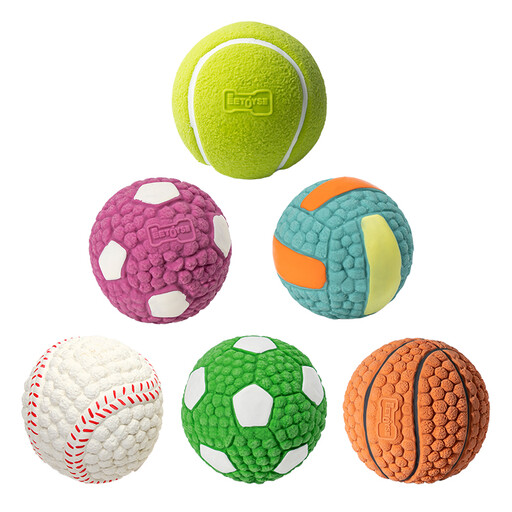
Why this fits the profile: The set is designed for fetching, training and indoor or outdoor play. Six balls offer variety, while the soft latex material feels flexible according to the product description.
The diameter is stated for each ball, and the warning excludes aggressive chewers without supervision. Checking beforehand remains essential.
Set of six; squeaky sound; washable with water; suitable for throwing and fetching.
We’ve put together a full, up-to-date list of products that fully meet these strict selection criteria and comply with current European safety regulations.
That depends on the material and your dog’s play behaviour. Don’t replace toys based on age alone, but especially when they tear, fray, crack or parts come loose. An enthusiastic chewer can damage toys much faster than a dog that mainly fetches.
No. According to product descriptions, certain textures can touch the tooth surface during chewing, but this is no substitute for regular dental care or advice from a vet. Use such toys as part of play and always check for wear.
Choose puppy toys that are light, the right size and not too hard. A soft latex bone or TPR toy can be suitable for short play sessions under supervision. Avoid small loose parts and check the toy after each use, especially during teething.
