
Vandaag of morgen in huis

Kwaliteit gegarandeerd

Welkomstaanbiedingen ontgrendelen: GRATIS bezorging | Tot 80% korting | Gratis 30 dagen JoyPlus-proefperiode
Download de app
A basket full of dog toys does not automatically mean your dog can play with them safely or for long. A puppy can chew through a soft toy in just a few minutes, while a large dog gets little benefit from a small latex bone. Squeaky dog toys and brightly coloured chew products are also sometimes sold with broad claims about dental care or stress reduction.
With this buying guide, the Joybuy Product Recommendation Officer filters the most important product information. This helps you compare dog toys based on size, material, use and ease of inspection, rather than just appearance or marketing copy.
Puppies and small dogs need different puppy toys from medium-sized or large dogs. A soft latex bone may be suitable for a puppy, but it will not necessarily withstand a dog that chews vigorously. Conversely, a very hard nylon toy may be impractical for a young dog with a smaller mouth.
So pay attention to:
Some product descriptions claim that a textured surface helps clean teeth or massage the gums. Phrase this carefully: according to the brand’s product description, the surface may support this function during chewing. It is not a replacement for routine dental care or advice from a vet.
A ridged surface, rope texture or rubber finish can add variety during play. Always check that the material is not crumbling, and replace the product as soon as cracks, fraying or loose parts appear.
For a dog bed or basket, the diameter is not the only consideration. Think about how your dog sleeps too. A dog that curls up may benefit from raised edges. A dog that stretches out needs more flat surface area. Measure your dog while lying down, and take the filling and edges into account.
A dog crate is not a replacement for a bed. A crate provides a confined space for transport or rest training; a soft basket or crate bed is designed for comfort.
When it comes to dog chew toys, you will see materials including latex, TPR, natural rubber, cotton, nylon and textiles. Each material has a different purpose:
“Durable dog toys” are therefore not indestructible. Their lifespan depends on your dog’s bite strength, how often the toy is used and the way your dog plays.
A toy should be large enough that it cannot easily disappear completely into your dog’s mouth, while remaining easy to handle. Pay attention to the diameter of balls, the length of a dog rope and the overall dimensions of bones or tug toys.
Weight is also relevant for fetch toys. A lightweight toy is practical indoors and for small dogs. Outdoors, shape, visibility and grip may be more important. Only use a squeaky toy where the noise will not cause a nuisance.
For intensive use, choose products that are easy to wipe down or rinse. Check:
When introducing a new dog toy, let your dog play under supervision at first. If your dog swallows parts, filling or rope fibres, contact a vet immediately.
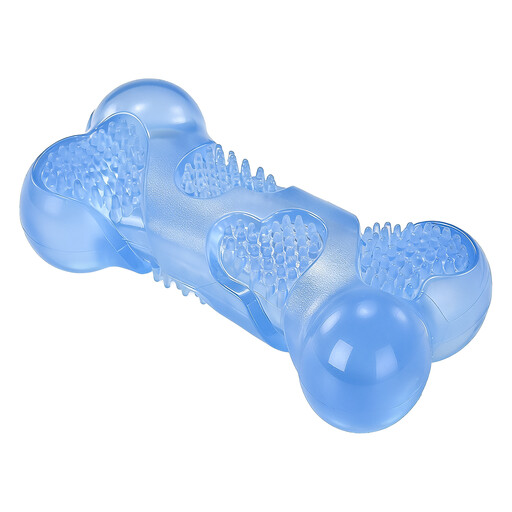
Why it suits this profile: According to the product information, this blue latex bone is intended for puppies and small dogs. Its bone shape is easy to hold, while the squeaker makes it suitable for short, interactive play sessions.
The target group and material are clearly stated. This makes it easier to distinguish the toy from products designed for strong chewers.
Latex, a built-in squeaker and dimensions suitable for puppies and small dogs. Check the toy regularly for cracks.
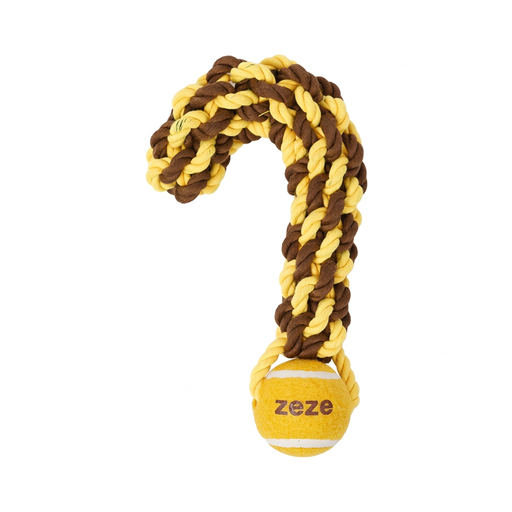
Why it suits this profile: The combination of cotton rope and ball supports tugging, rolling and fetching. It is ideal for owners who want to play with their dog, indoors or outdoors.
The product description specifies the material, indoor and outdoor use, and the need for inspection. This keeps “durable” linked to regular checks rather than presenting it as an absolute guarantee.
Cotton rope, ball shape and portable design. According to the product description, the texture may support the tooth surface and gums during play.
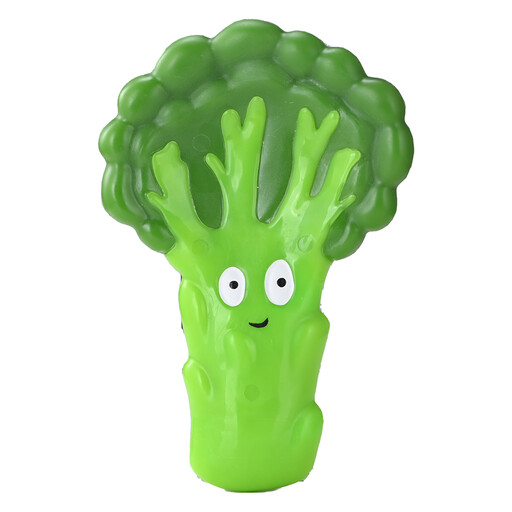
Why it suits this profile: According to the product information, the nylon version is aimed at moderate to strong chewers. Measuring 11 × 3,5 × 16,5 cm, the toy is designed for holding, chewing and fetching.
The product information warns that strong chewers must be supervised. This prevents you from automatically assuming that nylon is unbreakable.
Nylon material, broccoli shape and suitability for throwing and fetching. According to the usage information, the toy can be rinsed with water.
We have put together a complete, up-to-date list of products that fully meet these strict selection criteria and the applicable European safety regulations.
Dog toys work better when the rest of your dog’s equipment is suitable too. For walks, a dog harness with adjustable straps and a suitable chest measurement is important. Check that your dog cannot escape from the harness, and measure again as your puppy grows.
For rest, you can choose between a dog bed, dog basket or crate bed. Look out for:
A travel crate should be suitable for your dog’s weight and dimensions. Do not use a collapsible crate for extended periods without supervision if your dog chews on zips or mesh.
There is no fixed timeframe. Replace a toy as soon as you notice cracks, loose seams, fraying, exposed squeakers or broken pieces. With daily intensive use, this may be sooner than with toys used only under supervision.
Choose puppy toys that are an appropriate size for your puppy’s mouth and that the product information states are suitable for puppies. Soft latex or flexible TPR may be suitable, but supervision is still required. Avoid toys that could shed small parts.
According to some product descriptions, a rope texture may support the tooth surface or gums during play. This is not an established medical effect and does not replace routine care. Stop using the rope as soon as it becomes heavily frayed or your dog starts swallowing fibres.
