
Vandaag of morgen in huis

Kwaliteit gegarandeerd

Welkomstaanbiedingen ontgrendelen: GRATIS bezorging | Tot 80% korting | Gratis 30 dagen JoyPlus-proefperiode
Download de app
As a Joybuy Product Recommendation Officer, I see the vast selection of dog snacks available every day. The shelves are packed with promises, from sparkling teeth to a happy dog. But not every snack is what it seems. Many owners unknowingly fall for marketing traps, spending money on products that are unsuitable or even unhealthy for their dog.
Before you add anything to your shopping cart, it's wise to understand the most common pitfalls:
By being mindful of these points, you can make a better and healthier choice for your four-legged friend.
You don't need to be a nutritionist to find the right snack. Just pay attention to a few practical details that make the difference between a great buy and a waste of money.
The front of the package is for marketing; the back is for the facts. A good rule of thumb is to choose snacks where meat or fish is listed as the first ingredient. Ingredients are always listed in order of weight. If "cereals" or "derivatives of vegetable origin" are at the top, the snack consists mainly of filler.
For dogs with sensitive digestion or allergies, grain-free dog snacks are a great solution. These snacks often use alternative carbohydrate sources like sweet potato or are entirely meat-based, which reduces the risk of a reaction.
Not every snack serves the same purpose. Consider what you want to use the treat for:
The size of the snack is crucial for safety and effectiveness. A Dachshund needs a very different snack than a Great Dane. Manufacturers often provide a recommendation based on the dog's weight (e.g., 'for small dogs 5-10 kg'). Adhere to this to prevent choking hazards and to ensure the snack can perform its function, such as dog dental care, properly.
Based on clear product features and use cases, we have selected a few options that suit different dogs and owners.

Why This Fits Their Persona: Specifically designed for the teeth and jaw strength of small dogs (5-10 kg). It provides a functional snack tailored to their size, which is essential for effective dental cleaning.
This product tackles the 'one-size-fits-all' pitfall by offering a specific size for small dogs, which increases safety and effectiveness.
According to the manufacturer Pedigree, daily use can reduce tartar build-up by up to 80%. The snack is sugar-free and low in fat (less than 2%).

Why This Fits Their Persona: Ideal for training thanks to its high protein value and pure ingredients. This snack is a healthy and motivating reward, without unnecessary additives that detract from the goal: reinforcing good behaviour.
This snack is completely grain-free and contains no artificial additives, unlike many colourful treats with hidden sugars and fillers.
Made with 100% natural duck breast as the main ingredient. The strips are easy to break into smaller pieces for training purposes.
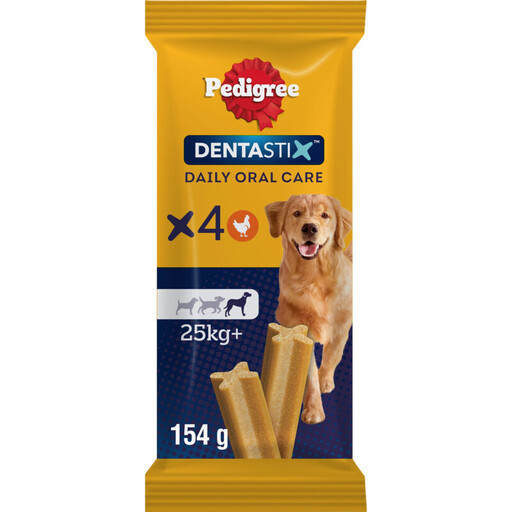
Why This Fits Their Persona: Perfectly tailored to the chewing power and teeth of large dogs. This snack is robust enough to have a cleaning effect without being swallowed immediately.
Provides a safe and effective option for dental care, where a 'one-size-fits-all' snack would be too small, ineffective, and potentially dangerous for a large dog.
According to the manufacturer, the unique X-shape helps clean hard-to-reach teeth and keeps gums healthy. The snack is sugar-free and developed with veterinarians.
We have compiled a complete, up-to-date list of products that meet these selection criteria and comply with UK & EU regulations.
A good guideline is the 10% rule: snacks and treats should not make up more than 10% of your dog's daily calorie intake. The remaining 90% should come from a complete and balanced main meal. The packaging of most dog snacks includes feeding advice. You may need to slightly adjust your dog's main meal if you give a lot of treats, for example, during an intensive training period.
Not necessarily for every dog. Grain-free dog snacks are an excellent choice for dogs with a diagnosed grain allergy or intolerance. For most dogs, however, grains are a perfectly good source of energy, provided they are part of a high-quality snack. It is more important to look at the overall quality of the ingredients and the absence of unnecessary sugars and artificial additives.
This largely depends on the type of snack. Many products, like the Pedigree Dentastix, are suitable for puppies from 4 months of age. Hard chews are often only suitable for dogs that have their adult teeth. Puppies have different teeth and nutritional needs. Therefore, always check the recommended minimum age on the packaging and choose snacks specifically developed for puppies.
