
Vandaag of morgen in huis

Kwaliteit gegarandeerd

Welkomstaanbiedingen ontgrendelen: GRATIS bezorging | Tot 80% korting | Gratis 30 dagen JoyPlus-proefperiode
Download de app
Buying dog food seems straightforward until you have to choose between dry dog food, wet dog food, grain-free dog food and dozens of flavours. Eye-catching packaging, however, says little about whether a product is suitable for your dog. Age, body weight, activity level and the full nutritional composition matter more than a promise on the front of the pack.
Not every product with “food” or “meat” on the packaging is complete dog food. Some products are complementary food. According to the product information, for example, INABA Fun Bites Dog Chicken Wraps contain 82% moisture and are intended as a reward or snack. The packaging also states that the product is not a replacement for a complete meal.
So always check whether the product is described as complete and balanced. If it says “complementary pet food” or “complementary food”, use it as a snack rather than as your dog’s daily main food.
“Dog food with chicken”, “dog food with lamb” or “dog food with beef” sounds clear, but the name does not always tell you how much of that ingredient is actually present. Check the ingredients list in descending order and pay attention to the analytical constituents, such as protein, fat, fibre, ash and moisture.
According to the product information, CESAR Adult Wet Dog Food, for example, lists 60% meat and animal derivatives for each variety, of which 4% is the named meat ingredient. That is more specific than simply relying on the flavour name on the front of the pack.
Grain-free dog food is not necessary for every dog. Instead of grains, a recipe often contains other sources of carbohydrates, such as peas, lentils or sweet potato. A grain-free formula may suit a particular dietary preference, but “grain-free” on its own is no guarantee of a better experience or a better composition.
If your dog experiences recurring problems after eating, do not change its diet based solely on a marketing claim. Discuss a suitable feeding plan with a vet.
Choose food that matches your dog’s life stage. Dog food for adult dogs is usually labelled “adult” on the packaging. Small dogs may benefit from smaller kibble, while large dogs often need a different portion size and kibble size. So look specifically for dog food for small dogs or dog food for large dogs where relevant.
The recommended quantity is only a guideline. Adjust the portion according to your dog’s weight, exercise and body condition. Purina Beneful Adult, for example, provides a feeding guide for dogs weighing 5 to 30 kg, with instructions to adjust the amount to individual circumstances.
For main meals, it is best to choose a product labelled as complete food. Wet dog food can therefore be a complete meal, but some soft treats and chew products are complementary only.
Also check the storage instructions. An opened tin, tray or pouch often needs to be refrigerated and used within a limited period. According to the product information, RENO Dog Chunks Sauce Beef states that unused portions should be stored in the refrigerator and used within 48 hours. CESAR specifies the same period for opened portions.
Do not compare protein percentages alone. Because of its low moisture content, dry food naturally often has a higher protein percentage than wet food. So look at:
For dogs with sensitive digestion, a straightforward composition can be useful. According to the product description, Eukanuba Life Care Adult Small/Medium Lamb & Rice contains lamb and rice, a fibre blend with prebiotics, and is suitable for adult small and medium breeds. This makes it an option worth comparing if you are looking for dog food for sensitive dogs. However, individual tolerance varies from dog to dog.
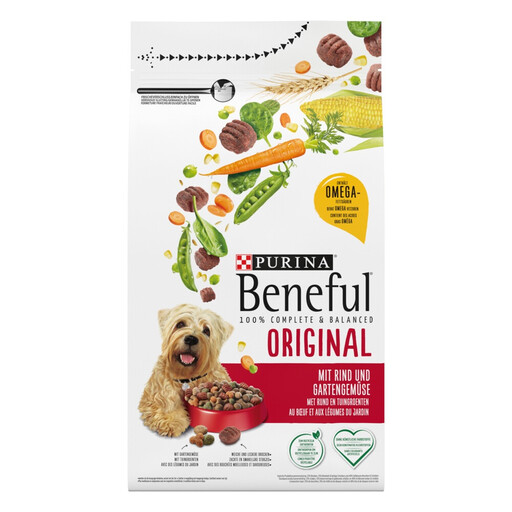
Why it suits this profile: Dry food for adult dogs in a convenient 1.4 kg pack, with a feeding guide for different weight categories.
The product information states that this is 100% complete and balanced food for adult dogs. This makes it easier to distinguish from complementary snacks.
Dry food with 15% crude protein, 8% fat and 12% moisture according to the stated analysis; the kibble can be served dry or with water.
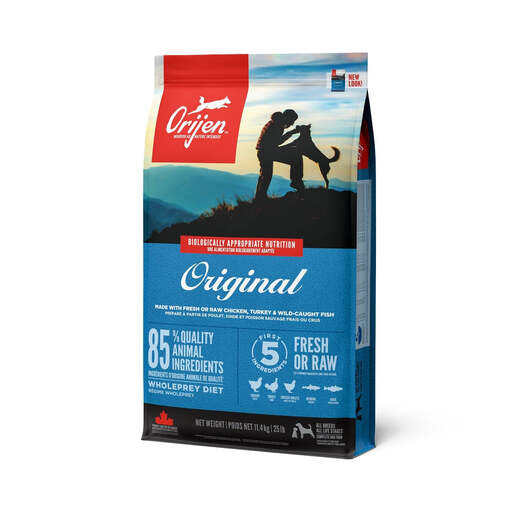
Why it suits this profile: For anyone looking for a large bag of complete dog food and placing great importance on an extensive ingredients list featuring chicken, turkey, fish and egg.
The product page provides specific percentages and analytical values, including 38% crude protein, 18% fat and 12% moisture. You can therefore check the composition instead of judging the product solely by the front of the pack.
11.4 kg pack; according to the product information, complete food for dogs at all life stages, with a gradual transition over 7 to 10 days.
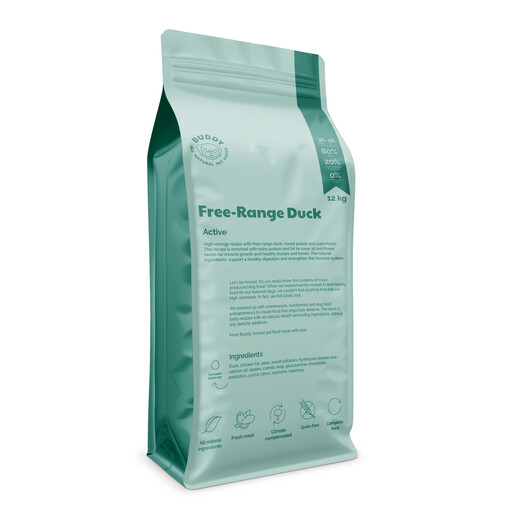
Why it suits this profile: The product information is aimed at large, active and working dogs, and describes an energy-rich formula with duck.
The composition lists 44% duck, including 26% fresh duck, as well as a kibble size of approximately 1.2 to 1.6 cm. This provides more useful information than a general claim about active dogs.
12 kg pack; according to the product description, grain- and gluten-free, with duck, sweet potato and vegetables.
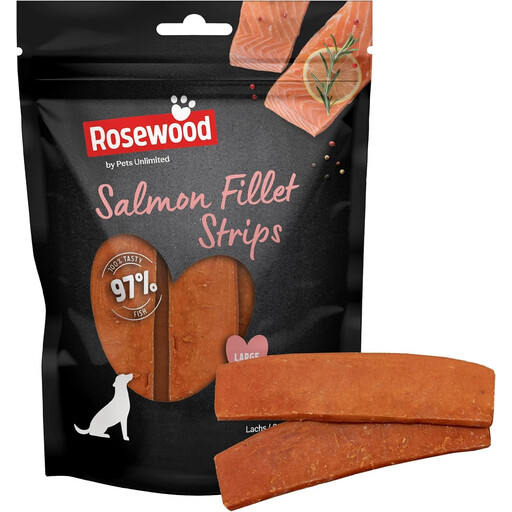
Why it suits this profile: A complementary snack for training, walks or variety, as long as the portion is included in your dog’s daily food allowance.
The product page clearly states that this is complementary food. This makes the difference from complete dog food clear before you place your order.
150 g pack; according to the product information, 97% salmon and a low fat content.
We have put together a complete, up-to-date list of products that fully meet these strict selection criteria and the applicable European safety regulations.
Use this quick checklist before ordering dog food:
This depends on your dog’s weight, activity level and daily portion. A large bag of dry dog food may work out cheaper per kilogram, but first check its shelf life and whether your dog accepts the food. Wet food and snacks can increase your monthly costs when given alongside the main meal.
Not necessarily. Wet food generally contains more moisture and has a different texture. Dry food is easy to weigh out and store. Above all, check whether the product is complete, suits your dog and fits into your feeding and storage routine. According to the product information from some brands, combining the two may also be possible.
Gradually mix the new food into the old food, increasing the proportion step by step. Keep an eye on your dog’s stools, appetite and body condition. Stop if clear problems occur and ask a vet for advice. If your dog has specific dietary needs, pay extra attention to the full composition rather than focusing only on terms such as “dog food with lamb” or “grain-free dog food”.
