
Vandaag of morgen in huis

Kwaliteit gegarandeerd

Welkomstaanbiedingen ontgrendelen: GRATIS bezorging | Tot 80% korting | Gratis 30 dagen JoyPlus-proefperiode
Download de app
A bag of dog food featuring appealing terms on the front may seem like an obvious good choice. However, words such as “natural”, “grain-free” or “rich in meat” say little on their own about whether it is suitable for your dog. The right choice mainly depends on age, body size, activity level, ingredients and whether the product is complete food or a snack.
Grain-free dog food is not automatically suitable for every dog. A recipe without grains may still contain plenty of carbohydrates, for example from peas, chickpeas, potato or sweet potato. Always check the full ingredients list and the analytical constituents.
Terms such as “high in meat” should also be verifiable. A product that lists percentages of chicken, lamb, fish or game gives you more useful information than a general image of meat on the packaging.
Puppies have different nutritional needs from adult dogs. Check that the packaging states that the product is intended as complete food for the appropriate life stage and breed size.
Dog treats and dog snacks are usually complementary pet food. They are intended as rewards or between-meal treats and do not replace a complete meal. INABA Churu dog snacks and soft Fun Bites can be practical during training, but the recommended amount should be adjusted to the dog’s size and activity level.
A 12 kg bag may appear financially attractive, but only if your dog tolerates the food well and the portion matches its energy needs. Follow the feeding guidelines on the packaging and adjust them according to weight, age, activity level and body condition. Always provide fresh drinking water as well.
Look for the legally required designation. Complete pet food or complete food is intended as a daily meal. If it says “complementary pet food” or complementary pet food, the product is not intended to be the sole source of nutrition.
This distinction is important for both dry dog food and wet snacks. A soft chicken treat with a high moisture content may be enjoyable as a reward, but it does not automatically contain all the nutrients needed for a complete meal.
Choose puppy food for young dogs when this is clearly stated on the packaging. Adult dogs can be given varieties for small breeds or for medium and large breeds. Kibble size, energy density and recommended quantity may vary.
An active or working dog may need a more energy-dense recipe than a dog that mainly goes on short walks. Products with higher fat and protein levels are not automatically suitable; compare the values with your dog’s daily level of exercise.
Check which animal protein source appears first in the ingredients list. This could be chicken, lamb, duck, cod, salmon, quail or game, for example. A recipe with one clearly defined main source can be useful if you want to keep the ingredients straightforward.
If you suspect a food intolerance, hypoallergenic dog food or veterinary dog food may be a specific option. Do not use a dietary product as a substitute for advice from a vet. Always check the current packaging too, as the composition and feeding advice may vary between varieties.
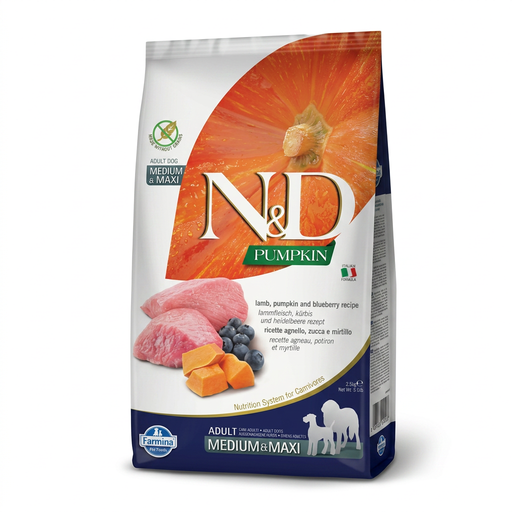
Why it suits this profile: The 2.5 kg pack is a manageable size if you want to try a recipe first. The product is listed as complete food for dogs at all life stages and contains lamb as a named protein source.
The product information explicitly states its intended use, ingredients and analytical values. This means you do not have to rely solely on the term grain-free.
Lamb and dehydrated lamb appear at the top of the composition; the listed values are 28% protein and 18% fat.
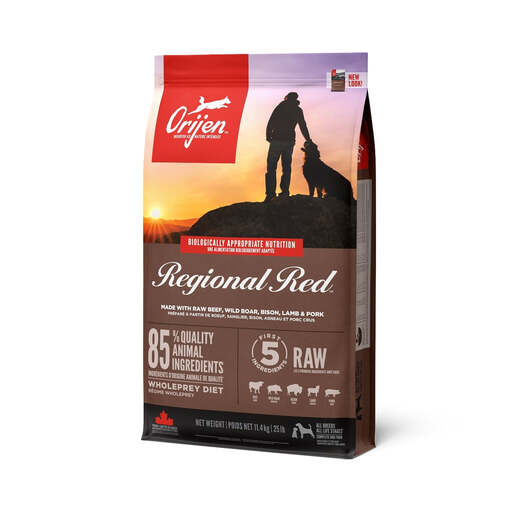
Why it suits this profile: This is a large pack for adult dogs whose owners are looking for an extensive recipe containing multiple animal-based ingredients.
The ingredients list names different types of meat, fish, organs and plant-based ingredients. However, check that your dog tolerates multiple protein sources well.
The listed analysis contains 38% crude protein and 18% crude fat; the bag has a net weight of 11.4 kg.
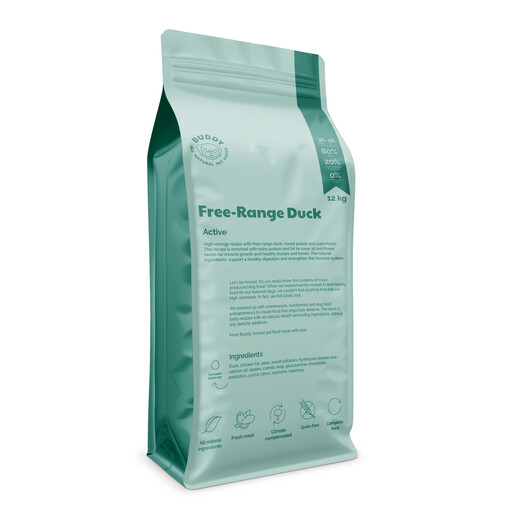
Why it suits this profile: The product description is aimed at large, active and working dogs. According to the listing, the kibble has a round, flat shape measuring approximately 1.2 to 1.6 cm.
The product information states the proportion of animal-based ingredients and the size of the kibble. This lets you compare the recipe and format with your daily feeding routine.
The composition lists 80% animal-based ingredients and 20% vegetables, fruit and superfoods; according to the product information, it is grain-free and gluten-free.
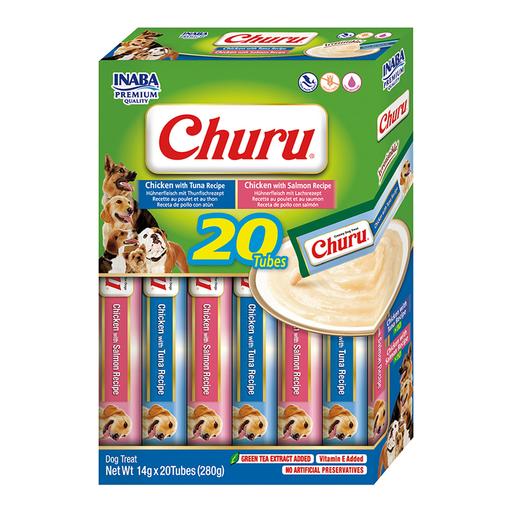
Why it suits this profile: The tubes can be given directly, used as a topper or offered as a small reward during training.
The packaging states that this is complementary pet food. It is therefore clear that the tubes should not be used as a complete meal.
The multipack contains two chicken and seafood varieties, with a stated moisture content of at least 90% and portions of 12 g.
We have compiled a complete, up-to-date list of products that fully meet these strict selection criteria and the applicable European safety regulations.
Choose a product that clearly states that it is puppy food and specifies the appropriate breed size. Small breeds may require different kibble sizes and portions from medium and large breeds. For example, Farmina N&D Prime Chicken Puppy Mini is indicated as complete food for puppies of small breeds. Always check the feeding guidelines on the packaging.
No, grain-free food is not a general requirement. It may suit a particular dietary choice, but you should also consider the overall composition, protein source, fat content and digestibility for your dog. If symptoms persist or you suspect an allergy, consulting a vet is wiser than repeatedly changing food yourself.
This varies by brand and packaging. Seal the bag securely after every use, store it in a dry place and check the use-by date. A large bag is only practical if your dog eats the food within the recommended period and continues to tolerate it well.
