
Vandaag of morgen in huis

Kwaliteit gegarandeerd

Welkomstaanbiedingen ontgrendelen: GRATIS bezorging | Tot 80% korting | Gratis 30 dagen JoyPlus-proefperiode
Download de app
Choosing dog food seems straightforward until you are standing in front of a shelf or browsing an online product page. Words such as “premium”, “natural” and “grain-free” sound appealing, but they do not always tell you whether the food is suitable for your dog. The right choice mainly depends on life stage, size, activity level, ingredients and how your dog responds to the food.
As a Joybuy Product Recommendation Officer, I filter out as much marketing language as possible and focus on verifiable product information. This helps you avoid paying too much for a bag that does not meet your dog’s everyday needs.
“Chicken dog food”, “lamb dog food” or “fish dog food” can mean different things. Check the ingredients list and see where the ingredient appears. Ingredients are generally listed in descending order by weight. A flavour name on the front is therefore not a complete description of the recipe.
You should also not confuse “with meat” with a recipe made exclusively from meat. Many dry dog foods also contain grains, pulses, oils, fibre, vitamins and minerals.
Grain-free dog food contains no grains, but often includes alternative sources of carbohydrates such as peas, chickpeas or sweet potato. This can be a practical choice for some dogs, for example if you are specifically looking for a grain-free recipe. It is not, however, a general reason to rule out standard food.
If your dog has a sensitive digestive system, pay particular attention to the complete ingredient list and change their food gradually. If problems persist, speaking to a vet is wiser than repeatedly switching brands.
A small dog does not just need less food; smaller kibble may also be easier to eat. Products for small dogs are therefore often designed for dogs weighing up to around 10 kg. For medium-sized and large dogs, the portions, energy density and sometimes the shape of the kibble are different.
So do not choose based on flavour alone. Always check whether the product is described as dog food for small dogs, dog food for medium-sized dogs or dog food for large dogs.
A puppy has different nutritional needs from an adult or senior dog. Look specifically for:
Age ranges vary by brand and size. For example, a medium-sized puppy formula may be suitable from 1 to 12 months, while senior food for small dogs may be recommended from the age of 11. Use the packaging as your guide.
For everyday use, a product labelled complete pet food is a practical choice. This means that, according to the product information, it is intended to be fed as a complete meal. Also check the recommended amount, the weight of the bag and the analytical constituents, such as protein, fat, fibre and ash.
A higher protein percentage does not automatically mean that the food is better for every dog. Consider the combination of nutrients, activity level and body condition.
Compare recipes based on specific points:
Claims about skin, coat, teeth, joints or digestion are product claims. According to a brand’s own research, certain ingredients may play a role in these areas, but such claims should not be presented as guaranteed effects. Your dog’s experience and the instructions on the label remain the best guide.
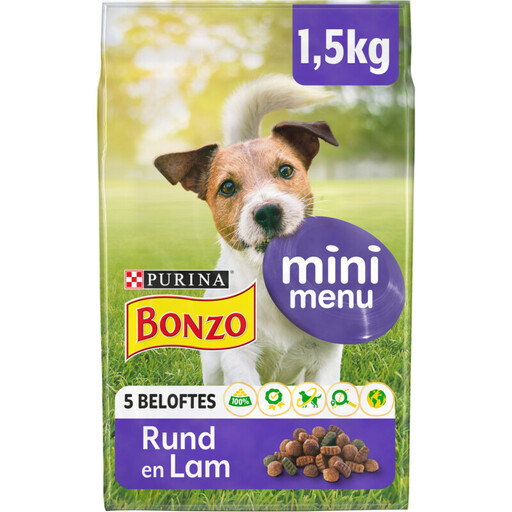
Why it suits this profile: This is a complete product for small adult dogs weighing up to 10 kg, with smaller kibble and a beef and lamb recipe.
The product description clearly states the target group, maximum weight and smaller kibble size. This means you do not have to rely on the flavour description alone.
Small kibble, an adult formula and, according to the product information, a complete and balanced recipe.
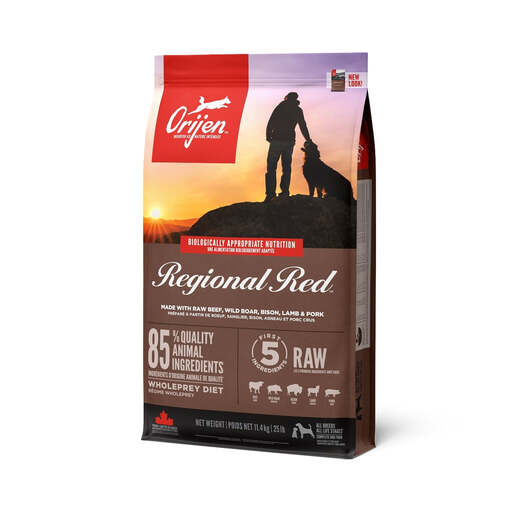
Why it suits this profile: The large 11,4 kg bag and detailed recipe suit adult dog owners who want to compare high-protein products carefully.
The ingredients and analytical constituents are listed in detail, including 38% crude protein and 18% crude fat. This allows you to compare the claims with the actual composition.
Contains several animal protein sources, omega-3 and omega-6 fatty acids, and is intended as complete food for dogs at all life stages.
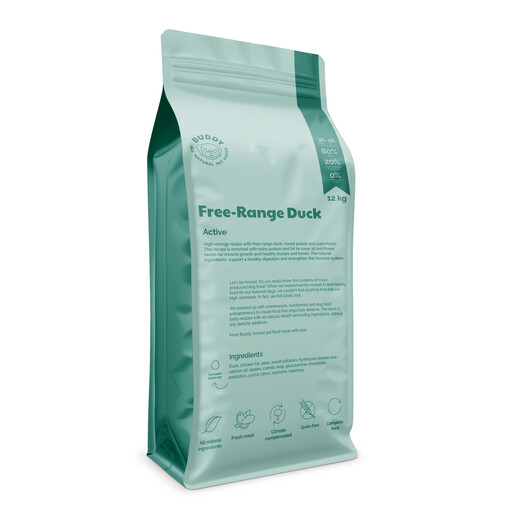
Why it suits this profile: The product information is aimed at large, active and working dogs, and describes an energy-rich recipe with duck.
The target group, kibble size of approximately 1,2 to 1,6 cm and nutritional composition are described clearly. Always check the portion based on your dog’s activity level.
According to the product information, contains 80% animal ingredients, is grain- and gluten-free, and comes in a 12 kg bag.
We have put together a complete, up-to-date list of products that fully meet these strict selection criteria and the applicable European safety regulations.
Gradually mix new dry dog food with the old food, usually over a period of around seven to ten days. This makes it easier to see how your dog responds and helps limit a sudden change in their eating pattern. Follow the feeding table on the packaging and adjust the amount according to exercise, age and body condition.
Store dry dog food in a cool, dry place, preferably sealed in the original bag or a tightly closed food container. Check the best-before date and reseal the packaging after every use.
Choose puppy food that is clearly intended for your dog’s age and size. A puppy from a large breed does not always need the same formula as a small dog. Check that the product is labelled as complete food and follow the feeding guidelines on the packaging.
Adult dogs are often fed two meals a day, but the right division depends on their size, activity level and individual needs. Puppies generally need several smaller meals. Use the product guidelines as a starting point and monitor your dog’s body condition.
This varies by product and packaging. Store the bag in a dry place and keep it tightly closed, following the instructions on the label. Do not buy a larger bag than you can keep fresh and sealed within the recommended period of use.
