
Vandaag of morgen in huis

Kwaliteit gegarandeerd

Welkomstaanbiedingen ontgrendelen: GRATIS bezorging | Tot 80% korting | Gratis 30 dagen JoyPlus-proefperiode
Download de app
Choosing a bag of dog food seems simple, until you have to compare dry dog food with chicken, fish, vegetables, grains or a grain-free recipe. Brands often use eye-catching terms such as “premium”, “natural” or “high in animal ingredients”. On their own, these words say little about whether the food is suitable for your dog.
The right choice mainly depends on your dog’s life stage, body size, activity level and nutritional needs. Always check the label and look beyond the front of the packaging.
A statement such as “with chicken” does not automatically mean that chicken is the main ingredient. Check the full ingredients list and the order in which the ingredients are named. Terms such as “natural”, “premium dog food” or “grain-free dog food” are not a guarantee that the food will suit every dog.
According to information provided by the brands themselves, certain ingredients may contribute to things such as healthy digestion, skin or coat. Do not present such brand claims as guaranteed results. The verifiable information is found in the ingredients, analytical constituents and feeding guidelines.
A puppy has different nutritional needs from an adult or senior dog. Kibble size and energy intake can also vary between small, medium-sized and large dogs. An all-life-stages food can be practical, but you should still check the feeding guidelines and whether it is suitable for your dog’s expected adult weight.
A large bag often seems like good value, but it is not always suitable for a small dog or a dog that does not tolerate a particular food well. As well as the price per kilo, consider the recommended daily amount, how long the food lasts after opening and whether you can store it somewhere dry and airtight.
For everyday use, choose a product labelled as complete dog food or complete nutrition. According to the product information, this means it is intended to be fed as a complete meal. Complementary food is intended as an addition and does not automatically provide a complete daily diet.
Also check which life stage the food is intended for:
The European nutritional guidelines for pet food, including FEDIAF guidelines, provide a useful reference point. The information on the current label remains the deciding factor.
At a minimum, compare the levels of crude protein, fat, crude fibre, ash and moisture. A higher protein percentage is not automatically suitable for every dog. Consider the overall nutritional profile and the feeding guideline for your dog’s body weight.
For weight management, a formula with a lower fat content may be worth considering. According to the product description, Beneful Healthy Weight contains 20% less fat than the original Beneful formula. The daily portion should then be adjusted according to activity level and body condition.
Never provide unlimited food based on the packaging text alone. Weigh out portions and regularly check that your dog’s weight remains stable.
With chicken dog food or fish dog food, it is important to check which animal ingredients are actually included in the recipe. If your dog has a sensitivity, a chicken-free or grain-free formula may be an option, but grain-free is not automatically necessary or better.
According to the product information, Eukanuba Grain Free for small and medium-sized adult dogs lists ocean fish as its animal protein source and uses peas and gluten-free sweet potato as carbohydrate sources. The recipe is described as chicken-free. If you suspect a food reaction, always check the full ingredients list and discuss any changes with a vet.
Smaller kibble can be easier for small dogs to eat. For medium-sized and large dogs, the feeding guidelines and portion size are more important than the name on the bag alone. For large breeds, choose a formula explicitly intended for large dogs or for the expected adult weight.
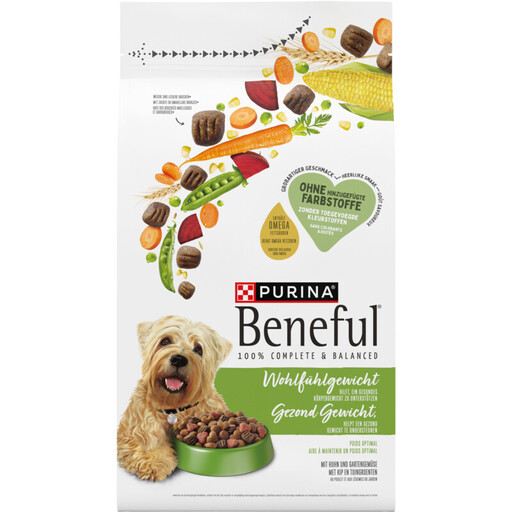
Why it suits this profile: A 1.4 kg bag is practical if you want to start with a smaller quantity or adjust your adult dog’s daily portion.
The product description states that this is complete food for adult dogs and explains that portions should be adjusted according to activity and body condition.
The stated fat content is 20% lower than the original Beneful formula; combines crunchy kibble with softer pieces.
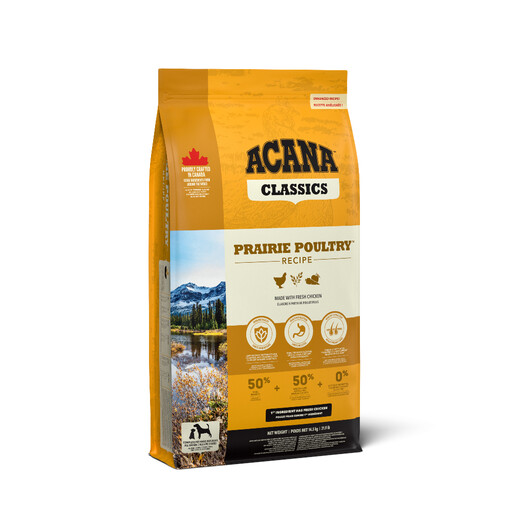
Why it suits this profile: Suitable for dog owners looking for a large bag of complete dry food with chicken, turkey and oats.
The product page shows the full recipe and analytical values, including 27% crude protein, 16% fat and 12% moisture.
50% animal ingredients according to the product information; includes oats and the listed probiotic cultures.
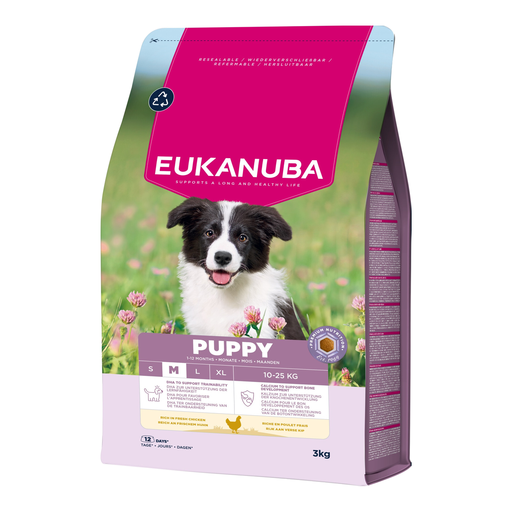
Why it suits this profile: Designed for owners of a medium-sized puppy who want to match growth food to the puppy’s age and size.
The product description explicitly mentions medium-sized puppies aged 1 to 12 months and recommends a gradual transition.
According to the product information, the formula contains DHA, calcium and a fibre blend with FOS, MOS and beet pulp.
We have put together a complete, up-to-date list of products that fully meet these strict selection criteria and the applicable European safety regulations.
Gradually mix the new food with the old food over at least seven days. Start with a small amount of the new food and increase it step by step. Some packaging recommends a ten-day transition. If so, follow the instructions on the label.
During the transition, monitor your dog’s appetite, stools and weight. Always provide fresh drinking water and store dry dog food in a cool, dry, well-sealed place. If problems persist, your dog has a known allergy or has a medical condition, it is advisable to consult a vet.
This depends on body weight, age, activity level and body condition. Use the feeding chart on the packaging as a starting point and weigh out the portion. An active dog may need more than a calm dog of the same weight. Treats count towards the total daily energy intake.
No. Grain-free dog food may be suitable if you specifically want a grain-free formula or if a vet recommends a particular dietary approach. The absence of grains does not automatically make a product more suitable. Always check the full ingredients list and nutritional value.
This varies by product and packaging. Seal the bag properly after every use, store the food in a cool, dry place and follow the best-before information on the label. Do not buy a larger pack than you can use within a reasonable period, especially for a small dog.
